
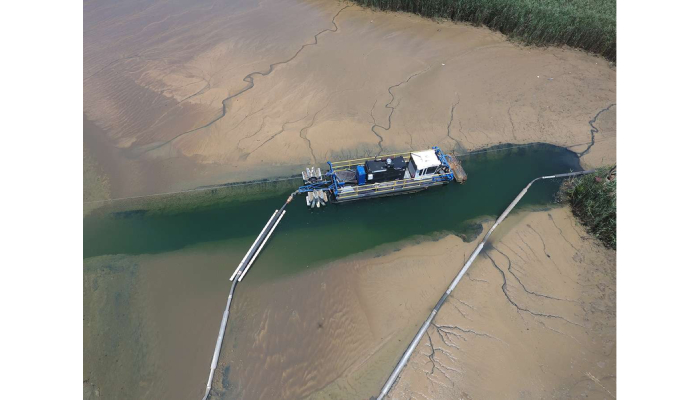
Using an auger dredge offers several notable benefits. First off, these dredgers operate with high efficiency, handling sediment of various textures and depths up to 10 meters. This makes them great for lakes, rivers, and coastal regions. They also minimize environmental disturbance by producing less turbidity than other types of dredging equipment, which is a plus for aquatic habitats. Their precision in removing thin sediment layers is ideal for clean-up projects where care is key. Plus, auger dredges are cost-effective; they generally need less maintenance than larger models. Lastly, their adaptability and versatility allow them to suit specific project needs easily.
1. High Efficiency in Sediment Handling
Auger dredge stand out for their ability to handle a variety of sediment types, including sand, silt, and clay, with impressive efficiency. They can operate effectively in both shallow and deep waters, reaching depths of up to 10 meters. This capability makes them suitable for diverse environments, such as lakes, rivers, and coastal areas. One of their key advantages is the consistent flow rate they maintain, which not only speeds up project completion but also allows for the management of large volumes of sediment, significantly boosting productivity.
These machines are designed to minimize downtime, featuring quick setup and takedown times that keep operations running smoothly. Their ability to navigate through narrow channels and confined spaces is another benefit, making them ideal for projects that require precision and adaptability. Additionally, auger dredgers are equipped with automated systems that monitor performance, enhancing operational efficiency. Notably, they consume less energy than traditional dredging equipment, making them an environmentally friendly choice. Continuous dredging capabilities further reduce interruptions, allowing for a more seamless working process. Overall, the versatility of auger dredgers makes them suitable for a range of projects, from commercial endeavors to environmental restoration.
2. Minimal Environmental Impact
Auger dredgers are designed to disturb sediment as little as possible, which helps preserve the underwater ecosystem. Unlike other dredging methods, they generate significantly less turbidity during operations, protecting water quality and minimizing harm to aquatic habitats. This lower impact also reduces the spread of contaminants, making auger dredgers a preferable choice in sensitive environments. Their compact design allows them to operate in areas that larger equipment cannot access, ensuring that local wildlife and plant life are less affected. Additionally, these dredgers can be adjusted to minimize any disruptions and can operate with fewer emissions, promoting cleaner air. Regular maintenance ensures they work efficiently, further reducing waste and environmental impact. Many operators are trained in best practices for environmental stewardship, enhancing the eco-friendly reputation of auger dredging.
- The design of auger dredgers minimizes sediment disturbance, preserving the underwater ecosystem.
- They produce significantly less turbidity during operations compared to other methods, which protects water quality.
- These dredgers help maintain aquatic habitats by reducing the spread of contaminants.
- The compact nature of auger dredgers allows them to work in sensitive environments without causing harm.
- Their operations can be adjusted to minimize impacts on local wildlife and plant life.
- Auger dredgers can operate with fewer emissions, contributing to lower air pollution levels.
- They are often used in environmental remediation, helping to restore damaged ecosystems.
- The technology used in auger dredgers supports eco-friendly practices.
- Regular maintenance schedules ensure that they operate efficiently and reduce waste.
- Operators can be trained to follow best practices in environmental stewardship when using these dredgers.
3. Precision in Sediment Removal
Auger dredgers are particularly effective in removing thin layers of sediment with precision. Their design allows operators to target specific sediment types without disturbing the surrounding materials, making them ideal for sensitive projects like habitat restoration or pollution cleanup. The controlled extraction capability of auger dredgers minimizes spillage, which is crucial when working in delicate environments. For instance, when dredging around underwater structures like pipelines, the precision of an auger dredger helps avoid damage while ensuring compliance with environmental regulations and project specifications. Additionally, many auger dredgers can be equipped with advanced sensors that monitor sediment characteristics in real-time, providing data on removal efficiency and allowing for necessary adjustments during operation. Operators can fine-tune dredging depth and speed to achieve optimal results, enhancing the overall effectiveness of sediment removal efforts. This adaptability not only improves project outcomes but also reduces the risk of unintended environmental impact.
4. Cost-Effective Dredging Solution
Auger dredgers offer a cost-effective solution for sediment removal, often presenting lower operational costs compared to larger cutter suction dredges. Their design includes fewer mechanical parts, which leads to reduced maintenance expenses. Because they are generally more fuel-efficient, overall fuel costs can drop significantly over time. The compact design of auger dredgers allows for easy transportation, which helps keep logistics costs down. Additionally, operators typically need less training, contributing to lower labor expenses. The efficiency of auger dredgers can also shorten project timelines, ultimately saving money in the long run. Moreover, they often face fewer permits and regulatory hurdles, reducing bureaucratic costs. These dredgers are suitable for smaller projects, making them accessible for various budgets. Their durability and reliability can lead to long-term savings as well. Investing in auger dredgers can yield high returns due to their versatility across multiple types of projects.
5. Adaptability for Various Projects
Auger dredgers are highly adaptable, making them suitable for a broad range of projects. Their design allows for customization, enabling operators to fit different auger sizes and configurations based on the type of sediment they need to handle. This flexibility means they can effectively tackle various environments, whether in urban settings, rural areas, freshwater bodies, or saltwater environments. For instance, they are ideal for marina construction, environmental restoration, and industrial cleanup operations.
Moreover, their compact size allows them to work in restricted areas where larger equipment may not fit, such as near residential docks. Auger dredgers can also be used in varying weather conditions, which enhances scheduling flexibility for project completion. Additionally, they can be integrated with other equipment, providing comprehensive solutions for complex dredging and sediment management tasks. Their adaptability supports innovative approaches, ensuring that unique challenges can be met head-on.
Frequently Asked Questions
What is an auger dredge and how does it work?
An auger dredge is a type of equipment used for digging and moving sediment from bodies of water. It works by using a rotating screw-shaped tool (the auger) to bore into the sediment, which then lifts and transports the material to the surface.
Can auger dredges be used in shallow waters?
Yes, auger dredges are very effective in shallow waters. They can easily reach areas where other dredging methods might struggle, making them ideal for lakes, rivers, and coastal areas with low water depths.
What are the environmental benefits of using an auger dredge?
Using an auger dredge can be more environmentally friendly than other dredging methods because it causes less disturbance to the surrounding ecosystem. The precision of the auger helps minimize disruption to aquatic life and water quality.
How does using an auger dredge improve project efficiency?
An auger dredge can speed up projects by quickly and effectively removing sediment. Its design allows for a continuous operation, making it possible to cover large areas in less time, which can lead to quicker project completion.
Are auger dredges versatile for different types of sediment?
Yes, auger dredges are quite versatile. They can handle various types of sediment, from soft mud to harder materials, making them useful for different projects, like excavation or marine construction.