
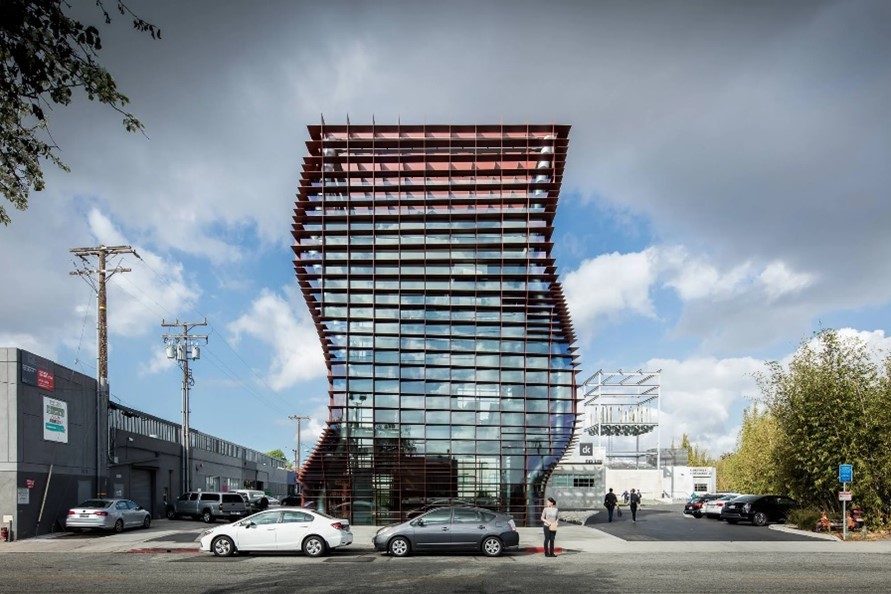
Vespertine in Culver City is a radical exploration of contemporary gastronomy—an avant‑garde, multi‑sensory dining experience where food, architecture, sound, and light are fused into a singular narrative. Recently reopened in spring 2024 after a four‑year hiatus, it swiftly reclaimed its two Michelin stars and a Michelin Green Star, underscoring a rare alignment of culinary ambition and environmental stewardship. Housed within architect Eric Owen Moss’s otherworldly “Waffle” structure, the restaurant seats just 22 guests, each evening unfolding as an immersive, meticulously choreographed journey that challenges conventional notions of luxury while honoring nature and craft.
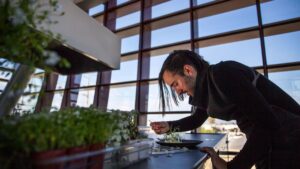
Architecture and Atmosphere
Stepping into Vespertine feels like entering a living installation. The building’s futuristic steel exoskeleton and monolithic interiors heighten a sense of dislocation from everyday life, priming the senses for abstraction and discovery. Shadow and light are used as materials, guiding movement through carefully staged spaces that function like acts in a performance. Soundscapes—ambient, contemplative, and occasionally dissonant—create a meditative envelope, while sightlines and textures are edited to draw focus to the plate and vessel. Seating is intentionally limited to emphasize exclusivity and intimacy, with a service cadence that is formal but human, exacting yet empathetic, designed to keep attention rapt without feeling rigid.
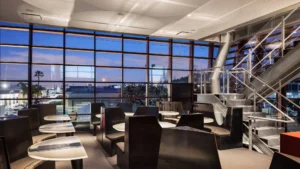
Culinary Vision: Chef Jordan Kahn
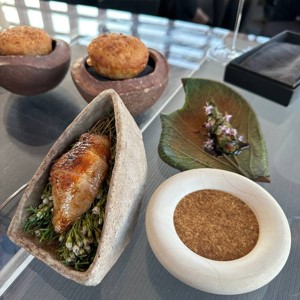
Chef Jordan Kahn’s cuisine is conceptual and deeply elemental, rendering ingredients as both medium and message. Menus operate as multi‑course tasting arcs that prioritize sensation and memory—temperature shifts, fragile textures, mineral tones, and botanical aromas layered to evoke landscapes as much as recipes. Dishes often read like edible sculpture: wild scallops presented with a tidepool’s austerity; oceanic gels and broths that glimmer with iodine and citrus; garden elements dehydrated, smoked, or fermented to concentrate essence; desserts that resemble design objects but dissolve with surprising tenderness. Custom ceramics and vessels—often wild‑harvested or hand‑formed—extend the narrative of materiality, allowing each course to feel site‑specific and time‑bound. Despite the conceptual frame, the cooking remains grounded in impeccable seasoning, precise doneness, and a persistent pursuit of balance.
Sustainability Commitment
Vespertine’s Green Star speaks to an ethos embedded in both sourcing and design. Ingredients are drawn from biodynamic farms, local foraging, and small, ethical fishing communities; seafood is wild‑caught, beef (when used) pasture‑raised, and the larder emphasizes regenerative practices. Materials in the dining room mirror this responsibility: wool carpeting, recycled or upcycled glassware, and ceramics shaped from wild clays signal a closed‑loop sensitivity. Waste is minimized through nose‑to‑tail and root‑to‑leaf utilization, dehydrators and ferments extend seasons, and the beverage program echoes the kitchen’s restraint, using infusions and botanicals that respect ecological cycles. Sustainability isn’t presented as moralizing didacticism; it’s woven into the aesthetics and rhythm, quietly shaping the palate’s experience of purity and place.
Course progression and sensory arc
The evening often opens with a cleansing prelude—something cool, saline, and textural—to tune the senses. Early courses emphasize raw or barely altered preparations that prize translucence and mineral clarity. Mid‑menu, warmth enters delicately: charcoal‑licked aromatics, gentle roasts, and emulsions that lift rather than weigh. Textures are juxtaposed with intent—brittle against custardy, silken against crisp, airy against dense—so that each bite carries a tiny narrative of contrast. The close tends to move toward botanical sweetness and subtle bitterness: herb oils, seed pralines, floral ices, or fermented fruit preparations that resolve with quiet luminosity. Throughout, portions are edited to sustain curiosity and ensure the four‑hour arc remains buoyant.
Service, pacing, and hospitality
Service at Vespertine is immersive but considerate. Staff guide each “act” with sparse, precise language, referencing provenance, process, and the intention behind form. Pacing is measured—never hurried, rarely stalled—with intermissions that allow the senses to reset. The choreography extends to sound and scent, which shift almost imperceptibly as the meal evolves. While the experience is formal, hospitality remains guest‑centered: dietary needs communicated in advance are incorporated seamlessly; pairings can be calibrated in weight and intensity; and the team reads the table to modulate explanations and momentum. The result is theater without theatricality—an intelligence that supports the art rather than competing with it.
Beverage pairings
Pairings are designed as a parallel composition rather than a mirror, prioritizing minerality, freshness, and textural glide. Expect crystalline whites, oxidative inflections where appropriate, and elegant, low‑tannin reds used sparingly for warmth rather than heft. Sake, mead, and botanical infusions appear with intention, amplifying umami and aromatics. Zero‑proof pathways might weave teas, ferments, hydrosols, and verjus‑based blends, echoing the kitchen’s focus on clarity and nature. The cellar favors producers who share the restaurant’s sensitivity to terroir and minimal intervention, keeping the dialogue between glass and plate alive but unobtrusive.
Accolades and legacy
Since reopening, Vespertine’s rapid return to two Michelin stars and receipt of the Green Star affirm its position among the nation’s most daring restaurants. Its resume—once crowned “best restaurant in Los Angeles” by Jonathan Gold and listed among Time’s World’s Greatest Places—captures an enduring ambition: to push the boundaries of how dining can feel, not just taste. In a landscape where “fine dining” is frequently equated with comfort and extravagance, Vespertine proposes an alternative: dining as contemplative art, where the measure of luxury is attention, coherence, and the integrity of materials.
Practical Information
- Address: 3599 Hayden Ave, Culver City, CA 90232.
- Hours: Dinner only, Tuesday–Saturday, typical seating 6:00–8:30 pm windows.
- Reservations: Required; book well in advance due to 22‑seat capacity.
- Price: Multi‑course tasting, premium tier; budget for an immersive four‑hour experience.
- Atmosphere: Intimate, romantic, modern, and unmistakably upscale; soundscapes and lighting are integral to the narrative.
- Accessibility: Wheelchair access for entrances, seating, parking, and restrooms.
- Parking: Valet and on‑site lot.
- Dress: Elevated contemporary; comfort recommended for extended seating.
Key Takeaways
Vespertine is not traditional fine dining—it is dining as immersive art, offering a provocative journey for guests open to abstraction, creativity, and bold innovation.
For more information, please visit Vespertine