
Los Angeles is no stranger to world-class dining experiences, but few new names have reshaped the city’s culinary conversation as swiftly and convincingly as Restaurant Ki. Tucked away in the hidden folds of Little Tokyo, this intimate fine-dining destination is already being heralded as one of the most carefully curated and thrilling gastronomic offerings in the city. At its helm is Chef Ki Kim, a rising star who has not only secured a coveted Michelin star but has also been recognized with a prestigious Young Chef Award, solidifying his place as a visionary at the intersection of tradition and modern creativity.
What makes Restaurant Ki especially compelling is its ability to channel contemporary Korean flavors through an almost theatrical, yet deeply personal, chef’s counter format. With just ten exclusive seats, the restaurant forces an intimate connection between the guests, the ingredients, and the meticulous craft at work. The experience is less about simply eating and more about participating in a culinary performance—one infused with precision, seasonality, and cultural memory.
A Hidden World in Little Tokyo
The design of Restaurant Ki almost mirrors the refinement of its food. Located in an underground complex in Little Tokyo, guests are first provided with discreet pre-arrival instructions. This small ritual—finding the subtle entrance, walking into a serene subterranean space—creates the sense that what lies inside is carefully shielded from the noise of the city above.
Inside, the atmosphere is minimalist yet immersive. The chef’s counter doubles as stage and canvas, drawing immediate focus to the craft rather than distractions. Every gesture, every plated bite, is highlighted against the restaurant’s clean aesthetic. The intentional simplicity of the setting amplifies the artistry of what appears on the plate, while the small scale and quiet theater of the experience instill both intimacy and reverence.
The Menu: Seasonality, Balance, and Narrative
At the heart of Restaurant Ki is its tasting menu, designed to highlight the seasonal abundance of California while maintaining a soul deeply rooted in Korean tradition. Unlike many ornate tasting experiences that overwhelm guests with excess, Chef Ki executes a vision of restraint, sophistication, and precise balance.
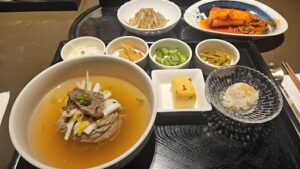
Early courses usually present as delicate compositions—perhaps a perilla-forward sorbet paired with briny roe, or tender octopus kissed by gochujang spice. These opening bites serve almost as brushstrokes on a blank canvas, setting the rhythm for a sensorial narrative that unfolds with increasing complexity.
As the courses progress, the flavors expand into deeper terrain: lobster brushed with doenjang butter over binchotan charcoal, or hand-pulled seafood noodles tangled with freshwater eel and myoga. Subtle notes of **fermented ingredients—ramp, soybean, or perilla—**thread through the menu, reminding diners of the Korean culinary backbone while harmonizing with techniques drawn from Japanese precision and French discipline.
Luxurious touches abound, but they are never arbitrary. Caviar is used to amplify salinity and add nuance rather than overwhelm. Truffle punctuates aromatic undertones, carefully ensuring balance. Herbs provide refreshing lifts between richer, umami-filled components. The meat course, considered the crescendo of the evening, might present as silky-glazed squab, herbaceous lamb, or aged beef steeped in an earthy broth—a fusion of Korean heartiness with elevated culinary artistry.
A Beverage Program of Equal Depth
Restaurant Ki pairs its cuisine with a beverage program that mirrors the same level of clarity, intelligence, and restraint. Guests can choose carefully curated wine selections, but the nonalcoholic pairings tend to stand out for their thoughtfulness. Rather than mimic the structure of wines, these beverages—ranging from herbal infusions and teas to carefully fermented sips—mirror the cuisine’s dynamic tone. Each pairing feels intentional, designed to elevate the layers of flavor in the food without overpowering it.
More Than a Meal: An Entire Experience
Restaurant Ki is not merely a restaurant—it is a complete fine-dining journey. Given that seating is extremely limited and demand is consistently high, making a reservation is essential. The experience prioritizes intimacy, which makes every guest feel as though they have been invited into a private performance.
From the initial greeting to the final farewell, the restaurant emphasizes a seamless flow. Service choreography is quiet, precise, and unobtrusive, while still offering warmth and attentiveness. Every detail—the pacing of courses, the narrative logic between dishes, the way flavors crest and rest—demonstrates a commitment to culinary storytelling.
The overall impression is a sense of harmony, exclusivity, and cultural resonance. For fans of modern dining, Restaurant Ki embodies something rare: it does not merely serve food; it creates a dialogue between Korean identity, California terroir, French training, and Japanese sensibility. This synthesis makes each visit as much about reflection as indulgence.
Key Details at a Glance:
- Location: Little Tokyo, Downtown Los Angeles
- Format: 10-seat chef’s counter; tasting menu only
- Cuisine: Contemporary Korean with global technique influence
- Reservations: Highly recommended, essential due to limited seating
- Attire: Smart casual to elegant
- Atmosphere: Minimalist, intimate, quietly theatrical
Final Thoughts
In an age where fine dining often risks becoming formulaic, Restaurant Ki offers something profoundly different. It avoids trends for their own sake and instead presents a deeply considered vision of flavor, culture, and craft. For anyone seeking one of Los Angeles’ most memorable meals, Restaurant Ki stands as a singular experience—personal yet polished, minimalist yet layered, innovative yet grounded in heritage.
For more information, please visit Restaurant Ki