
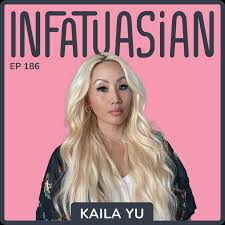
In her deeply personal debut memoir-in-essays, Fetishized: A Reckoning with Yellow Fever, Feminism, and Beauty, Kaila Yu invites us into the intimate terrain of her life as a Taiwanese-American woman navigating the worlds of modeling, music, media, and identity. Blending candid storytelling with cultural critique, Yu examines how she was both objectified by and complicit in the fetishization of Asian women—and how she ultimately found a path toward self-respect, agency, and healing.
Origins of the Project & Motivation
Yu never set out to write a memoir, but the convergence of the pandemic, the #StopAsianHate movement, and the shocking 2021 Atlanta spa shootings forced the reckoning. She realised there was a void: no first-person narrative confronting the “Asian fetish” from the vantage of the women who live it. In her words: “It was the book I would’ve loved to find growing up.”
Her early awareness of the disconnect between representation and self-image was sharpened by her experience as a young woman who looked for mirrors—and found tropes. One such formative memory: her encounter with Memoirs of a Geisha (and the film adaptation) which she had adored—but later understood as steeped in stereotype. This dual recognition of love and harm underpins much of the memoir.
Fetishized — Book at a Glance
Spanning 256 pages, Yu’s book takes the form of essays rather than a strictly linear narrative—each chapter thematically centered on a facet of beauty, media, desire, identity, and empowerment.
The book description highlights how Yu, formerly a model and lead singer of the all-Asian‐American female rock band Nylon Pink, uses her lived experience to expose how media images, colonial history and cultural frameworks have shaped the over sexualisation of Asian women.
Among the critiques she raises: the “exotic”, silent hyper-sexual Asian female archetype; the lack of diverse representation; the internalisation of sexualised self-image as a route to value; and the complicity many young women—herself included—fall into because the options feel limited.
Find Book here
Key Themes & Takeaways
Representation & the Male Gaze
Yu writes of modelling, appearance alterations, and media roles—highlighting how Western-centric beauty standards influenced her decisions. She admits to chasing those ideals: surgery, dieting, performative “ideal” images. But she also frames her resistance: gradually learning to centre her own preferences instead of performing for the male gaze.
The essays explore how not only do external stereotypes harm, but internalised ones can distort behaviour and self-worth: “That I often confused being desired with being respected and loved.”

Complicity, Trauma & Healing
What’s particularly striking about Fetishized is Yu’s willingness to confront her own role in the cycle. She acknowledges that in her twenties she benefited from playing into stereotypes, and only later recognised how those very dynamics contributed to objectification and even violence.
The memoir also includes raw reflections on trauma—sexual assault, unwanted filming, the pressures of performance and visibility. Writing the book was, for her, “one of the most healing experiences of my life… like free therapy.” Through this process she found agency, set stronger boundaries, and reclaimed self-definition.
Structural Context: Yellow Fever, Colonialism & Media
Yu situates her personal narrative within broader historical and cultural forces. She traces how U.S. colonialism, war, media representation and global beauty standards all contributed to the fetishisation of Asian women—and how those roots persist in modern algorithms and imagery. “Structural racism doesn’t just disappear on its own; it modernises through different media … The way it changes is when we call it out,” she writes.
Yu also engages with intersectionality—showing how race, gender, class and beauty standards intersect. For example: being deemed “desirable” can open doors under patriarchy—but it also narrows who you’re allowed to be and what long-term opportunities you might have.
Why the Memoir-in-Essays Format Works
Yu chose the essay form rather than a linear autobiography because it allowed thematic exploration. She cites influences such as Minor Feelings and Girlhood—works that interweave personal narrative with critique. Those chapters had self-contained themes (beauty, modeling, objectification, media) which allowed her to select memories fitting those arcs. Her editor, Amy Li, helped shape which memories to include and how deeply to expose personal vulnerability.
This format gives readers access to layered insight: we follow her life, yes, but also the cultural forces swirling around it—so the personal becomes a lens for the structural.
Practical Advice & Impact
Yu’s memoir is not just retrospective—it aims to provide tools and awareness. She urges Asian women and anyone navigating fetishising expectations to ask: “Who has power here?” Don’t accept what’s popular just because it’s celebrated.
She also speaks to allies: believe those who name fetishisation, learn the history behind it, and call it out when you observe it. In doing so, Yu positions Fetishized as both personal testimony and a resource for change.
Reflection & Looking Forward
Since the publication of the book, Yu says she views her past differently: with more compassion and recognition of the survival strategies she deployed—not just mistakes. Yet she holds onto accountability. She’s currently exploring new projects that sit at the intersections of food, desire, media, and writing—a creative continuation of this work.
She also sees promising shifts in representation: Asian women are appearing more often in media than when she grew up. But she makes clear that more nuanced, respectful portrayals are still needed, and that Asians must have agency in telling their own stories—as writers, directors, producers—not just in front of the camera.
Final Thoughts
Fetishized is a brave and essential book. Yu’s voice is sharp, vulnerable and reflective; her critique is incisive and culturally grounded. For readers interested in identity, representation, agency, and how the personal intertwines with the political, this memoir delivers.
It’s not always comfortable—Yu herself admits as much—but the discomfort is part of the power. Because it forces us to look, to question, to feel—and then to act differently. In her own words, beauty is “how I feel about myself when no one’s watching.”
If you’re looking for a book that doesn’t shy away from the messy, complicated truths of self-definition in a world shaped by centuries of stereotype, this one is worth your time.
For more information please visit