
https://unsplash.com/photos/winter-landscape-with-snow-covered-trees-and-a-road-dDIlxZgYYqU?utm_source=unsplash&utm_medium=referral&utm_content=creditShareLink
Northern Scandinavia does not present itself all at once. It reveals itself through distance, silence, and scale — landscapes that don’t rush to be understood. Snow-covered tundra stretches without markers. Fjords cut deep into rock with a precision that feels deliberate rather than dramatic. Here, nature isn’t arranged for viewing; it exists on its own terms.
Travelling through the far north of Europe requires a different kind of attention. Movement slows. Sound thins. Light behaves unpredictably. What emerges is not spectacle, but clarity — a sense that the land itself sets the rules, and human presence is shaped accordingly.
Where Stillness Becomes Terrain in Finland
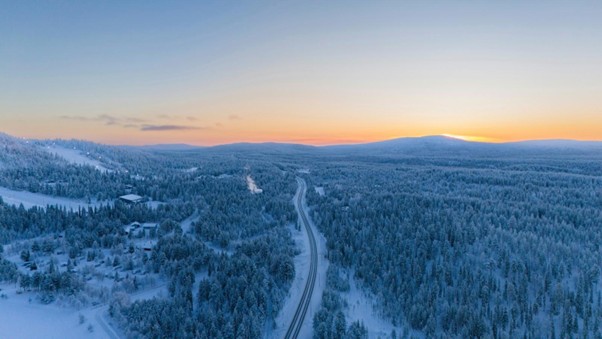
Finland’s northern landscapes are defined by openness. Snow flattens detail. Forests recede into pattern rather than form. The tundra does not guide the eye — it releases it.
In winter, the land feels suspended. Sound travels differently. Distance loses scale. What matters here is not what you see, but how long you remain with it. The absence of interruption becomes the defining feature.
For travellers exploring Finland tours, this environment often proves unexpectedly grounding. There is little to distract, and nothing to compete. The landscape offers space rather than stimulation.
Light That Refuses Consistency
In the far north, light behaves independently of expectation. Winter days compress into brief blue intervals. Twilight lingers longer than daylight. Shadows soften instead of sharpen.
This instability reshapes perception. Time feels elastic. Movement becomes deliberate. The land appears different from one hour to the next, not because it changes, but because light does.
Northern Finland teaches patience through repetition — the same view, returned to, never quite the same twice.
Life Adapted, Not Imposed
Human settlements in the tundra are practical by necessity. Buildings prioritise shelter over display. Roads follow terrain rather than interrupt it. Movement respects weather.
This adaptation creates a quiet harmony. Nothing feels temporary, yet nothing feels intrusive. Presence is measured. Survival and routine replace ambition.
The landscape doesn’t absorb human life — human life adjusts to the landscape.
Crossing Westward Into Vertical Space
Leaving the tundra introduces a shift that is both immediate and profound. Flat horizons give way to compression. Space narrows. Rock replaces snow as the dominant presence.
The transition into western Scandinavia feels less like entering a new region and more like encountering a different logic. Movement tightens. Water begins to organise space.
The land no longer stretches outward. It pulls inward.
Carved Depth and Contained Power in Norway
Norway’s fjords are landscapes shaped by subtraction rather than accumulation. Water has removed material over time, leaving behind forms that feel deliberate, almost architectural.
Fjords do not reveal scale immediately. Their depth becomes apparent only through comparison — cliffs rising higher than expected, water darker than anticipated, sound absorbed rather than echoed.
Those following tours to Norway often discover that fjords are not dramatic in a conventional sense. Their power lies in containment. Everything feels held.

When Water Becomes a Corridor
In Norway, water connects more than it divides. Fjords function as passageways, guiding movement inland rather than blocking it. Boats feel essential, not optional.
Villages appear briefly along the edges — functional, compact, and clearly adapted to their surroundings. Human life remains secondary to geology, and that hierarchy feels accepted rather than resisted.
Distance here is measured by time and terrain, not by kilometres.
Exposure as an Experience
Above the fjords, the landscape opens again — but differently. Plateaus replace valleys. Wind replaces enclosure. The sense of shelter disappears.
This exposure sharpens awareness. Weather arrives without warning. Light changes quickly. Small movements carry weight. Standing still feels active rather than passive.
Norway’s high ground teaches attentiveness through vulnerability.
Sound, Silence, and Scale
What many travellers remember most about northern Scandinavia is not visual detail, but sound — or the lack of it. Snow absorbs noise. Water carries it away. Wind replaces conversation.
This quiet is not empty. It is dense, filled with environmental cues. A distant movement matters. A change in weather is felt immediately.
Silence becomes informational.
Landscapes That Don’t Perform
Neither tundra nor fjord offers guaranteed moments. There are no crescendos, no schedules. The land does not reward haste.
Snow may flatten everything into abstraction. Water may remain opaque. Weather may obscure more than it reveals. And yet, these conditions are what give the landscape its authority.
Northern Scandinavia does not perform. It persists.
Why These Landscapes Stay With You
Snowy tundra and carved fjords linger in memory because they refuse simplification. They resist being captured as moments or reduced to images.
Instead, they demand duration. You remember how long you waited, how still you stood, how the land shaped your pace and attention.
Between Finland’s openness and Norway’s depth lies a shared northern truth: nature here does not ask to be admired. It asks to be respected.
And in learning that difference, travellers often discover that the most striking landscapes are not those that impress immediately — but those that quietly recalibrate how you see space, time, and yourself within it.