
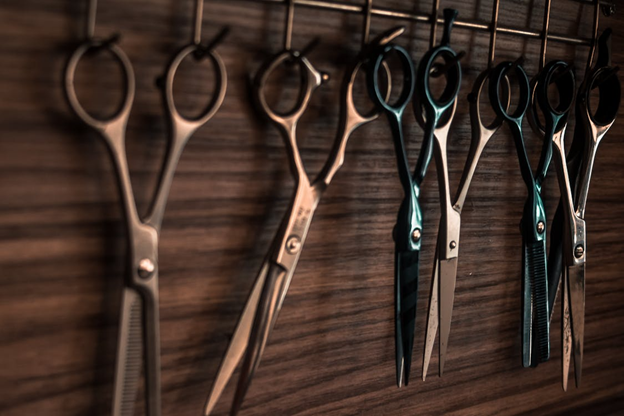
Precision cutting is a craft built on steady hands, sharp eyes, and the right tool. When your shears match your technique, hair responds cleanly, lines stay true, and blends fall into place with less effort.
The wrong tool adds drag, forces extra passes, and tires your hands. Over a day of clients, that small friction turns into lost time and uneven results. Choosing well keeps your workflow smooth and your cuts consistent.
How Steel And Edge Shape Affect Precision
Steel quality sets the ceiling for sharpness and how long that edge will last. Harder, high-quality alloys resist micro-chipping and keep a refined edge for many clients. A stable edge means cleaner lines and less push on fine or fragile hair.
Edge style matters too. Convex edges slice with less resistance, which helps with dry cuts and detail work. Beveled edges give a touch more bite, which can help on heavier sections or point cutting.
Think of the blade as your paintbrush. If the steel and edge suit your technique, your hands can focus on angle and tension instead of fighting the tool. That is how precision becomes repeatable.
Ergonomics Matter More Than You Think
Your hand, wrist, and shoulder pay the price when a handle does not fit. Offset or crane handles place your elbow lower and reduce strain over long sessions. A balanced pair opens and closes with less effort.
That smoother action reduces micro-tension in your thumb and keeps your wrist in a more natural line. You want gear that feels neutral, and if you do lots of dry detailing, consider premium cutting tools that stay sharp and track straight mid-snip. The right fit lowers fatigue, so your last cut of the day looks like your first.
One review site pointed out that high-carbon stainless steel with a convex edge and offset handles is a reliable path to pro-level performance and long-term comfort. This lines up with what many stylists learn the hard way: ergonomics and materials work together.
Maintenance Habits That Protect Your Edge
A great shear still needs care. Wipe blades between clients, oil the pivot daily, and keep the tension in the sweet spot. Those few seconds preserve sharpness and feel.
Storage is part of maintenance. Keep shears dry, closed, and cushioned in a case when not in use. That prevents nicks from knocks and protects the tips.
One salon-focused guide stressed that skipping cleaning and proper storage leads to dulling, rust, and product buildup, which then hurts performance and can risk client hygiene. Simple routines protect your edge and your reputation.
- Daily: wipe blades, oil pivot, check tension
- Weekly: deep clean, inspect screws, test glide
- Monthly: assess bite on wet and dry hair, note any pulling
Matching Shears To Technique And Hair Type
Different work calls for different blades. A slim, lighter shear tracks detail lines and perimeter tweaks without overcutting. A longer blade covers larger sections for scissor-over-comb or blunt lines.
For dense hair, a touch more length and a strong, well-honed edge help you stay in control. On fine hair, a refined convex edge reduces push and keeps cuticles smooth.
Carry variety with purpose. You might lean on a 5.5 to 6 inch for precision and a 6.5 to 7 inch for speed work. Let the hair and the goal decide which pair comes out of the case.
Small Details That Improve Control
Tension is a small dial with a big impact. Too loose and the hair bends, too tight and your hand works harder than it should. Aim for a smooth glide that stops on its own, without slamming shut.
Finger rests, rings, and fit tune your control. A pinky that actually rests steadies your wrist and keeps your cuts level. Rings that match your fingers reduce slop and wasted motion.
A brand known for high-grade stainless and balanced builds notes that smart weighting and smooth action improve comfort and accuracy. That balance is what lets you track a clean line across changing density and contour.
When To Sharpen Or Replace
Sharpen before you feel desperate. If you notice pushing, snagging, or extra passes to cut cleanly, it is time. Waiting until the edge is gone means more steel must be removed to bring it back.
Track your service schedule. Mark the calendar by client volume and cutting style. Dry cutting and heavy texturizing wear edges faster than wet blunt work.
Replacement comes later, but it does come. When the blade has been sharpened many times, or the set and ride are worn beyond a reliable tune, a new pair restores the feel you remember.
Your hands are your career, and shears are the tool that carries them. Choose materials and ergonomics that match your methods, keep them clean, and service them before the edge fades.
When the tool feels like an extension of your fingers, your lines stay crisp, your blends look seamless, and your clients can see the difference. That is the quiet power of the right shears.