
Getting ready for a BIS online application? It can feel a bit overwhelming, but it’s totally manageable with the right documents. First off, you’ll need your business registration papers like your license and PAN Card. Don’t forget identity proofs of the responsible person, too! Next up, you’ll prepare product specs and manufacturing details to show what you’re all about. Laboratory test reports from a recognized lab are essential, along with some application forms that must be submitted both online and in hard copy. Remember to check for specific product requirements that might apply. With these documents in hand, you’re on the path to success!
1. General Requirements for BIS Application
To embark on your BIS online application journey, you’ll need to gather several key documents that are essential for a smooth process. First and foremost, ensure that your business registration documents are current and valid. This includes your business license or registration certificate, which depends on your business structure, such as whether it’s a partnership or a private limited company.
Next, the Memorandum of Association (MoA) should clearly outline your company’s objectives, while the Articles of Association (AoA) must detail your governance and operational procedures. Don’t forget to include a valid PAN Card, as it plays a crucial role in tax identification and compliance. Additionally, a GST registration certificate is necessary for tax purposes in India.
You will also need to provide a photo ID of the responsible person, this can be an Aadhaar card or a passport, along with an address ID that verifies their current residence. If any documents require notarization to validate their authenticity, make sure to do so. Keeping copies of all submitted documents for your records is a wise move, as it can help you track your application status. Lastly, submitting your documents in a timely manner can significantly expedite the processing of your application, making the entire experience more efficient.
• Business registration documents must be current and valid.
• Memorandum of Association should outline the company’s objectives clearly.
• Articles of Association must include governance and operational procedures.
• A valid PAN Card is essential for tax identification and compliance.
• GST registration certificate is necessary for tax purposes in India.
• Photo ID of the responsible person, such as an Aadhaar or passport, is required.
• Address ID should show the current residence of the responsible person.
• Ensure all documents are notarized if required to validate authenticity.
• Keep copies of all submitted documents for your records.
• Timely submission of documents can expedite the processing of your application.
 2. Product Specific Documentation Needed
 2. Product Specific Documentation Needed
When applying for BIS certification, product-specific documentation is crucial. Start with a clear and detailed product description, including its dimensions and weight. This helps in establishing the product’s identity in the market. It’s also essential to list all materials and components used in manufacturing the product to ensure transparency.
Next, provide information about the product’s intended use and target market, as this helps BIS understand its application. Documenting the manufacturing process step-by-step provides clarity on how the product is made, which can be beneficial for compliance checks. Including a factory layout can help visualize the production environment, while a flowchart outlining the entire production process can make it easier to follow.
Additionally, list the machinery used in manufacturing along with their specifications, as this showcases the technology and reliability behind the product. If the product or manufacturer holds any certifications, be sure to include that as well, as it adds credibility. Quality assurance procedures must also be documented to show adherence to standards and compliance. Lastly, highlight any unique features or innovations in the product design, as these can set your product apart in a competitive market.
3. Laboratory Test Reports and Compliance
When applying for BIS certification, laboratory test reports play a crucial role in demonstrating that your product meets the required standards. It is essential that these tests are conducted by a BIS-recognized laboratory, as this ensures credibility. The test reports must clearly specify compliance with relevant Indian standards, which establishes the quality and safety of your product.
Make sure that the test report is dated within the last 90 days at the time of your application. This time frame is important to show that the results are current and relevant. Alongside the test report, you will need to prepare an undertaking as per Form II to declare compliance with the applicable standards. This undertaking reinforces your commitment to maintaining quality in your products.
The test report should detail the tests conducted and their outcomes. For example, if your product is an electrical appliance, the report should include results from tests related to electrical safety and efficiency. If you are working with a foreign manufacturer, providing authorization letters may also be necessary to support your application.
If there are any discrepancies in the test results, address them before submitting your documents. Open communication with the testing lab is essential for clarifying any queries or concerns you might have. Thoroughly review the test report to ensure accuracy, as any errors could delay your application. Additionally, document any corrective actions taken based on the test outcomes, as this helps reinforce your commitment to quality and compliance.
4. Completing the Application Form
When completing the BIS online application, start by using the correct form, typically Form I for BIS CRS. Filling out all fields accurately is crucial, as even minor errors can lead to delays. Take a moment to double-check for any spelling mistakes or numerical inaccuracies. To strengthen your application, include an affidavit as specified in Form III, which validates the claims made in your application. Once your application form is complete, submit it digitally via the BIS portal to streamline the process. Make sure to keep the content concise yet informative, avoiding unnecessary fluff. Don’t forget to attach all required supporting documents, as these are essential for a successful submission. After submitting, you can track your application status online to stay updated. Lastly, provide clear contact information for any follow-up inquiries, and remember to submit a signed declaration affirming the authenticity of all information provided.
5. Submission of Supporting Documents
Submitting your supporting documents is a crucial step in the BIS online application process. Once you’ve completed your online submission, you have a limited window of 15 days to send hard copies of all required documents to the BIS office. To make sure everything goes smoothly, it’s essential to keep your documents organized and clearly labeled, which helps in quick reference and processing.
Include a cover letter with your submission that outlines the contents of the package. This simple step can make a big difference, as it provides the reviewing officers with a clear snapshot of what to expect. When it’s time to send your documents, choose a reliable courier service to ensure they arrive on time. It’s also wise to retain the receipts or tracking information from your courier for your records.
Before you seal the envelope, double-check that all documents are signed where required and that nothing is missing. Incomplete submissions can lead to significant delays, so accuracy is key. For added security, consider using registered post. This way, you can have peace of mind knowing your important documents are being handled with care. Additionally, keeping digital copies of everything you submit is a smart move for future reference.
Finally, do not forget to follow up with the BIS office to confirm that your documents have been received. Regular follow-ups can help you stay informed about your application status and address any issues promptly.
6. Additional Relevant Documents to Include
When applying for BIS certification, it’s important to consider including additional documents that can strengthen your application. First, review the specific product category requirements, as some may necessitate extra documentation. If your product has existing certifications from other authorities, attach those as proof of compliance, as this can enhance credibility. If applicable, provide documentation demonstrating environmental compliance, showcasing your commitment to sustainability. Including product brochures or marketing materials can also be beneficial, as they describe the product and its features, making it easier for BIS to understand its value.
Any previous correspondence with BIS regarding your application should also be included, as it can provide context and show your proactive engagement in the process. If your product has any special handling or shipping requirements, document those clearly to avoid issues later on. Consider attaching testimonials or case studies that highlight customer satisfaction and performance. If your product comes with warranties or service agreements, include those documents as well, as they can assure BIS of your company’s reliability.
Lastly, if you have proof of intellectual property rights, such as patents or trademarks, this should be included to protect your innovations. Evidence of market research or demand for your product can further substantiate your application, demonstrating that there is a need in the market for your offering.
7. Understanding Fees and Processing Time
When applying for BIS certification, understanding the fees involved is crucial for budgeting purposes. The application fees generally start at ₹1,000, depending on the product category you are pursuing. In addition to this, you can expect a processing fee that usually hovers around ₹50,000, along with a registration fee of about ₹2,000 for certification. It is also important to note that if you require expedited processing, additional fees may apply, so be sure to check the BIS website for the most current fee structure before you proceed.
Processing time is another key aspect to consider. Typically, the complete process can take anywhere from 20 to 30 working days. However, if your application contains incomplete documents or requires further verification, delays can occur. It’s wise to plan for potential delays in testing and compliance checks as well, especially around holiday seasons when processing times may increase.
To avoid surprises during your application process, budget for these fees well in advance. Being prepared can make the journey smoother and help you stay on track with your timeline.
8. Benefits of Obtaining BIS Certification
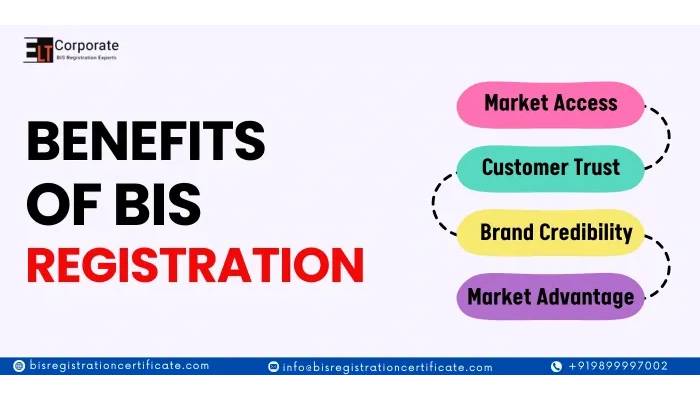
BIS certification offers a multitude of advantages that can significantly enhance your business. First and foremost, a BIS mark boosts consumer confidence in product quality. When consumers see the BIS logo, they know the product has met stringent safety and quality standards, making them more likely to choose your brand over others. This trust can lead to increased sales and market share, as products with BIS certification are often preferred by distributors and suppliers.
Moreover, having BIS certification facilitates easier access to various markets within India. It acts as a gateway, allowing your products to be more attractive to both consumers and retailers, which is particularly valuable in a competitive marketplace. This competitive edge can be a game-changer in your marketing strategy, positioning your brand as a leader in quality and reliability.
Additionally, BIS certification ensures compliance with regulatory standards, minimizing legal risks associated with product liabilities. This compliance not only protects your business from potential penalties but also enhances your brand reputation among consumers and retailers alike. A strong reputation can lead to better pricing strategies for certified products, as consumers are often willing to pay a premium for quality assurance.
Last but not least, obtaining BIS certification opens doors for exports to countries that recognize BIS standards, expanding your market reach beyond India. In summary, the benefits of BIS certification are extensive, making it a vital consideration for any manufacturer looking to thrive in today’s market.