
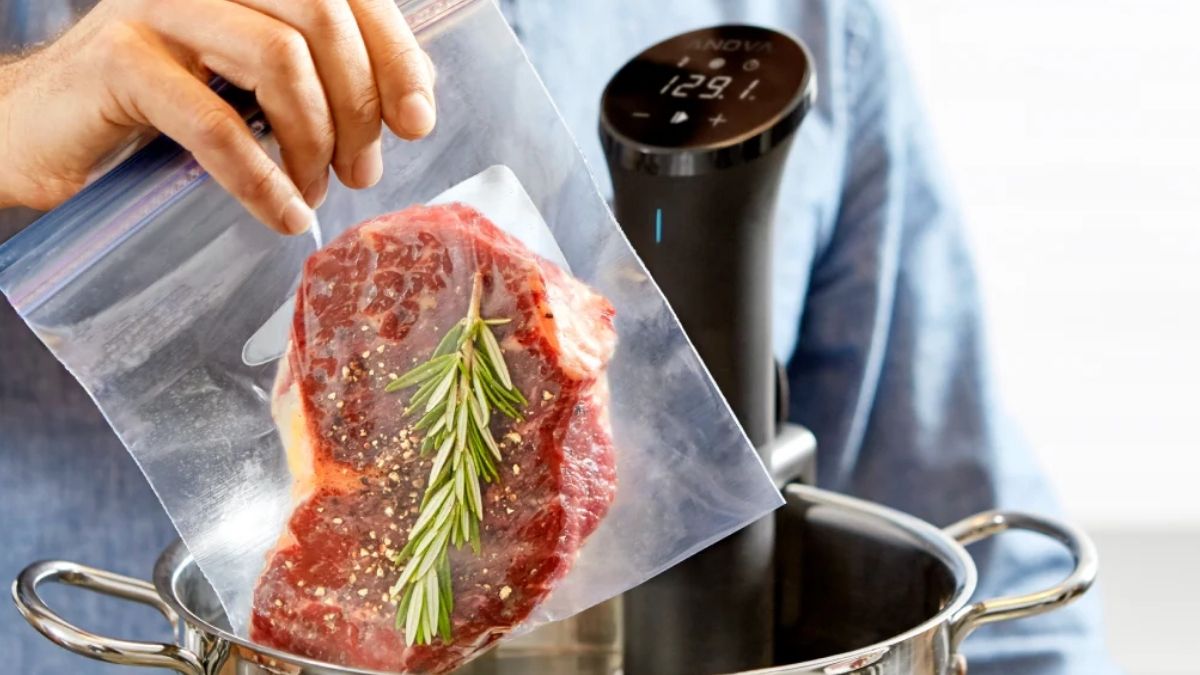
Professional kitchens don’t struggle with steak because the people cooking it lack ability. They struggle because steak exposes every weakness in a system. Thickness varies. Fat content shifts. Grill temperatures drift. Staff changes. Pressure spikes during service. One small miss shows up immediately on the plate. That’s why sous vide steak has moved from a niche technique to a practical operating choice.
This article looks at sous vide steak as a strategic ingredient, not a cooking trick. The objective is repeatability. Same doneness. Same texture. Same yield every service. Across shifts and across locations. That’s what elevating steak quality actually means in a professional kitchen.
Sous Vide: What Does It Mean in a Working Kitchen
Sous vide means “under vacuum.” Steak is sealed in a food-safe pouch and cooked in a water bath held at a precise temperature. Not approximate. Exact. The steak never exceeds that temperature.
In a foodservice environment, that changes how steak behaves. Doneness is achieved before service begins. Once the target internal temperature is reached, the steak stays there until finishing. No guessing. No pulling early. No recovery after the rush hits.
This level of control removes the biggest variable in steak cookery: real-time judgment under pressure.
Why Sous Vide Steak Solves Problems Traditional Methods Can’t
Grills rely on constant attention. Sous vide relies on predefined parameters.
That distinction matters during high-volume services, catering events, banquets, and multi-unit operations. With sous vide steak, the most error-prone step happens during prep, not during peak service. The line focuses on finishing instead of cooking from raw.
The result is faster tickets, fewer mistakes, and less stress at the grill station.
Best Meat for Sous Vide Starts with Steak
When operators ask about the best meat for sous vide, steak consistently leads the list. The reason is financial. Beef carries high cost and tight margins. Mistakes are expensive.
Sous vide steak improves performance in ways kitchens can measure:
- Edge-to-edge doneness without gradients
- Reduced moisture loss during cooking
- More consistent portion weights
- Fewer refires tied to doneness errors
Over time, these gains show up in food cost reports and labor efficiency, not just guest feedback.
Food Safety and Holding Advantages
Sous vide supports food safety when managed correctly. Controlled time and temperature allow for pasteurization at lower heat levels. For operators, this means less same-day prep, better inventory planning, and fewer last-minute cooks. Waste drops because production aligns more closely with demand. That matters when premium proteins are involved.
Guest Perception Is Built on Repetition
Guests don’t analyze cooking methods. They react to outcomes. They notice when a steak is cooked exactly as ordered. They notice when the next visit feels the same as the last. They notice when quality doesn’t change based on who is working the grill. Sous vide steak supports that experience by removing randomness. Different cooks can finish the steak. Different shifts can plate it. The core result stays consistent. That consistency builds trust, and trust drives repeat visits.
How Sous Vide Changes the Economics of Premium Proteins
Working with a sous vide company that understands foodservice scale changes how steak performs as a menu item. Cuisine Solutions focuses on removing variability from premium proteins by controlling the process before the product reaches the kitchen. Portioning, cooking parameters, and food safety controls are managed upstream, protecting yield and reducing risk during service. That assurance matters. When operators partner with a sous vide company built to support consistency, steak becomes predictable instead of volatile. That reliability directly supports the operational and financial goals outlined throughout this article.
Labor Efficiency Without Lowering Standards
Sous vide steak doesn’t replace skilled cooks. It protects them. Precision work happens earlier in the process, allowing line cooks to focus on finishing and pacing during service. Training becomes easier. New hires ramp faster. Experienced staff spend less time correcting errors under pressure. In tight labor environments, that flexibility helps kitchens maintain standards without overloading staff.
Scaling Steak Across Concepts and Dayparts
Steak no longer belongs only on white-tablecloth menus. It appears in fast-casual bowls, hotel dining, catering programs, and premium grab-and-go.
Sous vide enables that range because the base product behaves the same way every time:
- Center-plate steaks for dinner service
- Sliced steak for bowls or salads
- Pre-portioned proteins for catering
- Late-night menus with minimal staff
One process supports multiple formats without sacrificing quality.
Sous vide steak succeeds because it treats steak as a controlled outcome rather than a gamble. Temperature replaces intuition. Process replaces luck. Results become repeatable. For foodservice professionals focused on elevating steak quality without increasing risk, sous vide offers a clear path forward. Steak stops being the most unpredictable item on the menu and becomes one of the most reliable.