
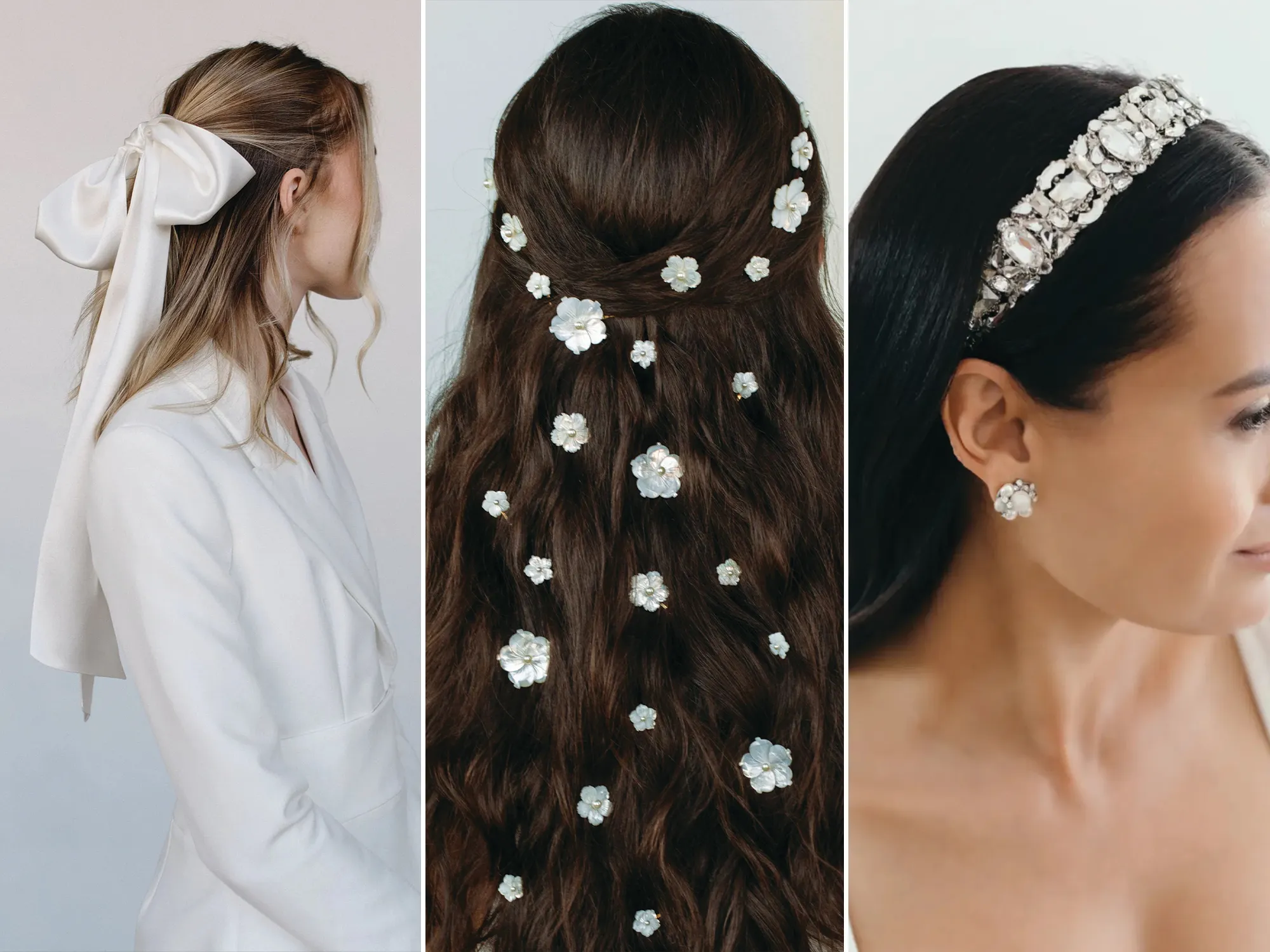
A bride’s ring and her hair accessories rarely get introduced to each other before the wedding day. They meet for the first time in a mirror, sometimes an hour before the ceremony, and the result is either harmony or distraction. The careful ones plan ahead. They hold a hairpin next to their ring finger under lamplight. They ask if the warm glow of one fights against the cool shine of the other. This small act of coordination separates a polished bridal look from one that feels assembled at random.
Hair accessories have taken on greater importance in recent bridal seasons. Pearl pins, crystal combs, velvet bows, and gold leaf accents now serve as connective elements between the gown, the hairstyle, and the jewelry a bride wears. The engagement ring, often the most expensive and sentimental piece in the ensemble, deserves accessories that work alongside it rather than against it.
Why Your Ring Should Inform Your Accessories
Your engagement ring sits on your hand all day. Guests will look at it during the vows. Photographers will capture it in close-up shots. The metal tone, the stone cut, and the setting style all contribute to the overall impression you create.
When hair accessories share visual characteristics with your ring, the entire look reads as intentional. A bride with a warm yellow gold band and a cushion cut stone benefits from accessories with similar warmth. A bride with a platinum setting and a brilliant round stone looks best with silver-toned pins that share the same brightness.
This coordination does not require exact matching. It requires awareness. The accessories should feel like they belong in the same family as your ring, even if they differ in material or design.
Metal Tones and Hair Accessories That Work Together
A gold leaf comb pairs well with yellow gold rings, while platinum or white gold settings call for silver-toned pins and clips. A bride wearing a radiant cut diamond ring might choose a crystal-studded barrette that catches light in a similar way, or she might select pearl-encrusted pins that soften the overall look without competing for attention. Oval and cushion cut stones follow the same logic when matched with accessories.
The goal is consistency across metals and finishes. If your ring has rose gold prongs, a velvet bow with rose gold threading or a hairpin with warm metallic accents keeps the palette unified. Mixing metals can work, but it requires intention. Most brides find that sticking to one metal family produces a cleaner result on the day.
Stones and Sparkle: Finding the Right Level of Shine
Diamonds catch light. So do crystal hair accessories. When both compete for attention, the effect can feel overwhelming. The solution lies in distribution.
A ring with a large center stone or an intricate halo setting already draws the eye. Hair accessories in this case should lean toward subtler materials. Pearl pins, matte gold clips, or fabric-based pieces like velvet bows allow the ring to remain the focal point.
A simpler ring, such as a solitaire on a plain band, leaves room for more statement-level accessories. A crystal-encrusted comb or a sculptural hairpin can fill the visual space without creating conflict.
Think of your overall look as having a budget for sparkle. Your ring takes a portion of that budget. Your accessories should use the remainder without exceeding it.
Sculptural Pieces for Short Hair
Brides with pixie cuts, bobs, or cropped styles sometimes assume hair accessories are off the table. They are not.
Mini veils, sculptural pins, and delicate bows work especially well on shorter hair. These pieces become focal points because they have less hair to compete with. A single antique comb placed above the ear or a cluster of pearl pins along the hairline can carry as much visual weight as a full headpiece on longer hair.
The key is scale. Accessories for short hair should fit the proportions of the style. Oversized pieces can look unbalanced. Small, intentional placements work better.
Pearls as a Unifying Element
Pearls appear frequently in bridal fashion for good reason. They pair with nearly every metal tone. They soften the hardness of diamonds. They photograph well in both natural and artificial light.
A bride whose ring features diamond side stones might choose pearl hairpins to add warmth without adding more glitter. A bride with a vintage-style ring might select antique pearl combs that echo the era of her setting.
Pearls also work with gowns that have beaded or embellished bodices. The texture of the pearls in the hair connects to the texture of the dress, creating visual continuity from head to hand.
Velvet Bows and Fabric Accessories
Fabric accessories have gained ground in recent bridal seasons. Velvet bows, satin ribbons, and silk flowers offer an alternative to metal and crystal.
These pieces suit brides who prefer a softer, less formal look. They also work well for brides whose rings have intricate settings or colored gemstones. A velvet bow in a deep burgundy or forest green can complement a sapphire or emerald accent stone without fighting for attention.
Fabric accessories tend to photograph with less glare. Brides concerned about flash reflections in their photos might consider them for outdoor or brightly lit venues.
Floral Clips and Botanical Themes
Floral clips offer a way to connect your hair to your bouquet. A bride carrying roses might wear a small rose-shaped hairpin. A bride with a wildflower arrangement might choose a clip with leaf detailing.
These accessories also tie into the venue or season. Spring and summer weddings suit fresh-looking floral pieces. Fall and winter weddings might call for dried flower accents or pieces with autumnal tones.
When pairing floral clips with your ring, consider the overall color palette. A ring with a warm gold band works with floral clips in cream, blush, or gold-toned leaves. A ring with a cooler platinum band pairs better with white florals or silver-accented pieces.
Balancing Your Full Jewelry Look
Your hair accessories do not exist in isolation. They share space with earrings, necklaces, and bracelets.
A tiara or statement headpiece calls for simpler jewelry elsewhere. Small stud earrings and no necklace keep the look from becoming heavy. A delicate hairpin or single comb allows room for bolder earrings or a pendant.
Your ring factors into this balance. If it has a bold setting or unusual shape, the rest of your jewelry and accessories should support it rather than compete. Subtle, complementary pieces allow the ring to remain visible and central.
Practical Considerations for the Day
Hair accessories must stay in place through hours of activity. Test your chosen pieces during a hair trial. Move your head. Hug someone. Lean forward.
Clips and combs with multiple prongs hold better than those with fewer attachment points. Heavier pieces may require additional bobby pins for security. Velvet and fabric accessories tend to grip hair more easily than smooth metal.
Consider the weather. Humid conditions can affect fabric pieces. Wind can dislodge lightweight pins. Plan for your venue and season.
Your ring will be on your finger all day. Your hair accessories should stay put with equal reliability.