
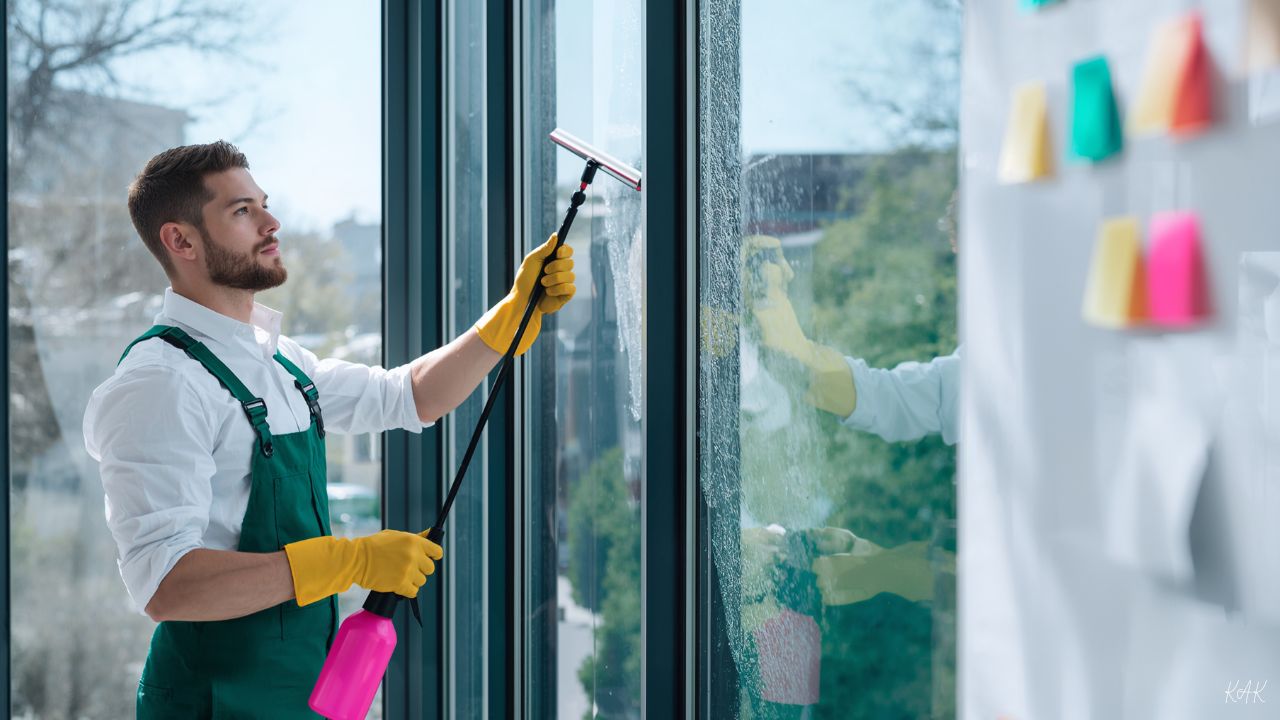
There’s a performance happening on your building every few months. Crew arrives. Equipment gets unloaded. Workers climb, spray, wipe, squeegee. Three hours later they’re gone, windows sparkle, invoice gets paid.
But what actually happened during those three hours? What techniques separated this from the disaster that occurred when you tried it yourself last summer? What are they doing that makes the results last weeks instead of days?
Professional window cleaners operate with knowledge accumulated over decades of collective industry experience. Some of it gets shared. Most of it stays quiet because explaining the nuances doesn’t fit into a sales pitch, and customers don’t ask the right questions to unlock the information.
Let’s talk about what actually separates professional window cleaning from amateur attempts, and why the gap is wider than most people realize.
The Water Nobody Talks About
You think window cleaning is about the blue liquid in the spray bottle. It’s not. It’s about water chemistry, and most professionals won’t explain this because it sounds too technical for a service that “should be simple.”
Tap water contains minerals. Calcium, magnesium, iron, manganese – dissolved solids that stay behind when water evaporates. This is why your DIY attempts leave spots and film even when you follow instructions perfectly. You’re cleaning with contaminated water.
Professional window cleaners either use filtered water systems that remove these minerals, or they adjust their cleaning solutions to compensate for local water hardness. They’ve tested the water in your area. They know its mineral content. They’ve adapted their approach accordingly.
When they show up with equipment, that’s not just tanks and hoses. It’s water purification systems producing deionized or distilled water that dries without leaving deposits.
You’re spraying whatever comes out of your tap and wondering why results look mediocre. They’re using water that’s been stripped of everything that causes spotting and streaking.
Nobody mentions this because it undermines the simplicity narrative. “We use special water” doesn’t sound as marketable as “we use professional techniques.”
The Timing They’ve Mastered
Watch a professional window cleaner work. Notice how fast they move through the cleaning and squeegee process. That’s not just efficiency. That’s precisely calculated timing based on how quickly their solution dries in current conditions.
Temperature, humidity, sunlight, wind – all these factors affect how long cleaning solution stays workable before it dries and leaves residue. read more about how professionals adjust their approach, but the core principle is simple: they’re racing evaporation, and they know exactly how much time they have.
In summer heat, they work in smaller sections because evaporation happens fast. In humid conditions, they have more working time and can cover larger areas. In direct sunlight, they might avoid certain windows entirely until shade hits them later in the day.
You spray an entire window and start wiping, not realizing half of it has already dried while you were working on the other half. They calculate working time before they start and move accordingly.
This knowledge comes from experience you haven’t accumulated. They’ve cleaned thousands of windows in every possible weather condition. They know instinctively what you’d have to learn through countless failures.
The Equipment Hierarchy You Don’t See
Professional window cleaners own multiple squeegees. Not because they lose them or wear them out constantly, but because different windows require different tools.
Small windows, large windows, windows with divided panes, windows at awkward angles – each situation has an optimal squeegee size and blade type. They’re selecting tools based on variables you don’t know exist.
The blade rubber itself comes in different hardnesses. Soft rubber for cold weather when harder rubber becomes too stiff. Hard rubber for hot weather when soft rubber gets too flexible. Medium rubber for moderate conditions.
They’re also replacing blades constantly. A blade that’s cleaned 50 windows doesn’t perform like a fresh blade. The edge degrades microscopically, causing streaks that wouldn’t occur with new rubber.
You bought one squeegee from the hardware store and expect it to work for everything. They’re carrying a selection of tools and choosing appropriate ones for each situation.
That’s before we even discuss extension poles, scaffolding systems, safety equipment, and specialized tools for difficult access situations. The equipment investment for legitimate professional operation runs thousands of dollars, and customers see maybe 10% of it.
The Technique That Looks Simple
Squeegee technique appears straightforward when you watch someone who’s mastered it. Pull straight down in smooth motion, wipe the blade, repeat. How hard could it be?
Extremely hard. The blade angle matters within a few degrees. The pressure matters – too much creates drag and streaks, too little leaves water behind. The overlap between strokes matters. The speed matters. Even how you wipe the blade between strokes affects the next pass.
Professional window cleaners have muscle memory developed over years. They’re not thinking about angle, pressure, or speed. Their hands know these variables automatically through thousands of hours of practice.
You’re consciously trying to remember which direction to pull while also managing pressure, maintaining angle, and keeping consistent speed. It’s like asking someone to juggle while reciting multiplication tables. Possible, but requiring intense concentration that professionals no longer need.
The frustrating part? Watching them makes it look effortless. That’s the hallmark of true expertise – making difficult tasks appear simple. But simple-looking and actually-simple are completely different things.
The Contamination Assessment Nobody Explains
Before cleaning starts, professional crews assess contamination type. This determines their approach, solution strength, and technique.
Light dust requires minimal agitation and weak solution. Heavy pollution buildup needs stronger chemicals and more mechanical cleaning. Hard water deposits might require acid treatments. Organic contamination needs different approaches than inorganic.
They’re looking at your windows and categorizing contamination types you don’t have names for. Then they’re selecting appropriate responses from a mental database of methods they’ve tested over years of work.
You see “dirty window” and apply generic approach. They see specific contamination patterns requiring specific solutions. The difference in results reflects this gap in diagnostic capability.
Even within a single building, different windows accumulate different contamination based on exposure, orientation, and environmental factors. Professionals adjust their approach window by window. You use the same method everywhere and wonder why results vary.
The Weather Window They’re Exploiting
There’s an optimal weather window for window cleaning. Not too hot, not too cold, not too humid, not too dry, no direct sunlight, no precipitation, minimal wind.
Professional window cleaners book appointments strategically within these windows. When they schedule your cleaning for “Thursday afternoon,” that’s not random availability. That’s when weather conditions optimize results.
They’re monitoring forecasts. Adjusting schedules. Sometimes postponing jobs because conditions aren’t ideal even though weather seems fine to you.
You clean windows whenever you have free time, regardless of whether temperature, humidity, and sunlight create good working conditions. Then you’re surprised when results don’t match what professionals achieve.
The same crew using identical techniques and equipment will produce different results in different weather. They know this and plan around it. You don’t know this and attribute poor results to your lack of skill rather than environmental factors.
The Access Solutions You Haven’t Considered
Professional window cleaners rarely tell customers “I can’t reach that window.” They have solutions for access challenges you’d consider impossible.
Extension poles reaching 40+ feet. Rope descent systems for high-rise work. Specialized ladders for unusual configurations. Equipment for cleaning from inside when exterior access isn’t feasible.
When they quote a job, they’re mentally planning access strategies for every window. Some might be straightforward. Others require specialized equipment or techniques they won’t mention unless asked specifically.
You look at second-story windows and think “I could probably reach those with a ladder.” They look at the same windows and calculate ladder angle, stability points, reach distances, and safety factors before deciding if ladder access is even appropriate.
The confidence they show in accessing difficult windows comes from having solved similar problems hundreds of times. You’re encountering these challenges for the first time and don’t even know what questions to ask.
The Damage They’re Preventing
Experienced window cleaners cause less damage than amateurs despite cleaning significantly more windows. This seems counterintuitive until you understand what they’ve learned to avoid.
They know which window frames can’t handle pressure. Which seals are already failing and need gentle treatment. Which glass types require specific cleaning methods. How to clean without scratching, etching, or damaging surrounding materials.
They’ve learned these things through making mistakes on windows that weren’t yours. Now they’re applying that accumulated damage-prevention knowledge to your property without explicitly telling you all the ways this could go wrong.
You don’t know these pitfalls exist until you’ve already damaged something. They’re avoiding hazards you can’t see because you’ve never encountered them.
The Schedule They’re Not Mentioning
Professional window cleaning companies have optimal service intervals based on building type, exposure, and local environmental factors. They know how long their cleaning typically lasts before degradation becomes visible.
But they rarely volunteer this information during sales conversations because it might influence how frequently you book service.
If they tell you windows need cleaning every eight weeks but you book quarterly, that’s still business. If they explain optimal scheduling is more frequent than what you’re planning, you might choose less frequent service or no service at all.
The knowledge gap works in their favor financially. You think quarterly cleaning is adequate. They know it’s probably not optimal but won’t push back if you’re happy with results.
The Product Reality Behind Marketing
Window cleaning solutions marketed to consumers contain ingredients designed to make the product appealing on store shelves – color, fragrance, foaming action – none of which improve cleaning performance and some of which actively harm results by leaving residue.
Professional window cleaners mostly use plain water with small amounts of dish soap, sometimes with additives like vinegar or ammonia depending on specific needs. They’re not buying specialized window cleaning products. They’re mixing their own solutions at ratios they’ve refined through experience.
The blue stuff in fancy bottles at the store exists because consumers expect cleaning products to look like cleaning products. Professionals know this is mostly theater and unnecessary expense.
They’re not going to tell you this because it undermines the perception that window cleaning requires specialized products they have access to. Reality is simpler and cheaper than the marketing suggests, but simplicity doesn’t justify professional pricing as effectively as perceived complexity.
Making Peace With The Gap
Professional window cleaners aren’t keeping massive secrets. They’re just operating with knowledge and experience you haven’t accumulated and probably never will unless you clean windows professionally yourself.
The gap between professional and DIY results isn’t mysterious. It’s the predictable outcome of expertise, appropriate equipment, proper technique, and experience that comes from doing this work constantly rather than occasionally.
You can learn some of this. Watch professionals work. Ask questions. Practice technique. Invest in better equipment. But fully closing the gap requires more time and effort than most people want to invest in becoming skilled at something they only need done a few times yearly.
That’s fine. Understanding why the gap exists is more useful than pretending it doesn’t or assuming professionals are just doing what you’re doing but slightly better.
They’re doing fundamentally different things based on knowledge developed through extensive experience. Recognizing this helps you evaluate whether professional service makes sense versus continuing DIY attempts that produce mediocre results despite your best efforts.
Your windows will get cleaned either way. The question is whether you want to invest the years of learning required to match professional results, or just hire people who’ve already made that investment.
Most people choose the latter once they understand what’s actually involved in doing this properly.