
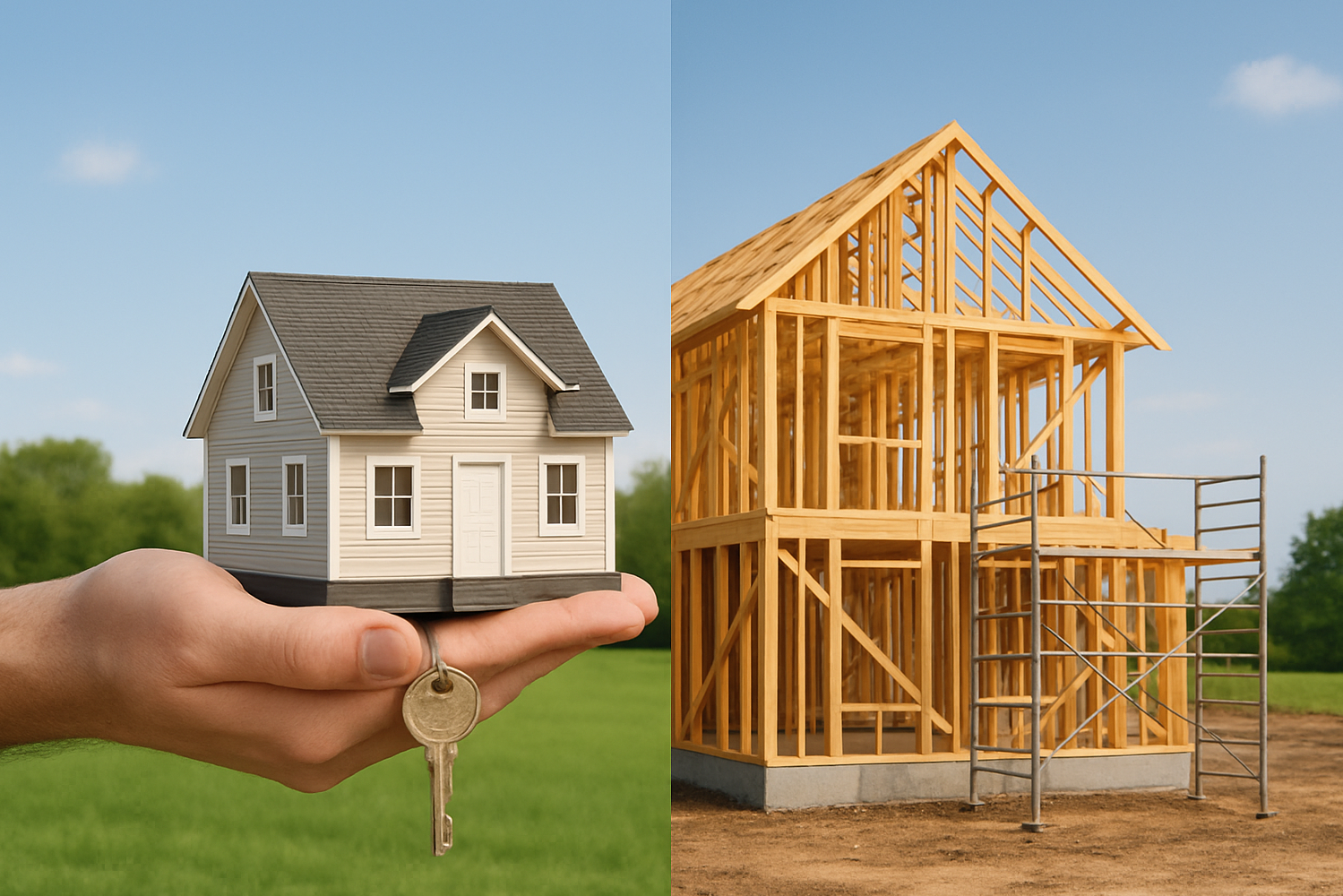
Buying new construction is supposed to feel like a fresh start, not a long-term group project with 47 text threads. Your first real decision is simple: Do you want a home that’s ready soon, or do you want a home you can shape from the studs up?
If you’re shopping in Maryland vs Virginia vs Delaware, that choice gets even more personal because commutes, taxes and inventory can change the math fast. Your best move is to get clear on what you won’t compromise on, then pick the path that delivers it without wrecking your calendar or your mood.
Quick Move-in vs. Traditional Builds
A quick move-in (often called a spec home) is already built or close enough that you can see what you’re buying and plan your life around it. A traditional build is the longer route, where you pick a floor plan, choose finishes and wait through construction.
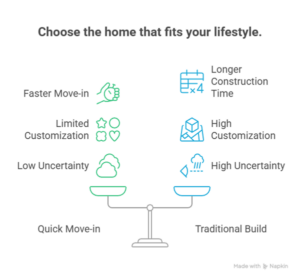
Neither is “better.” One is better for you, and it depends on how you live, how you decide and how much uncertainty you can tolerate without turning into the world’s grumpiest homeowner.
Time Is the Luxury You Feel Daily
People love to talk about quartz counters and chef’s kitchens, but time is the feature you notice every morning. With a quick move-in, you’re usually skipping the long stretch of waiting, second-guessing and checking your phone for updates from a builder rep.
That matters more than it sounds. If your lease ends soon, if you’ve already sold a house, or if you’re relocating for work, “sometime this year” isn’t a plan. It’s a headache with a calendar invite. A quick move-in can help you line up movers, schools and a normal life without juggling temporary housing.
Traditional builds can still be the right call, but be honest about the real cost of waiting. You may be paying rent while also paying to store furniture, renewing a lease month-to-month, or living in a short-term rental that makes every box feel like a personal insult. Even if your budget can handle it, your patience might not.
The Timeline Reality Check
If you’re leaning quick move-in, act like a calm skeptic for 10 minutes and verify what “ready” means. Ask direct questions and get the answers in writing when you can.
Here’s what to confirm before you fall in love with the staging pillows:
- Completion status: Is the home fully complete, or “nearly done” with a punch list still open?
- Permits and sign-offs: What’s the status of final inspections and the certificate of occupancy?
- What’s included: Are appliances installed and on-site, and are the listed finishes the actual finishes?
- Walk-through plan: When is the final walk-through, and how will repairs be handled after closing if something is missed?
If you’re building traditionally, you still need a timeline check. You want a clear construction schedule with key milestones, plus what happens when delays hit. “Weather” and “supply chain” can be real, but you’re not signing up for vague.
Customization vs. Certainty
This is the heart of it.
Quick move-in gives you certainty: You can walk the rooms, see the natural light, check the storage and decide with your eyes open.
Traditional builds give you control: You can pick materials, layouts and details that fit your taste and your daily habits.
If you know exactly what you want and you’re the kind of person who enjoys making choices (and sticking with them), building can be fun.
Customization is not free, even when it looks like it is. Design center upgrades, change orders and “while we’re at it” moments can add up fast, and they tend to show up when you’re already emotionally attached.
Pick Your Non-Negotiables First
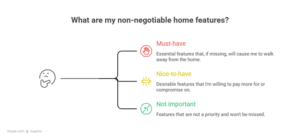
Before you tour another model home, set your list of non-negotiables. Three to five is enough.
Use this simple ranking:
- Must-have: If it’s missing, you walk.
- Nice-to-have: You’ll pay a bit more or compromise elsewhere, but you don’t need
- Not important: If it’s there, great. If not, you won’t remember in six months.
Examples of true non-negotiables that age well: the right commute, the right school zone, a layout that fits how you move through the day, and a bedroom count that won’t pinch.
If your must-haves are mostly location and timing, quick move-in often wins because you can lock in both. If your must-haves are layout-specific or finish-specific, traditional builds often win because you can shape the home around the way you live.
Money: Predictable vs. Adjustable
Quick move-in often feels more straightforward because the selections are already made, the home is priced, and you can see what you’re getting. Traditional builds can start clean and then drift upward as you choose upgrades, change finishes, or decide that built-ins are “non-negotiable” after all.
Also think about carrying costs. A longer build timeline can mean longer overlap: rent plus a mortgage, storage costs, extra moves, or rate-lock worries if you’re financing. None of this means “don’t build,” but it does mean you should price the whole experience, not just the base home.
The Buyer’s Playbook
No matter which route you take, treat the timeline like a contract and your non-negotiables like a compass. A home can be beautiful, but the best one is the one that fits your real life and lets you enjoy it sooner rather than later.