
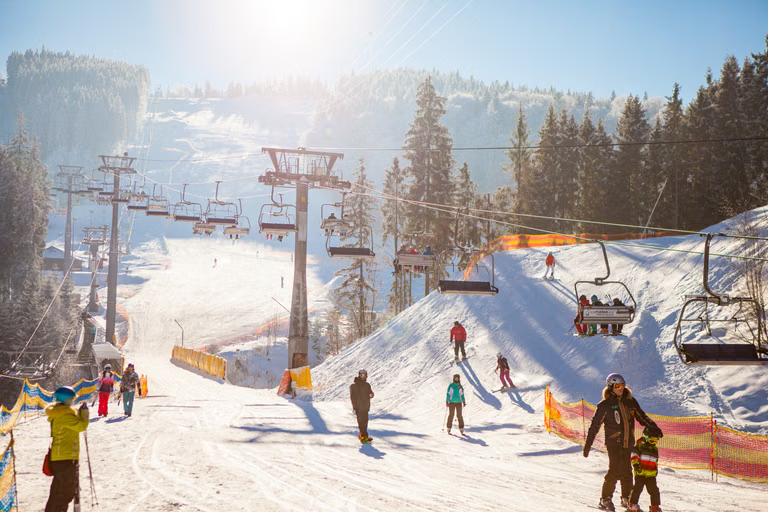
Ever watched a ski instructor carve effortlessly down a pristine slope and thought, “I want that life”? You’re not alone. Becoming a ski instructor at one of the world’s top resorts isn’t just about teaching people to ‘Pizza’ it’s about living in some of the planet’s most stunning locations, immersing yourself in mountain culture, and getting paid to do what you love.
But here’s the thing, not all instructor training programs are created equal. If you’re going to invest time and money into certification, why not do it somewhere that combines world-class training with an unforgettable experience? Let’s explore what it’s really like to train as a ski instructor in luxury resort destinations.
Why train at a top resort instead of your local mountain?
Training at a prestigious resort offers advantages you simply can’t get at smaller ski areas:
- Access to diverse terrain: From groomed cruisers to challenging off-piste runs, top resorts give you the varied conditions you’ll need to become a versatile instructor
- International certification opportunities: Many luxury resorts host training programs that lead to globally recognized qualifications
- Networking with industry professionals: You’ll connect with experienced instructors and ski school directors who can open doors to future employment
- Real-world teaching experience: These resorts attract skiers of all abilities, giving you hands-on practice with actual students during your training
- Lifestyle benefits: Think cozy mountain chalets, après-ski culture, and a community of like-minded adventurers
What are the best resorts for ski instructor training?
Several world-renowned destinations stand out for their exceptional instructor training programs:
Sun Peaks, Canada A premier British Columbia mountain resort spanning over 4,270 acres across three mountains, with an average snowfall of 600cm. Ski-in/ski-out accommodation and champagne powder make it one of Canada’s top snow destinations. Season runs November to April.
Revelstoke, Canada Home to the longest vertical drop in North America and over 3,121 acres of terrain, Revelstoke is a world-class mountain for serious riders. With legendary backcountry access, epic off-piste trails, and a vibrant town renowned for its dining scene, it’s widely regarded as a must-visit for any snow sports enthusiast.
Big White, Canada Canada’s largest ski-in, ski-out resort, nestled in the Monashee Mountains of British Columbia’s Okanagan Valley. Famous for its light, dry “champagne powder” and magical “snow ghosts” (ice-encrusted trees), it offers 119 marked trails for all abilities with a charming village atmosphere. Season runs November to April.
Panorama, Canada A hidden gem tucked deep in BC’s Purcell Mountains, Panorama is an alpine-style, ski-in/ski-out resort with nearly 3,000 acres of varied terrain. Intimate and welcoming in feel, it combines a true village atmosphere with serious mountain credentials. Season runs December to April.
Fairmont Hot Springs, Canada A friendly, well-managed resort perfect for all ages and abilities, and one of WSC’s most popular internship destinations. Set in a beautiful environment in British Columbia, it offers a warm, welcoming atmosphere ideal for those looking to gain real teaching experience in a supportive setting.
Hidden Valley, Canada A compact, community-run resort nestled in Cypress Hills Provincial Park near Medicine Hat, Alberta. Operated by Alberta Parks, it offers a friendly and focused environment, making it an ideal, intimate setting for instructor training. Season typically runs mid-December to mid-March.
What does ski instructor training actually involve?
Most certification programs follow a tiered structure that takes you from beginner instructor to advanced levels:
Level 1 (Entry-level certification)
- Basic ski technique refinement
- Teaching methodology and lesson planning
- Understanding student learning styles
- Safety protocols and mountain awareness
- Usually takes 2-4 weeks to complete
Level 2 (Intermediate certification)
- Advanced ski technique across all terrain types
- Teaching progressions for intermediate and advanced skiers
- Child development and teaching strategies
- Typically requires one season of teaching experience before attempting
Level 3 and 4 (Advanced certifications)
- Expert-level skiing ability required
- Advanced teaching methodologies
- Specializations like freestyle, racing, or adaptive skiing
- Can take several years to achieve
How much does it cost to train at a luxury resort?
Let’s be honest-training at a top resort isn’t cheap, but it’s an investment in your future:
- Course fees: $2,000-$6,000 for entry-level certifications, increasing for higher levels
- Accommodation: $500-$1,500 per month, depending on whether you choose shared chalets or private apartments
- Lift passes: Often included in training packages, but if separate, expect $1,000-$2,000 for the season
- Living expenses: Budget $800-$1,500 monthly for food, entertainment, and transportation
- Travel: Flights and transfers to mountain destinations vary widely
Many programs offer package deals that bundle training, accommodation, and lift passes, which can provide better value than booking everything separately.
Can you work while training to offset costs?
Absolutely, and many trainees do exactly that. Here’s how:
- Part-time resort jobs: Work in ski rental shops, restaurants, or hotels during non-training hours
- Assistant instructor roles: Some programs allow you to start teaching beginner lessons partway through your training
- Seasonal work arrangements: Many resorts hire seasonal staff for various positions, understanding that you’re also pursuing certification
The key is finding a balance that doesn’t compromise your training quality or exhaust you.
What’s the lifestyle actually like during training?
Picture this: you wake up in a mountain chalet, grab breakfast with your fellow trainees, and head out for a morning of intensive skiing. After lunch on a sunny terrace with panoramic Alpine views, you practice teaching techniques with your group. Evenings might involve video analysis sessions, studying mountain safety, or let’s be real-hitting the local bars with new friends from around the world.
The community aspect is huge. You’ll meet people from dozens of countries, all sharing the same passion for skiing and mountain life. These connections often lead to job opportunities, travel adventures, and lifelong friendships.
Do you need to be an expert skier before starting?
Here’s what most programs require for entry-level certification:
- Confident parallel skiing on blue and red runs
- Basic carving ability
- Comfortable skiing at moderate speeds in varied conditions
- No specific racing or freestyle background needed
You don’t need to be a backcountry badass to start-that’s what the training is for. However, the better your skiing is when you begin, the more you’ll get out of the program. Many successful instructors recommend taking private lessons before starting formal instructor training.
What happens after you’re certified?
Congratulations-you’re now a qualified ski instructor! Your options are wide open:
Seasonal positions: Work winters in the Northern Hemisphere and summers in New Zealand, Australia, or South America for year-round skiing
Resort employment: Many luxury resorts hire from their training programs, especially if you’ve made a good impression
Private instruction: Build a client base of repeat customers who request you specifically (this is where the real money is)
Ski school management: With experience, you can progress into administrative and leadership roles
Specialized instruction: Focus on racing, freestyle, adaptive skiing, or children’s programs
Is it worth it to train at a luxury resort versus a budget option?
This depends on your goals and resources, but consider this:
If you’re serious about making skiing your career, not just a gap-year adventure, training at a prestigious resort offers distinct advantages. The connections you make, the quality of instruction you receive, and the name recognition of your training location can significantly impact your future opportunities.
However, if budget is a major concern, starting with a more affordable program doesn’t mean you can’t eventually work at top resorts. Many instructors begin at smaller mountains and work their way up through experience and additional certifications.
Ready to make the leap?
Training as a ski instructor at a world-class resort is more than professional development-it’s a lifestyle choice that can fundamentally change the direction of your life. You’ll gain skills, confidence, and a passport to mountain communities worldwide.
The best time to start? That depends on when courses run at your chosen resort, but most instructor courses begin in late autumn or early winter. Research programs now, get your applications in early, and start preparing physically and financially.
Who knows? Next season, you could be the one carving down that pristine slope, with students following your tracks and an office that most people only dream about.
The mountains are calling, and they’re offering you a career.
Have you trained as a ski instructor, or are you considering it? Share your experiences and questions in the comments below!