
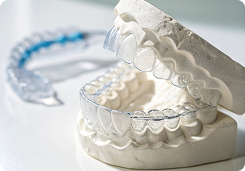
Digital technology is transforming many areas of healthcare, and dentistry is one of the fields benefiting the most from these innovations. One of the most important developments is 3D printing for making surgical guides in dentistry. This technology allows dentists to plan procedures digitally and create highly precise surgical guides that help perform treatments with greater accuracy and safety.
Surgical guides are especially useful in dental implant procedures, where the position, angle, and depth of the implant must be exact. With the help of 3D printing, dentists can create customized guides tailored to the patient’s unique oral anatomy.
This article explains how 3D printing for making surgical guides in dentistry works, its benefits, and its growing role in modern dental treatments.
What Is 3D Printing in Dentistry?
3D printing is an advanced manufacturing process that creates objects layer by layer using digital designs. In dentistry, this technology is used to produce dental models, crowns, aligners, dentures, and surgical guides.
When it comes to 3D printing for making surgical guides dentistry, the process involves using digital scans of a patient’s mouth to design a guide that helps dentists perform procedures with precision.
These guides are custom-made for each patient and are used during surgery to guide dental instruments to the exact location planned before the procedure.
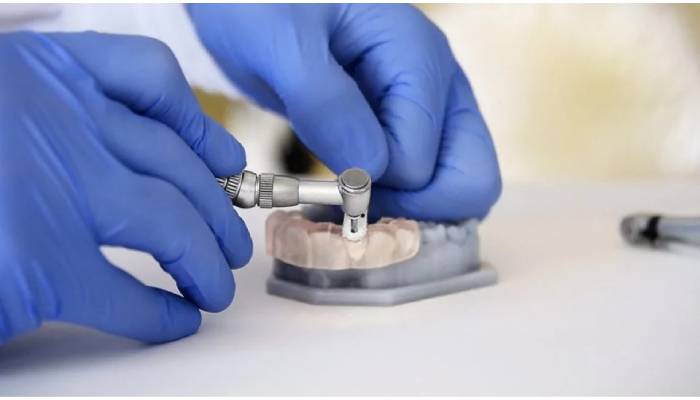
What Are Surgical Guides in Dentistry?
Surgical guides are specially designed templates that assist dentists during procedures such as dental implant placement.
A surgical guide fits securely over the patient’s teeth or gums and contains small openings that direct the dentist’s drill. These openings control the angle, depth, and position of the drill, ensuring accurate placement of implants.
With 3D printing for making surgical guides in dentistry, these guides can be produced quickly and with extremely high precision.
How 3D Printing Is Used to Make Surgical Guides
The process of creating surgical guides using 3D printing involves several steps. Each step plays an important role in ensuring that the final guide is accurate and effective.
Digital Scanning
The first step is capturing detailed images of the patient’s teeth and jawbone. Dentists use technologies such as CBCT scans and intraoral scanners to create a digital representation of the patient’s mouth.
These scans provide important information about bone structure, nerve locations, and surrounding tissues.
Digital Treatment Planning
After the scans are collected, specialized dental software is used to plan the procedure.
For example, when placing dental implants, dentists determine the best position, angle, and depth for the implant based on the patient’s anatomy.
This stage allows dentists to visualize the entire procedure before performing the actual surgery.
Surgical Guide Design
Once the treatment plan is finalized, a surgical guide is designed digitally. The guide includes specific holes or sleeves that will guide the dental drill during the procedure.
The design ensures that the guide fits securely in the patient’s mouth and remains stable during surgery.
3D Printing the Guide
The digital design is then sent to a 3D printer. The printer uses biocompatible materials to produce the guide layer by layer until the final structure is complete.
After printing, the guide is cleaned, cured, and sterilized to prepare it for clinical use.
Benefits of 3D Printing for Making Surgical Guides in Dentistry
The use of 3D printing for making surgical guides in dentistry offers many advantages for both dentists and patients.
High Precision and Accuracy
One of the biggest benefits of 3D printed surgical guides is their accuracy. Since the guide is designed based on digital scans of the patient’s anatomy, it ensures that the implant or surgical procedure is performed exactly as planned.
This precision improves treatment outcomes and reduces the chances of errors.
Better Treatment Planning
Digital planning allows dentists to analyze the patient’s oral structure in detail. They can evaluate bone density, identify nerve positions, and choose the best implant placement.
This preparation helps ensure a safer and more effective surgical procedure.
Reduced Surgery Time
Using a surgical guide simplifies the implant placement process. Because the guide already determines the correct position and angle, dentists can perform the procedure more quickly.
Shorter surgery times also reduce stress and discomfort for patients.
Improved Patient Safety
The jawbone contains sensitive structures such as nerves and sinus cavities. Incorrect implant placement can cause serious complications.
With 3D printing for making surgical guides in dentistry, dentists can avoid these structures by following the precise path created in the guide.
Minimally Invasive Procedures
Many guided implant procedures can be performed with smaller incisions in the gums. In some cases, dentists can even perform flapless surgery, which avoids large gum openings.
Minimally invasive procedures often lead to less bleeding, swelling, and pain.
Faster Healing and Recovery
Because guided procedures cause less trauma to surrounding tissues, patients often recover faster.
Smaller incisions and accurate implant placement reduce inflammation and promote quicker healing.
Improved Implant Success Rates
Proper implant positioning is critical for long-term stability and success. 3D printed surgical guides ensure that implants are placed correctly, improving the chances of successful integration with the jawbone.
Applications of 3D Printed Surgical Guides in Dentistry
The use of 3D printing for making surgical guides in dentistry is expanding rapidly. These guides are used in many dental procedures.
Dental Implant Placement
Surgical guides are most commonly used for placing dental implants. They help ensure that implants are positioned accurately within the jawbone.
Full-Mouth Implant Treatments
For patients who need multiple implants or full-mouth restorations, surgical guides help place several implants with precise alignment.
Bone Grafting Procedures
Guides can assist dentists in performing bone graft surgeries more accurately.
Orthodontic Procedures
In some orthodontic treatments, surgical guides are used to place temporary anchorage devices or mini-implants.
Complex Dental Surgeries
Patients with unusual jaw structures or limited bone density benefit greatly from guided surgical procedures.
Challenges of 3D Printing in Dental Surgery
Although 3D printing for making surgical guides in dentistry offers many advantages, there are also some challenges.
Technology Costs
The equipment required for digital scanning, planning software, and 3D printing can be expensive for dental clinics.
Training Requirements
Dentists and technicians need specialized training to use digital planning software and operate 3D printers effectively.
Production Time
Creating a surgical guide requires several steps, including scanning, designing, and printing. This process may take additional time before the surgery can be performed.
However, as technology continues to improve, these challenges are gradually being reduced.
The Future of 3D Printing in Dentistry
The future of 3D printing for making surgical guides in dentistry looks very promising. Advances in digital technology are making these tools more efficient and widely available.
Several developments are expected in the coming years, including:
- Faster and more accurate 3D printers
- Improved biocompatible printing materials
- Advanced digital planning software
- Integration with artificial intelligence for treatment planning
These advancements will allow dentists to perform procedures with even greater precision and efficiency.
Conclusion
The use of 3D printing for making surgical guides in dentistry is transforming the way dental procedures are planned and performed. By combining digital imaging, advanced planning software, and 3D printing technology, dentists can create customized surgical guides that ensure highly accurate treatment.
These guides improve surgical precision, reduce procedure time, increase patient safety, and support faster recovery. They also help achieve better aesthetic and functional outcomes for dental implant procedures.
As digital dentistry continues to evolve, 3D printed surgical guides will play an increasingly important role in delivering modern, precise, and patient-centered dental care.