
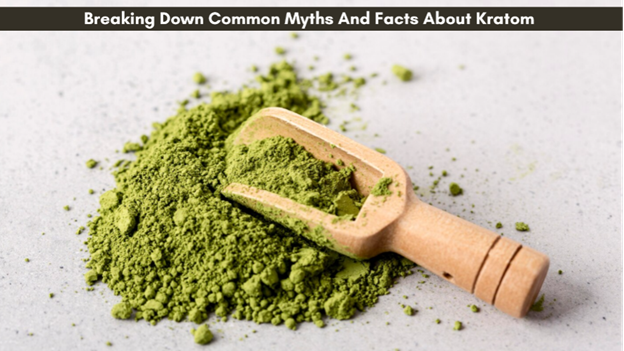
In case you have recently read about kratom, then you have probably read conflicting information that hardly allows you to draw a conclusion. On the one hand, it is described by some individuals as positive and manageable, whereas on the other hand, the possibility of risks and legality causes reluctance.
This leads to a lot of confusion, particularly where the online debates take the place of organized information. This uncertainty may leave you uncertain about safety, regulation, and realistic expectations.
However, the clarity is attainable when myths are disassociated from proven facts. You can assess kratom more objectively by considering biological impacts, regulatory stance, legal regulations, and product variations.
Moreover, rather than relying on assumptions and exaggerated claims, you can pay attention to evidence and practical knowledge. This article breaks down the most popular myths and facts about kratom in order to approach the subject with a balanced, well-grounded understanding.
- Public Availability Versus Legal Restrictions
Being sold either in conventional retail or online can give the impression that kratom is legal everywhere. Nevertheless, the laws vary greatly based on the country, state, or municipality.
Moreover, regulation often becomes part of public discussion, especially in countries like Canada, where legal clarity can influence perception. For example, many individuals search queries such as “is kratom legal in Canada” to better understand the regulatory status before making a purchase. These searches reflect concern about both compliance and safety.
Furthermore, kratom is also legal but controlled in certain areas. There are restrictions or even bans in others because of the health concerns of the populace. Such distinctions in law are evidence of a persistent controversy of safety, potential misuse, and classification.
Due to the possibility of a change in legal status, assumptions can have unintended legal implications. Thus, it is important to check the existing local laws to buy or own kratom.
Therefore, public availability is not a complete guarantee of legality, and maintaining information is a way to keep you out of unnecessary problems.
- Personal Claims Versus Scientific Validation
The other prevalent myth is that mass personal testimonials attest to the medical effectiveness. In online forums, one can often find stories of pain relief, mood support, or better productivity. Even though personal experiences can be compelling, they cannot substitute for any organized clinical studies.
In fact, at present, none of the significant health authorities are permitting kratom to be used in medicine. This implies that no official therapeutic claim that has undergone regulatory approval exists. Consequently, the products are not sold as remedies that aim at diagnosing, curing, treating, or preventing illness.
Therefore, that distinction matters. Scientific approval includes controlled trials, long-term safety data, and regulatory examination. In the absence of these components, stories are rather personal experiences than medical conclusions.
Hence, by keeping personal accounts and regulatory approval apart, you can be more critical and objective when assessing claims.
- Perceived Safety Versus Dependence Potential
There are people who consider kratom to be less dangerous than conventional opioids, and they believe that it has no significant risk of dependence. Although kratom is not an opioid prescription drug, its alkaloids do affect the same receptor systems in the brain.
Furthermore, due to this interaction, some individuals could become tolerant to repeated use. On the development of tolerance, higher amounts may cause the same effects. In the long run, this tendency can raise the possibility of dependence.
Additionally, regular users have reported experiencing withdrawal-like symptoms such as irritability and disruption of sleep. Even though the severity may be different, the fact that the dependence is possible undermines the notion that kratom is completely harmless.
Thus, by recognizing this possibility, you can make decisions in a better-informed way, as opposed to the idea that its safety can be inferred only by comparison to more potent materials.
- Natural Origin Versus Real Biological Impact
The majority of people feel that kratom is safe because it is extracted from plant leaves. Thus, it is generally perceived that natural origin is linked to safety. However, even plant-based substances can lead to severe physiological effects.
In reality, kratom contains active alkaloids that interact directly with receptors in the brain, which makes its effects more pronounced than many expect. These compounds influence the central nervous system, meaning responses can vary depending on the amount and individual sensitivity.
Therefore, even though kratom comes from a natural source, its biological impact should not be underestimated. Lower amounts may be linked to alertness, whereas higher amounts can produce more sedative-like effects.
In reality, kratom contains active alkaloids that interact directly with receptors in the brain, which makes its effects more pronounced than many expect, particularly in more concentrated forms like kratom extract. These compounds influence the central nervous system, meaning responses can vary depending on the amount and individual sensitivity.
- Product Similarity Versus Quality Differences
A final myth suggests that all kratom products are essentially identical. Packaging may appear similar across brands, which can create the impression of consistency. However, product quality and alkaloid concentration may vary widely.
Since kratom is not uniformly regulated as a pharmaceutical product, standards for purity, potency, and labelling accuracy are not always consistent. As a result, one batch may differ significantly from another in strength or composition.
Additionally, improper sourcing or handling can introduce contamination risks. These differences explain why user experiences may vary even when products appear similar.
Therefore, assuming uniformity across all kratom products can lead to unexpected outcomes. Awareness of variability encourages more cautious and informed evaluation.
Bottomline
Kratom remains surrounded by strong opinions; therefore, separating myth from fact becomes essential. Although it comes from plant leaves, its biological effects are significant and should not be overlooked.
At the same time, personal testimonials circulate widely; however, scientific validation and regulatory approval are still lacking. Moreover, concerns related to dependence, shifting legal status, and product variability add further complexity.
For this reason, approaching kratom with accurate information instead of assumptions creates a more balanced perspective. Instead of reacting to bold claims or fear-driven narratives, you can carefully evaluate risks, regulations, and practical realities. Ultimately, informed awareness supports clearer, fact-based decision-making.