
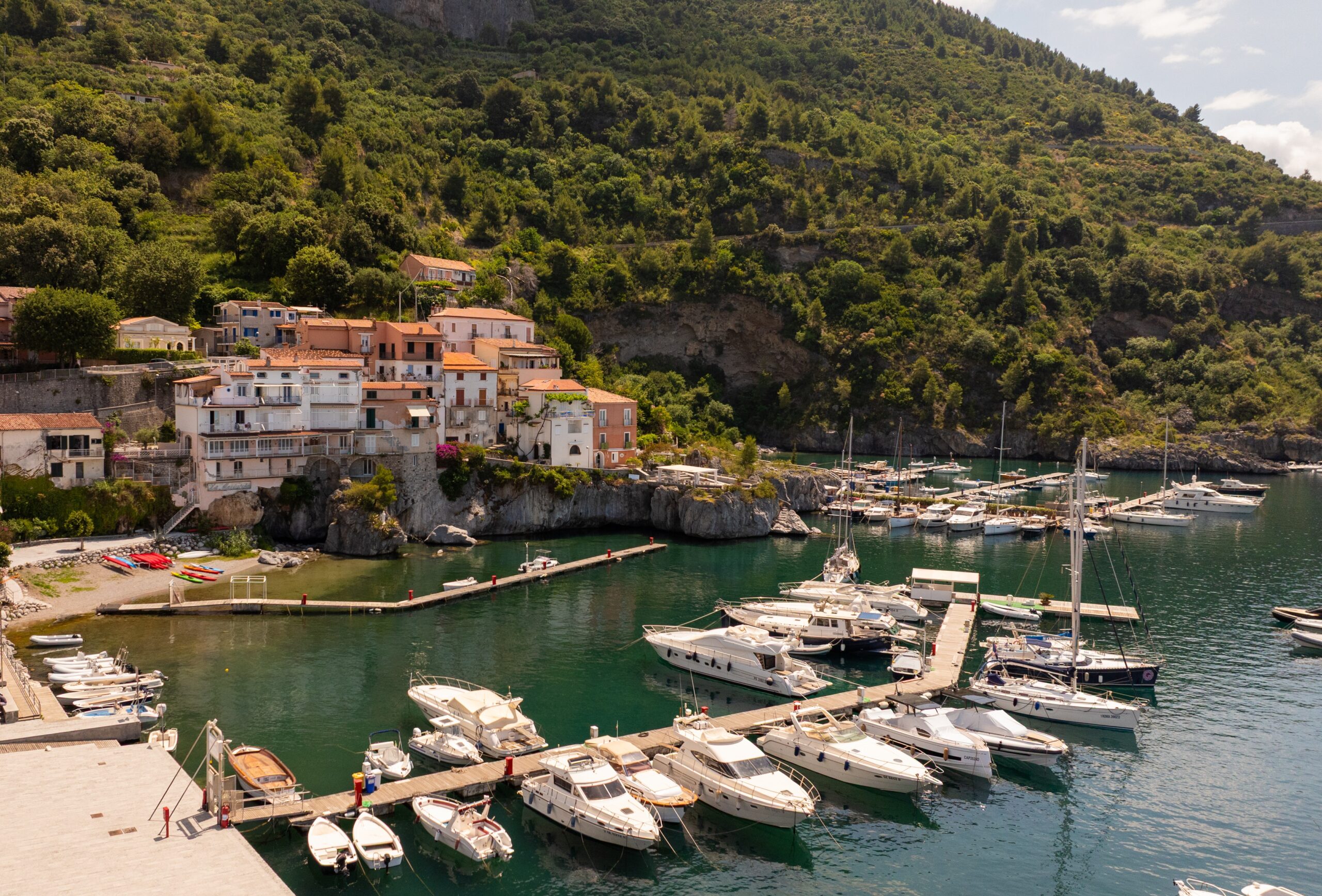
One of those places is Maratea, a seaside town along Italy’s Tyrrhenian coastline where the atmosphere remains shaped more by tradition than tourism. At the center of that identity stands Santavenere, the region’s only five-star hotel, which this summer celebrates its 70th anniversary as it reopens for the 2026 season.
What stood out to me while reading about the property is how intentionally unchanged much of its character appears to remain. In an era where many luxury coastal destinations increasingly feel built around visibility and constant activity, Santavenere seems rooted in a quieter and far more timeless version of Mediterranean hospitality.
A Hotel Deeply Connected to Maratea’s Story
The history of Santavenere is closely tied to the transformation of Maratea itself.
In the early 1950s, Count Stefano Rivetti, a member of one of Piedmont’s prominent textile families, arrived along the still largely undeveloped Lucanian coastline and recognized its potential long before international tourism reached the area.
Beginning in 1953, Rivetti invested heavily in the region, helping shape what would gradually become one of southern Italy’s most refined but discreet coastal destinations.
When Santavenere officially opened in 1956, Italy was entering a defining cultural period, one associated with postwar optimism, seaside summers, cinema, and a renewed celebration of Italian lifestyle and design.
Over the following decades, the hotel became known among artists, writers, and Italian families seeking a more relaxed and elegant form of seaside hospitality, while remaining relatively outside the international spotlight that transformed many other Mediterranean destinations.
That sense of discretion still appears central to the property today.
A Different Rhythm of Italian Summer Living
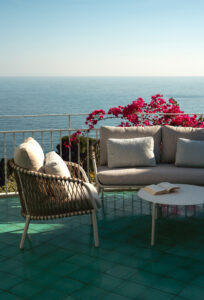
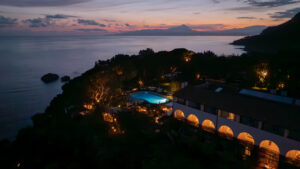
Set across ten hectares of Mediterranean parkland filled with citrus trees, pine, juniper, and oak, Santavenere unfolds gradually rather than dramatically.
The 26-room property is connected through shaded pathways and gardens that eventually lead down to a private stretch of coastline overlooking the Gulf of Maratea.
What I find especially compelling is how strongly the hotel seems designed around rhythm rather than spectacle.
Descriptions of the experience consistently return to long outdoor lunches, afternoons moving slowly between sea and shade, sunset aperitivi, and evenings that stretch naturally late into the night. There is very little emphasis on over-scheduled itineraries or high-energy programming.
Instead, the atmosphere appears shaped around the simple pleasures traditionally associated with Italian coastal summers.
That slower pace feels increasingly rare across many Mediterranean destinations today.

Dining Rooted in Southern Italian Traditions
Food remains deeply connected to both the surrounding landscape and Lucanian culinary heritage.
At Le Lanterne, menus focus on regional cuisine shaped by seasonal ingredients sourced between land and sea. Meanwhile, Gli Ulivi transitions from relaxed daytime dining beneath lemon trees into an open-air pizzeria by evening.
Perhaps the most atmospheric setting is Il Carrubo, positioned directly beside the water and centered around seafood-focused menus that reflect the simplicity and freshness of southern Italian coastal cooking.
What stood out to me is how naturally the culinary experience appears integrated into the environment itself. Dining seems less separated into formal events and more woven into the overall rhythm of the property.
The hotel also offers wine tastings, cooking classes, cocktail workshops, private garden dinners, and sunset picnics, experiences designed not around luxury performance, but around connection to local culture and place.
Maratea Remains One of Italy’s Quiet Coastal Escapes
Beyond the hotel itself, Maratea continues offering a version of the Italian coast that feels noticeably less commercialized than many better-known destinations.
Positioned between Campania and Calabria, the region combines dramatic cliffs, hidden coves, pine-covered hills, and quieter seaside towns that remain relatively untouched by large-scale tourism.
Travelers can spend their days sailing along the coastline, paddleboarding through secluded coves, kayaking beneath cliffs, or exploring the shoreline by boat.
Inland, hiking and cycling trails move through elevated ridgelines and forested landscapes overlooking the sea.
What I noticed while reading about the destination is how balanced the region feels between nature, culture, and coastal life. Historical landmarks such as the church of San Biagio and Maratea’s many hilltop sanctuaries emerge naturally within the landscape rather than functioning as heavily staged tourist sites.
That integration between environment and history gives the area a sense of authenticity that feels increasingly difficult to preserve in more internationally visible destinations.
The Return of Understated Mediterranean Luxury
In many ways, Santavenere reflects a broader shift happening within luxury travel right now.
Increasingly, travelers are moving away from destinations centered around visibility, crowds, and constant activity in favor of places that prioritize atmosphere, privacy, and emotional calm.
What makes Santavenere especially interesting is that it appears to have embodied those qualities long before they became contemporary travel trends.
The hotel does not seem interested in reinventing itself dramatically for modern luxury culture. Instead, its appeal lies precisely in its continuity, preserving the feeling of an Italian seaside summer that has become increasingly difficult to find elsewhere along the Mediterranean.
Celebrating Seven Decades of Coastal Hospitality
To mark its 70th anniversary, Santavenere will host a special celebration on August 14, 2026, honoring the generations of summers and guests that have shaped the property’s identity over the decades.
That milestone feels significant not only for the hotel itself, but for what it represents culturally.
Very few Mediterranean properties have managed to preserve such a strong sense of place while remaining relatively outside the cycle of overexposure that often transforms iconic coastal destinations.
What stayed with me most while reading about Santavenere is that the hotel seems deeply comfortable with restraint. It does not compete loudly for attention, and perhaps that is exactly what makes it feel so appealing right now.
Why Santavenere Feels Especially Relevant Today
Modern luxury travel increasingly revolves around emotional experience rather than excess alone.
Travelers are searching for destinations that feel grounded, personal, and connected to their surroundings rather than interchangeable global resort environments. Santavenere appears to understand that instinctively.
Its appeal comes not from spectacle, but from atmosphere, long meals outdoors, quiet gardens, sea air, shaded terraces, and the feeling of time stretching slightly slower along the coast.
And perhaps that is what makes the hotel’s 70th anniversary feel meaningful beyond simple longevity.
Santavenere represents a version of Mediterranean hospitality that still believes elegance can exist quietly, without needing to announce itself too loudly to the world.
For more information please visit here.