
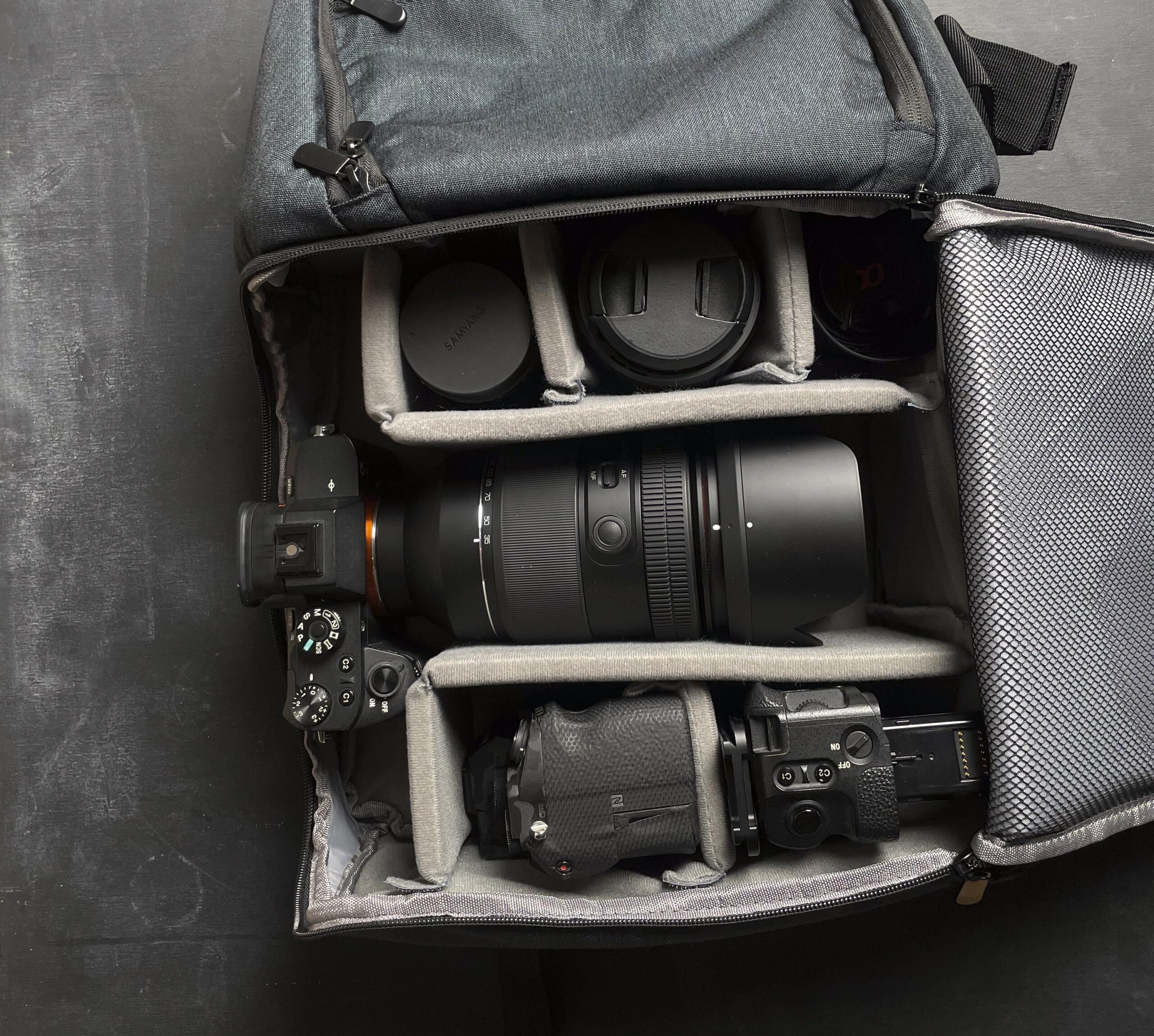
After years of seeing camera backpacks evolve mostly through aesthetics, slightly different compartments, cleaner silhouettes, lighter materials, it’s rare to come across a product that genuinely questions the way photographers interact with their gear. But that’s exactly what stood out to me while learning about this new push-button camera backpack system developed by co-founder Nycol Bevis.
At the center of the concept is a surprisingly simple question: why are photographers still relying on zippers for something they access constantly throughout the day?
For many creators, that probably sounds almost too obvious to even think about. Zippers have simply become part of the routine. But according to Bevis, that routine is exactly the problem.
The Frustration That Sparked the Idea
After spending more than 15 years behind the camera, Bevis noticed the same interruption happening repeatedly during shoots. Accessing gear meant stopping everything, taking the bag off, placing it on the ground, opening compartments, digging through equipment, swapping lenses, and then reversing the process before continuing.
For photographers working in fast-moving environments, those few extra moments matter more than people realize.
What struck me most while reading through the interview is that the frustration wasn’t necessarily about storage capacity or aesthetics. It was about workflow. The issue wasn’t where the gear was stored, but how much effort it took to reach it every single time.
That perspective feels surprisingly overlooked in the camera bag industry.
Why Camera Bags Have Stayed the Same for So Long
One of the more interesting points Bevis raises is that most camera bags have remained mechanically unchanged for decades. Brands continue refining materials and layouts, but the core method of access, the zipper, has stayed almost untouched.
And honestly, once you think about it, it makes sense why.
Moving away from zippers means stepping beyond traditional soft-goods design and into actual engineering. Suddenly, a bag is no longer just fabric and compartments. It becomes a mechanical system that has to withstand constant use, pressure, movement, vibration, and weight without failing.
That’s a far more complicated challenge than redesigning pockets or straps.
According to Bevis, years were spent refining the push-button system before it was reliable enough for professional use.
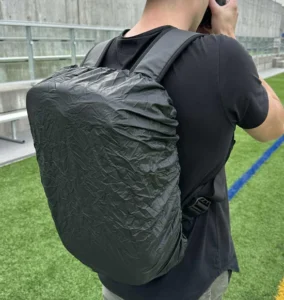
Inspired by Race-Car Engineering
Perhaps the most unexpected detail is where the latch system draws its inspiration from: automotive racing technology.
That influence shaped the backpack’s focus on reliability and safety. The idea was to create something that felt instantaneous when opening but remained secure once locked into place.
There’s an interesting psychological aspect to this too. Most people instinctively trust zippers because they’re familiar. But as Bevis points out, engineered mechanical latching systems can actually be incredibly durable when designed correctly.
The company has reportedly already shipped more than 10,000 bags using the system, suggesting that the concept is resonating with photographers who prioritize efficiency in the field.
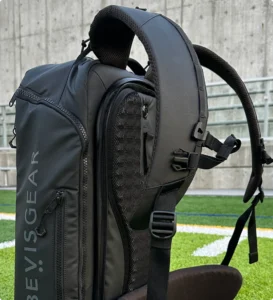
A Workflow-First Philosophy
What separates this backpack from many others is that it appears to have been designed around behavior rather than specifications.
A lot of photography gear is marketed through numbers, storage volume, dimensions, material specs. But professionals often care more about how something feels during daily use.
That’s another point Bevis makes directly in the interview, arguing that many products are built around specifications rather than real-world experience.
And honestly, that observation applies far beyond camera bags.
The idea here seems to be that reducing friction, even by a few seconds at a time, can completely change the experience of working. Over hundreds of gear swaps each week, those small inefficiencies accumulate.
The Unexpected Benefit Users Notice
While speed is the obvious selling point, Bevis mentions something more subtle that users reportedly notice after using the system: reduced mental friction.
That phrase stayed with me because it captures something many creators understand instinctively but rarely articulate. When tools become cumbersome, even slightly, they interrupt focus.
A smoother workflow doesn’t just save time, it allows photographers to stay mentally engaged with the creative process instead of constantly managing equipment.
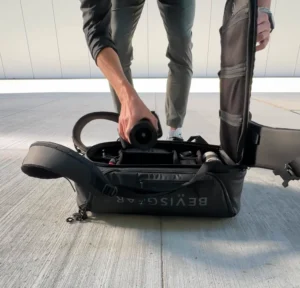
Another feature users seem to appreciate is what the company calls the “Top Shelf” platform, a stable elevated workspace that allows photographers to swap lenses without placing gear on the ground.
It’s one of those details that sounds minor until you imagine using it in real-world conditions.
Could This Become the New Standard?
Bevis acknowledges that products which change user behavior are often initially viewed as niche because they challenge familiar habits.
That’s probably true here as well. Most photographers have spent years adapting themselves to the limitations of traditional backpacks, not necessarily questioning them.
But once a workflow becomes noticeably faster or smoother, it’s difficult to ignore the difference.
What’s interesting is that the company doesn’t appear to be positioning the product as a gimmick or novelty. Instead, the goal seems to be much broader, rethinking one of the most frequently used tools photographers rely on every day.
More Than Just Another Camera Bag
After going through the interview, what stands out most is that this isn’t really a story about backpacks. It’s a story about questioning assumptions that people stopped noticing years ago.
For a long time, photographers simply accepted that accessing gear meant slowing down. This product asks whether that compromise was ever necessary in the first place.
And in an industry where creators are constantly searching for tools that help them work faster, smarter, and more fluidly, that question feels increasingly relevant.
Whether this push-button approach becomes mainstream or remains a specialized solution, it clearly reflects a broader shift happening across creative industries, one where workflow and user experience matter just as much as technical specifications.
And honestly, that feels like a direction worth paying attention to.
For more info, visit here.