
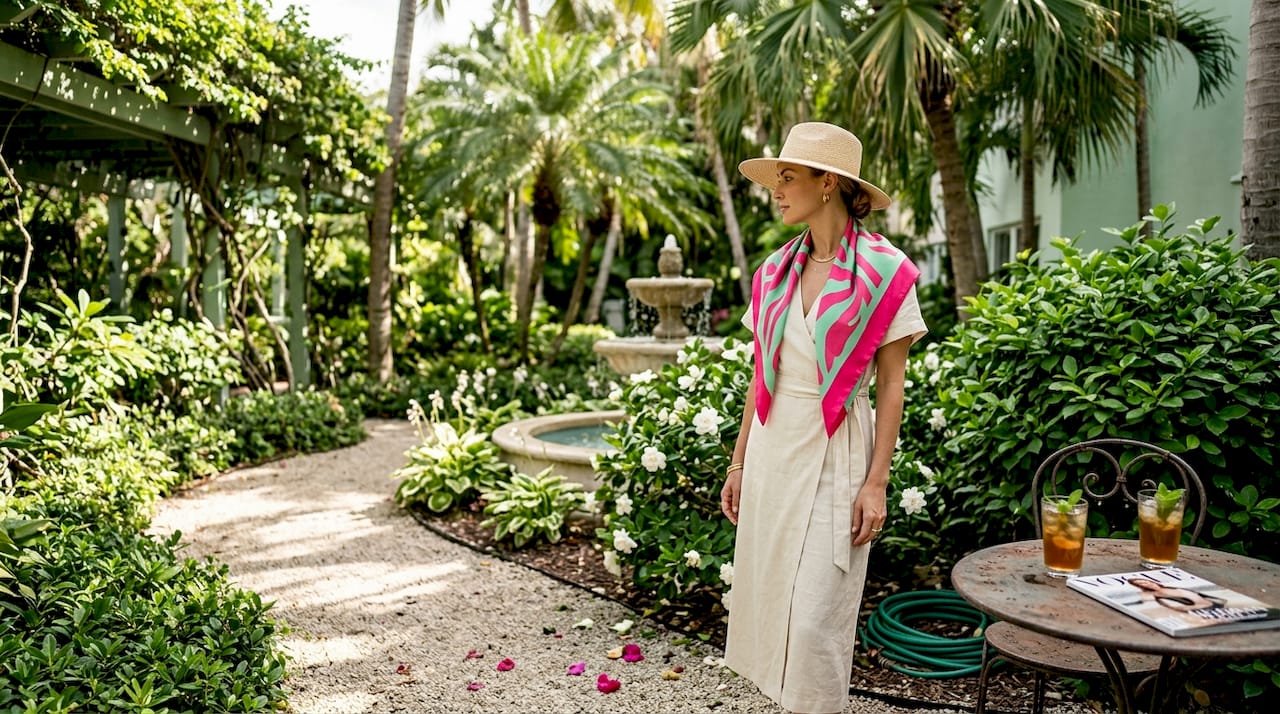
Most travelers book a hotel room and think about the bed, the location, and the price. Amenities are an afterthought. But the role of secret garden hotel amenities goes far beyond a welcome basket or a pool you might use once. At culturally rich destinations, thoughtfully curated amenities are the difference between a stay you forget and one you talk about for years. They shape how you feel, how deeply you connect with a place, and whether you ever want to leave. This guide breaks down exactly what those amenities are, why they matter, and how to find them.
Table of Contents
- Key takeaways
- The role of secret garden hotel amenities explained
- How amenities shape guest experience and satisfaction
- Why amenities matter to hoteliers, not just guests
- How to evaluate secret garden hotels before booking
- Emerging trends shaping secret garden hotel amenities
- My perspective on what these amenities actually do
- Discover exceptional stays with Davidsguide
- FAQ
Key takeaways
| Point | Details |
|---|---|
| Amenities define the experience | Secret garden hotel amenities shape emotional connection and cultural immersion, not just physical comfort. |
| Wellness drives real revenue | Hotels investing in wellness amenities see up to a 26% TRevPAR increase, making them smart for guests and hoteliers alike. |
| Transparency protects your stay | Hidden resort fees damage trust. Always confirm what amenities are included before booking. |
| Personalization is the future | Travelers increasingly expect amenities tailored to their preferences, not generic one-size-fits-all offerings. |
| Evaluate before you book | Use reviews, photos, and direct inquiries to verify that a hotel’s amenities match your travel goals. |
The role of secret garden hotel amenities explained
Secret garden hotels occupy a specific and compelling niche in the hospitality world. They are typically boutique properties built around natural surroundings, curated outdoor spaces, and an aesthetic that feels rooted in the culture of their location. Their amenities reflect that philosophy at every level.
Where a standard hotel might offer a gym, a business center, and a continental breakfast, a secret garden hotel offers something harder to replicate. Think walled courtyards planted with native herbs, outdoor dining under century-old trees, handwoven textiles sourced from local artisans, and guided garden walks led by a resident botanist. These are not decorative choices. They are deliberate decisions that shape how guests experience the property and the destination around it.
Here is a direct comparison of what separates these two types of offerings:
| Standard hotel amenities | Secret garden hotel amenities |
|---|---|
| Fitness center with standard equipment | Outdoor yoga pavilion surrounded by native plantings |
| Generic toiletries | Locally formulated botanical bath products |
| Landscaped pool area | Private garden courtyards with seasonal flora |
| Buffet breakfast | Farm-to-table meals using on-site grown ingredients |
| Printed city map | Guided cultural walks with local expert guides |
| In-room coffee machine | Curated tea ceremonies using regionally sourced blends |
The distinction matters because amenities reflect brand identity, not just volume of features. A property that curates its offerings around a sense of place communicates something specific to travelers who are looking for more than a transactional overnight stay.
Key characteristics you will find in well-executed secret garden hotel features include:
- Outdoor spaces designed around local ecology and seasonal change
- Locally sourced materials in décor, food, and wellness products
- Programming that connects guests to artisans, farmers, or cultural practitioners
- Architecture that integrates natural light, ventilation, and garden views
- Personalized touches that reflect the destination’s history and traditions
How amenities shape guest experience and satisfaction
The guest experience with amenities in secret garden hotels operates on several levels simultaneously. There is the sensory layer, the emotional layer, and the cultural layer. Each one reinforces the others.
The sensory layer is the most immediate. Walking through a garden courtyard in the morning, smelling jasmine, hearing water from a stone fountain, and feeling cool shade from a mature tree canopy. These experiences trigger a physiological relaxation response that no amount of thread count can replicate. Frictionless amenities that reduce stress and improve guest flow, such as keyless entry, intuitive room controls, and thoughtfully placed seating, impact satisfaction more than rarely used luxury features.

The wellness layer is where secret garden hotels genuinely outperform conventional properties. Spa treatments using locally harvested botanicals, aromatherapy drawn from the surrounding garden, and holistic programming designed around the natural rhythms of the destination. These are not add-ons. They are the core product.
The cultural layer is what makes a stay genuinely memorable. When a hotel integrates local flora, traditional craftsmanship, and regional food traditions into its amenity offering, guests stop feeling like tourists and start feeling like temporary residents. That shift is powerful.
Here is how these layers translate into practical guest benefits:
- Reduced stress and faster mental decompression through natural surroundings and quiet outdoor spaces
- Stronger sense of place through culturally rooted design and programming
- Improved sleep quality from amenities like garden-facing rooms, natural soundscapes, and sleep-focused turndown services
- Authentic cultural learning through guided experiences, local cuisine, and artisan encounters
- Higher overall satisfaction that translates directly into positive reviews and repeat bookings
Hotels that balance authentic local elements with modern conveniences achieve better emotional resonance and long-term guest loyalty. That balance is the defining skill of the best secret garden properties.
Pro Tip: When reading hotel descriptions, look for specificity. “Garden views” is generic. “A walled Moorish courtyard planted with orange trees and night-blooming jasmine” tells you the hotel actually understands what it has. Specificity signals intentionality.
If you want to understand how these principles apply to your next trip, Davidsguide’s guide on luxury travel tips covers the broader framework for choosing stays that deliver genuine experiential value.
Why amenities matter to hoteliers, not just guests
The business case for investing in secret garden hotel amenities is as strong as the experiential case. Hotels that treat amenities as a branding tool rather than a cost center perform measurably better across key metrics.
Hotels investing in wellness-focused amenities see up to a 26% increase in total revenue per available room. That is not a marginal gain. It reflects a fundamental shift in how guests allocate spending when they feel genuinely connected to a property.
The strategic logic works like this:
- Curated amenities attract a specific traveler demographic willing to pay a premium for authenticity
- Those guests leave more detailed, enthusiastic reviews that drive organic discovery
- Repeat booking rates climb when guests feel the property offered something they cannot find elsewhere
- Word-of-mouth from culturally curious travelers carries disproportionate weight in niche travel communities
The Raffles Hotels & Resorts approach to their Lake Como debut illustrates this perfectly. The property’s entire identity is built around curated natural and cultural amenities that justify premium pricing and generate anticipation well before opening.
Amenities also function as competitive insulation. A hotel with a genuinely distinctive garden, a resident herbalist, or a private cultural archive is not competing on price. It is competing on experience. That is a much stronger position.
The key is alignment. Amenities must match the destination’s culture and the guest profile the hotel is trying to attract. A wellness retreat in Bali and a heritage property in Marrakech should have entirely different amenity offerings, even if both qualify as secret garden hotels. Curated amenities differentiate hotels in competitive markets precisely because they cannot be copy-pasted from one property to another.
How to evaluate secret garden hotels before booking
Knowing what to look for is half the battle. The luxury hotel amenities benefits are real, but only if the hotel actually delivers on what it promises. Here is how to evaluate properties before you commit.
Start with the photography. Generic stock-style images of a pool or a bed tell you nothing. Look for photos that show the actual garden, the outdoor spaces, the food, and the textures of the décor. A hotel proud of its amenities will photograph them with specificity.
Read reviews for sensory language. When guests describe the smell of the gardens, the sound of birdsong at breakfast, or the taste of a locally sourced dish, you know the amenities are doing their job. Vague praise like “nice atmosphere” is a weaker signal.
Confirm what is actually included. Transparent pricing about resort fees and amenities avoids guest complaints and improves booking confidence. Always ask directly whether garden access, cultural programming, or wellness treatments are included or charged separately.
Use amenity filters carefully. Most booking platforms allow you to filter by amenity type. Use them as a starting point, but verify with the hotel directly. A “garden” filter might return a property with a small potted-plant terrace.
Prioritize based on your travel goals. If cultural immersion is your priority, look for hotels with on-site programming, local partnerships, and staff who can connect you with the destination. If wellness is the goal, look for botanical spa menus and outdoor movement spaces.
Pro Tip: Travelers often mistake star ratings for experience quality. A four-star property with a genuine secret garden and resident cultural guide will outperform a five-star tower hotel for the kind of traveler reading this. Star ratings don’t capture sense of place.
Note that 69% of travelers now rely on AI-generated summaries when researching hotel amenities online. That means the quality of a hotel’s written descriptions directly shapes how it gets surfaced and perceived. Properties that describe their amenities with precision and depth have a genuine advantage.
Emerging trends shaping secret garden hotel amenities
The future of secret garden hotel features is being shaped by three converging forces: sustainability, personalization, and technology. Understanding these trends helps you identify properties that are building for the long term rather than chasing short-term aesthetics.
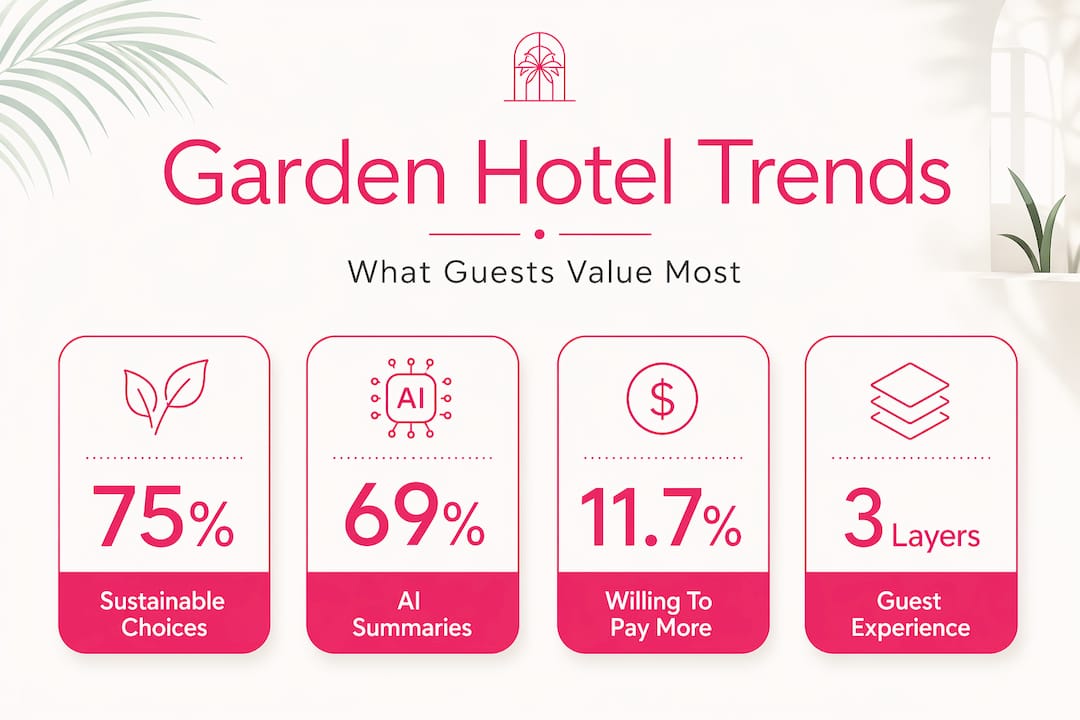
Sustainability is no longer optional. A full 75% of travelers are willing to pay around 11.7% more for hotels with strong environmental and sustainable amenity practices. Secret garden hotels are naturally positioned to lead here, given their existing orientation toward natural materials, local sourcing, and outdoor spaces. The best properties are going further with rainwater harvesting, composting programs, and zero-waste food systems.
Personalization is becoming the baseline expectation. Travelers in 2026 expect amenities like early check-in, late check-out, personalized welcome experiences, and sleep-friendly room options as standard. The secret garden hotels that stand out are those that extend this personalization into the cultural experience itself. Imagine a welcome note that references your interest in native orchids and includes a private garden walk scheduled for your first morning.
Technology is enhancing rather than replacing the organic experience. Digital guides that map the hotel’s garden with botanical notes, contactless check-in that eliminates arrival friction, and AI-driven concierge tools that surface local cultural events. The One Hotel in New York City’s approach to sustainable amenity design shows how technology and nature-forward thinking can coexist without one undermining the other.
“Amenities are no longer optional extras but critical experiences that embody a hotel’s unique identity and connect travelers emotionally to place.” — Hotel amenities transforming guest experience
The secret garden hotels that will define the next decade are those that treat this evolution not as a challenge but as an opportunity to deepen what they already do well.
My perspective on what these amenities actually do
I have stayed in properties that had every luxury feature on paper and left me feeling nothing. And I have stayed in a small riad in Marrakech with a central courtyard garden, a resident cook who sourced from the souk each morning, and hand-painted tiles that told a story I spent three days trying to decode. The second stay cost less. It gave me far more.
What I have learned is that conventional hotel amenities often miss the mark for culturally curious travelers because they are designed to impress on a checklist rather than to connect on a human level. A rooftop infinity pool is photographable. A private garden where you can sit in silence and smell something you have never smelled before is transformative.
The hotels that get this right treat their amenities as storytelling. Every plant in the garden, every textile on the bed, every ingredient on the breakfast plate is a sentence in a longer narrative about where you are and why it matters. When a property commits to that philosophy, guests feel it immediately. They do not just enjoy the stay. They understand the place.
My advice: seek out hotels that treat amenities as part of storytelling, not as a list of features to compete on. The difference shows up in ways that no star rating can capture.
— David
Discover exceptional stays with Davidsguide
Davidsguide covers the kind of travel experiences that stay with you. If the role of secret garden hotel amenities has you thinking differently about where to stay next, the resources here go deep on exactly that. From boutique properties built around natural and cultural immersion to practical guidance on getting the most from your next trip, Davidsguide offers curated recommendations you can actually use. Start with the luxury travel guide for a full framework on choosing stays that deliver on every level. If a city break is on your radar, the guide on making city stays luxurious shows how to apply the same principles to urban properties. The right amenities are out there. Davidsguide helps you find them.
FAQ
What makes secret garden hotel amenities different from standard ones?
Secret garden hotel amenities are built around natural surroundings, local culture, and sensory experience rather than generic comfort features. They typically include curated outdoor spaces, locally sourced materials, and cultural programming that connects guests to the destination.
Do hotel amenities actually affect guest satisfaction?
Yes, significantly. Hotels investing in wellness-focused and culturally curated amenities see measurable gains in both guest satisfaction scores and revenue, including up to a 26% increase in total revenue per available room.
How do I know if a hotel’s amenities are genuine or just marketing?
Look for specific, sensory language in descriptions and reviews rather than generic claims. Confirm directly with the hotel which amenities are included versus charged separately, and check for transparent pricing on any resort fees.
Are sustainable amenities worth paying more for?
For most travelers, yes. Research shows 75% of travelers are willing to pay a premium of around 11.7% for hotels with strong sustainable practices. Beyond the environmental benefit, sustainable amenities in secret garden hotels often deliver a more authentic and immersive experience.
What amenity types should I prioritize when booking a secret garden hotel?
Prioritize based on your travel goals. For cultural immersion, look for on-site programming, local partnerships, and guided experiences. For wellness, focus on botanical spa offerings and outdoor movement spaces. For relaxation, garden access, natural soundscapes, and sleep-focused room features are the strongest indicators.
Recommended
- One Hotel Nyc – David’s Guide
- How to Make Your Next City Break Truly Luxurious – David’s Guide
- Luxury Travel Tips – How To Elevate Your Next Vacation – David’s Guide
- Blog – David’s Guide
Article generated by BabyLoveGrowth
