
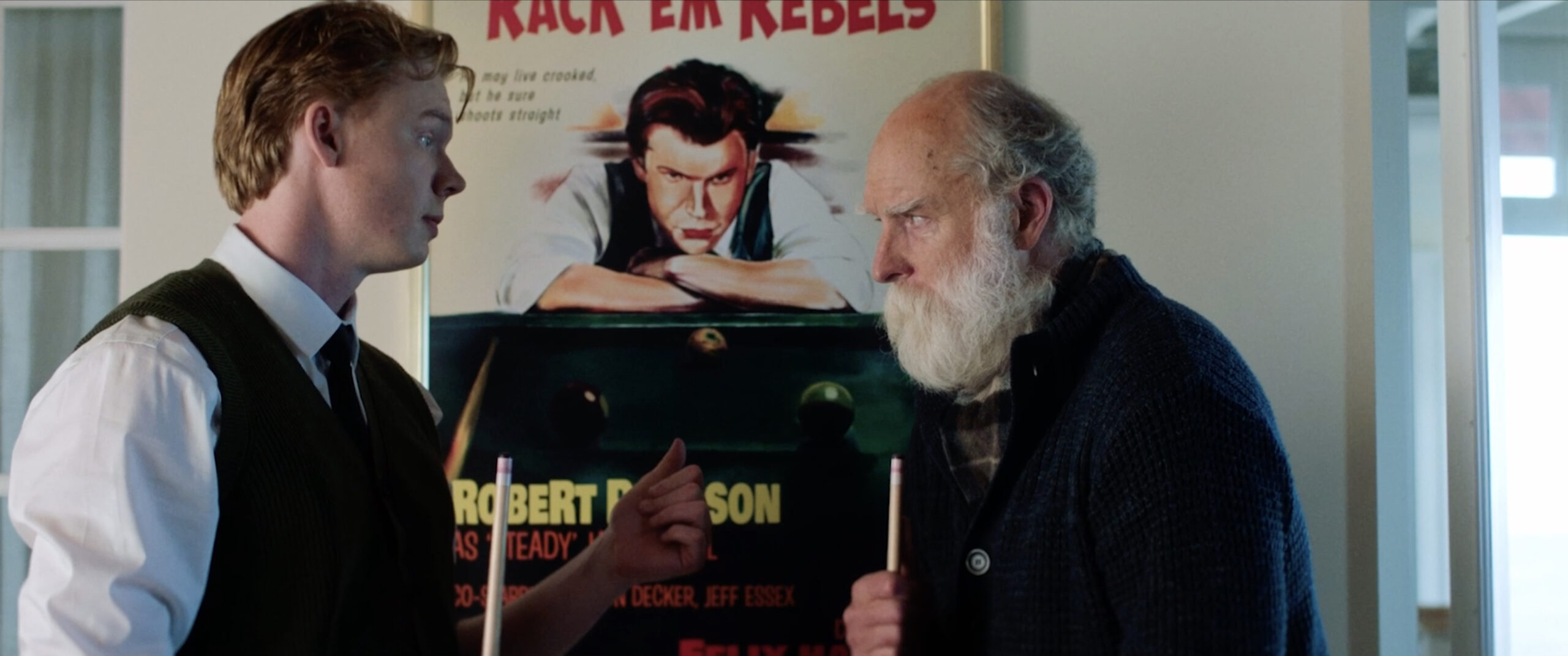
Some performances do not rely on grand speeches or dramatic transformation to leave an impact. Instead, they unfold slowly, revealing emotion through silence, restraint, and deeply human vulnerability. That appears to be exactly what acclaimed stage actor Hugo Armstrong achieves in Watching Mr. Pearson, an emotionally resonant independent drama now arriving in Los Angeles for special theatrical screenings beginning May 30.
Long regarded as one of the most respected performers within the Los Angeles theatre community, Armstrong is now earning some of the strongest praise of his career for what many critics and audiences are calling a breakthrough feature film lead performance.
And honestly, the excitement surrounding the film feels understandable.
Watching Mr. Pearson explores cognitive decline, memory loss, caregiving, and emotional connection with a level of honesty and humanity that independent cinema often handles better than larger studio productions. Rather than sensationalizing illness or emotional hardship, the film appears committed to quiet realism and emotional intimacy.
That sincerity seems to be exactly what audiences are responding to.
A Story Rooted in Emotional Truth
The film follows Robert Pearson, a once-celebrated actor now struggling with the painful realities of memory loss and cognitive decline. As his world gradually becomes less stable, the people surrounding him, caregivers, loved ones, and companions, must also navigate the emotional complexity of watching someone slowly disappear while still physically present.
It is an emotionally delicate subject, one that can easily drift into melodrama if handled carelessly.
But according to early critical reactions, Watching Mr. Pearson avoids those traps by grounding itself in emotional authenticity rather than manipulation.
Rotten Tomatoes-approved critic Bill Arceneaux described the film as “One of The Best Films of The Year,” while Michelle Swope of Elements of Madness praised the film’s “truthful, nuanced portrayal of the progression of dementia.”
And honestly, what makes the project especially compelling is that the film reportedly never loses sight of humanity inside the illness itself.
The story is not simply about decline.
It is about dignity.
Memory.
Identity.
Connection.
And the emotional fragility of watching someone you love slowly change.
Hugo Armstrong Brings Years of Stage Experience to the Role
For longtime Los Angeles theatergoers, Hugo Armstrong’s emergence as a breakout film lead probably feels overdue.
Armstrong has spent years building a remarkable reputation onstage through productions with companies including Rogue Machine Theatre, Pasadena Playhouse, Geffen Playhouse, and Center Theatre Group.
His recent Los Angeles Drama Critics Circle Awards win for Evanston Salt Costs Climbing only further solidified his standing as one of the city’s most emotionally powerful stage performers.
That theatrical background appears to bring extraordinary emotional precision to Watching Mr. Pearson.
Stage actors often develop a unique ability to communicate emotional depth through subtle behavioral shifts rather than cinematic exaggeration, and Armstrong’s performance reportedly embodies exactly that restraint.
Rather than “performing” illness theatrically, he seems to inhabit it quietly.
And honestly, those are often the performances audiences remember most deeply.
The Film Has Resonated Far Beyond Traditional Film Audiences
One of the most fascinating aspects surrounding Watching Mr. Pearson is how strongly it has connected with audiences outside conventional indie film circles.
According to the release information, caregiving communities, nursing professionals, senior organizations, and faith-based audiences have all responded emotionally to the film during screenings across the country.
That kind of response says a great deal about the film’s emotional accessibility.
Too often, movies exploring dementia or cognitive decline focus heavily on tragedy while overlooking the everyday emotional realities surrounding caregiving itself. Watching Mr. Pearson appears to approach the topic with empathy rather than sentimentality.
The post-screening discussions reportedly becoming emotional community conversations also suggests the film is functioning as more than entertainment alone.
It is becoming a shared emotional experience for audiences personally connected to memory-related illness.
A Grassroots Independent Film Finding Genuine Momentum
Another reason the film feels especially noteworthy is its unconventional release strategy.
Rather than relying purely on traditional marketing, Watching Mr. Pearson continues building momentum through filmmaker appearances, community outreach, Q&A screenings, and conversation-driven theatrical engagements.
That grassroots approach feels increasingly rare and refreshing within modern film distribution.
Independent cinema often survives because of emotional word-of-mouth rather than massive promotional campaigns, and this project appears to be building exactly that kind of organic audience connection.
Film schools, theater programs, and media studies departments have reportedly also embraced the project as an example of innovative community-centered distribution.
And honestly, in an entertainment industry increasingly dominated by streaming algorithms and franchise releases, films like this remind audiences why theatrical experiences still matter, especially when stories are designed to provoke reflection and dialogue afterward.
A Strong Supporting Ensemble Elevates the Emotional Weight
Alongside Armstrong, the film features performances from Sam Bullington, Zainab Jah, Luis Rizo, and Dominika Zawada.
Particularly notable is Zawada’s portrayal of a compassionate caregiver, a role that audiences across the country have reportedly connected with very strongly.
That emotional ensemble dynamic appears essential to the film’s success.
Stories about memory loss and aging often become most powerful not through the illness itself, but through the relationships surrounding it. The patience, exhaustion, tenderness, frustration, and love experienced by caregivers frequently become equally important emotional narratives.
Director Dillon Bentlage Approaches the Material with Compassion
Directed by Dillon Bentlage and co-written alongside Simon Kienitz Kincade, the film seems especially committed to emotional honesty over dramatic manipulation.
That tone matters enormously with material this sensitive.
The strongest films about aging and cognitive decline rarely rely on oversized emotional moments. Instead, they often focus on the quieter emotional fractures:
forgotten conversations,
small behavioral shifts,
moments of recognition,
moments of absence.
Watching Mr. Pearson appears deeply aware of that emotional realism.
Why Films Like This Matter
At a time when mainstream entertainment increasingly prioritizes spectacle, speed, and emotional immediacy, smaller independent dramas like Watching Mr. Pearson serve an important purpose.
They create space for patience.
For vulnerability.
For emotional reflection.
And perhaps most importantly, they remind audiences that ordinary human experiences, aging, caregiving, memory, grief, still contain profound cinematic power when approached honestly.
Final Thoughts
What makes Watching Mr. Pearson feel especially moving is that it seems less interested in dramatizing illness than in preserving humanity inside it.
Through Hugo Armstrong’s reportedly extraordinary central performance, the film explores memory loss not as abstraction, but as lived emotional reality affecting families, relationships, and personal identity itself.
And honestly, that emotional sincerity may be why audiences are responding so strongly.
In an era increasingly filled with noise and distraction, films willing to sit quietly with human vulnerability can feel almost radical.
Watching Mr. Pearson sounds like exactly that kind of film.
For more information, visit here.
She’s All Over the Place Podcast