

For most people, liver health barely registers — until something goes wrong. According to Dr. Gareth Morris-Stiff, Chief Medical Officer at The Liver Clinic and a hepato-pancreato-biliary surgeon with 30 years of experience at Cleveland Clinic, that blind spot has a lot to do with how little the pharmaceutical industry has historically offered.
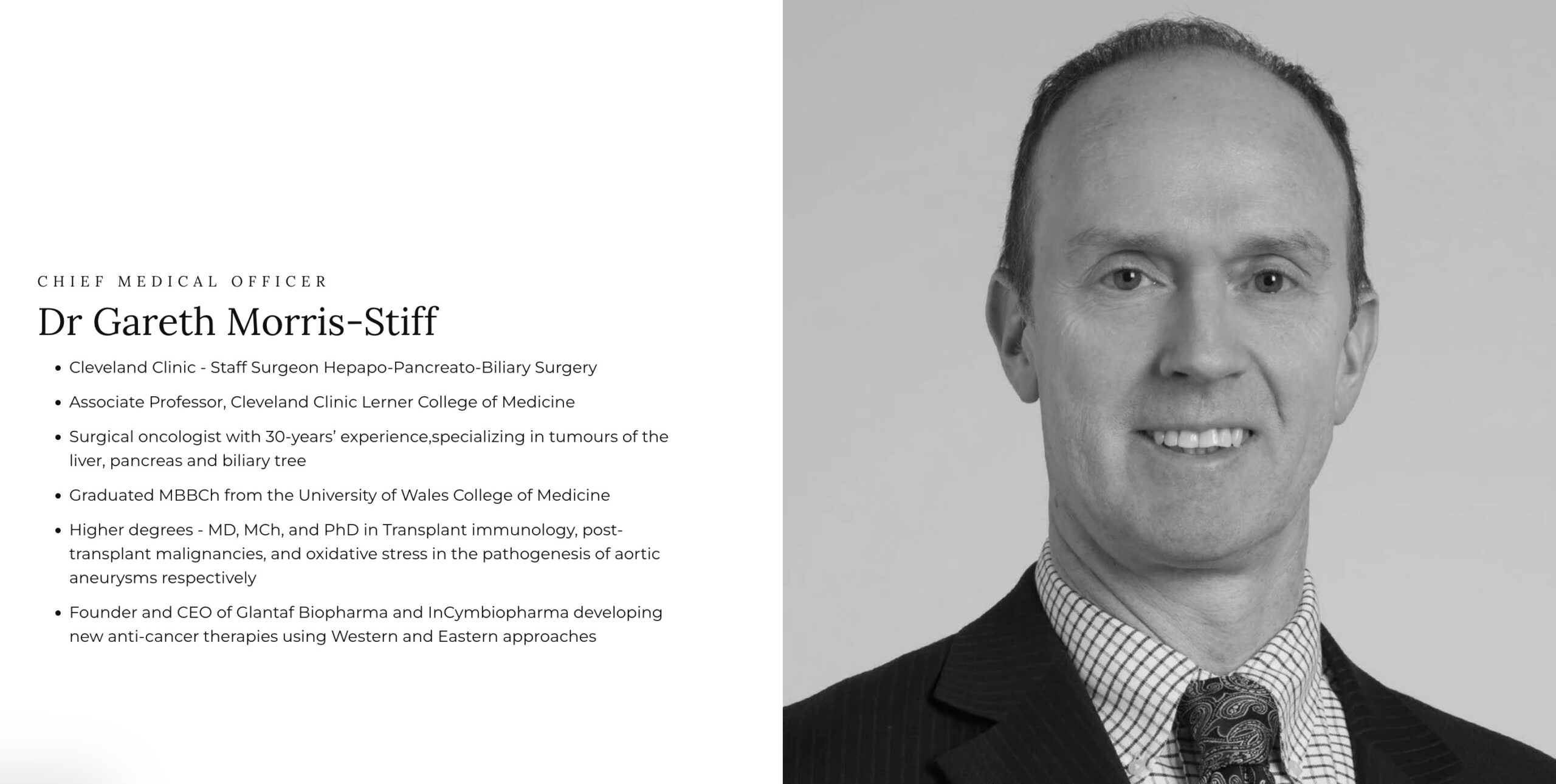
Dr. Morris-Stiff’s own path to that vantage point is unusually broad. A graduate of the University of Wales College of Medicine, he went on to complete an MD, an MCh, and a PhD. As a surgical oncologist, his clinical focus centered on tumors of the liver, pancreas, and biliary tree. He’s the founder and CEO of two biopharma ventures, Glantaf and InCym, and the biotech company NeoStent, and has c-suite roles with 6 other cancer therapeutic initiatives. His approach to anti-cancer therapies combines Western pharmacology with Eastern medical traditions — a blend that, as it turns out, also runs through his approach to liver health more broadly. He is also the founder and CEO of Panoptic Oncology, a holistic concierge service for those afflicted by cancer.
“The public’s lack of interest has been fueled until recently by Big Pharma’s lack of solutions,” he explains. Take the two most common liver conditions: alcoholic liver disease and metabolic dysfunction-associated fatty liver disease (MAFLD, formerly known as NAFLD). “The former has no pharmacological options, and the latter has two, for severe cases, and these have only been approved in the last year or so.” Because of this treatment gap, he says, many doctors and patients alike fail to appreciate the liver’s central role in conditions like type 2 diabetes and high cholesterol — treating the downstream symptoms while the liver itself goes unaddressed.
A Quiet Epidemic
MAFLD is, in Dr. Morris-Stiff’s words, the standout concern of the moment. He cites estimates that put its prevalence among American adults at around 40%, with projections suggesting it could affect one in two adults within a decade. Troublingly, he notes it’s becoming increasingly common in children and adolescents, and has already become the second most common reason for liver transplantation in the United States — placing further strain on an already scarce resource.
Beyond Alcohol: The Misunderstood Liver
Ask most people what causes liver disease, and alcohol is usually the first — and only — answer. Dr. Morris-Stiff wants to broaden that picture. “This has probably led to many members of the public shying away from supporting liver charities,” he says, drawing a parallel to how pancreatitis is often wrongly assumed to be alcohol-related in every case.
Before the rise of MAFLD, hepatitis B and C were the dominant causes of liver failure; hepatitis C, he notes, can now be effectively treated. Other contributors include autoimmune conditions such as autoimmune hepatitis, primary biliary cholangitis, and primary sclerosing cholangitis, as well as drug-induced liver injury, a range of benign liver disorders, and both primary liver cancers (hepatocellular carcinoma, cholangiocarcinoma) and cancers that spread to the liver from elsewhere in the body.
The Warning Signs — and Why They’re Easy to Miss
One of the more sobering points Dr. Morris-Stiff raises is how silent liver disease can be in its early stages. With MAFLD in particular, many people have no symptoms at all until brain fog, lethargy, or unexplained weight gain set in — and even then, those symptoms rarely point clearly to the liver. Most cases are only caught once blood tests turn up abnormal results, or fat is spotted incidentally on an imaging scan done for an unrelated reason.
As disease advances, the signs become more specific: jaundice, fluid retention (ascites and edema), itchy skin, dark urine, and pale stool. In more severe stages, patients may experience bleeding from esophageal varices or hepatic encephalopathy — confusion, disorientation, or even coma — as the liver’s function deteriorates.
Diet, Stress, and the Modern Lifestyle
Dr. Morris-Stiff is direct about the lifestyle factors he considers most damaging to liver health, particularly for MAFLD: ultra-processed foods, excess sugar and refined carbohydrates, and — in his view — seed oils. He’s also candid that dietary advice around meat has often been oversimplified. “Well raised animals that are preferably grass fed are an excellent source of protein, whereas processed meats are an absolute no,” he says, adding that even vegetarian and vegan diets can carry MAFLD risk if they lean heavily on carbohydrates to compensate for reduced protein intake.
Stress, he explains, does more than affect mood — it disrupts cortisol levels, drives metabolic changes like elevated blood glucose, triggers systemic inflammation, and even reduces blood flow to the liver, impairing its ability to detoxify the body. He points to low-cost interventions like breathing exercises and sauna use as accessible ways to manage it. Exercise, meanwhile, plays a dual role: burning excess calories and improving blood flow and oxygenation to the liver, while also addressing sarcopenia (muscle loss), which is common in liver disease.
Can Fatty Liver Be Reversed?
According to Dr. Morris-Stiff, the answer is yes — with caveats. In its earliest stages, MAFLD can be reversed through diet and exercise alone. But as the condition progresses, reversal becomes harder, and adherence to lifestyle changes is, in his experience, difficult to sustain for most patients. This is where he sees a role for antioxidant supplementation in supporting liver function alongside lifestyle change.
Left unaddressed, MAFLD can progress to MASH (metabolic dysfunction-associated steatohepatitis), then to fibrosis, cirrhosis, and eventually liver cancer — in some cases, he notes, cancer can develop earlier in MAFLD than in other liver diseases due to the intensity of inflammation involved. Two FDA-approved drugs now exist for MASH, with more in development, though Dr. Morris-Stiff notes most target later-stage disease rather than prevention.
Screening: Catching Disease Before It Progresses
“Prevention is better than cure” is how Dr. Morris-Stiff sums up his approach to liver health, and screening is central to it. Early-stage MAFLD, he says, can often be reversed through diet and activity changes alone, with antioxidant support aiding more advanced cases. He also flags the importance of screening for genetic conditions like hemochromatosis (a disorder of iron metabolism) in patients with a relevant family history, and routine liver cancer screening for patients who already have cirrhosis.
Detoxes, Supplements, and the Fine Print
Asked about liver detoxes and supplement myths, Dr. Morris-Stiff is measured: “There are no clinical trials to confirm the efficacy of a liver cleanse, and no biomarker to confirm a ‘detox’ has occurred” — though he acknowledges many people report feeling better afterward.
His bigger caution is around interactions. Because the liver metabolizes the vast majority of drugs, herbs, and supplements, anyone on prescription medication should think carefully about what else they’re taking. He suggests checking Ayurvedic or Traditional Chinese Medicine interaction databases for herbs that mainstream pharmacopeias often dismiss as having “inadequate evidence.” An interaction doesn’t necessarily mean a supplement is harmful, he clarifies — often it just means the drug and supplement are processed by the same liver enzyme system, which calls for caution rather than avoidance. He also warns against the “more is better” mentality he sees in the biohacking community, where stacking multiple supplements can place a cumulative strain on the liver.
Inside The Liver Clinic’s Approach
The Liver Clinic’s model centers on screening asymptomatic patients for MAFLD using transient elastography — a technique Dr. Morris-Stiff considers essential, since up to 80% of people with MAFLD have normal liver enzyme levels on standard blood tests. Prevalence, he notes, climbs sharply in specific populations: near-universal in patients who are morbidly obese, and present in an estimated 50–70% of those with diabetes or high cholesterol. He also points to genetic predispositions in populations stretching from Iran to India, who he says may be more sensitive to Western processed diets.
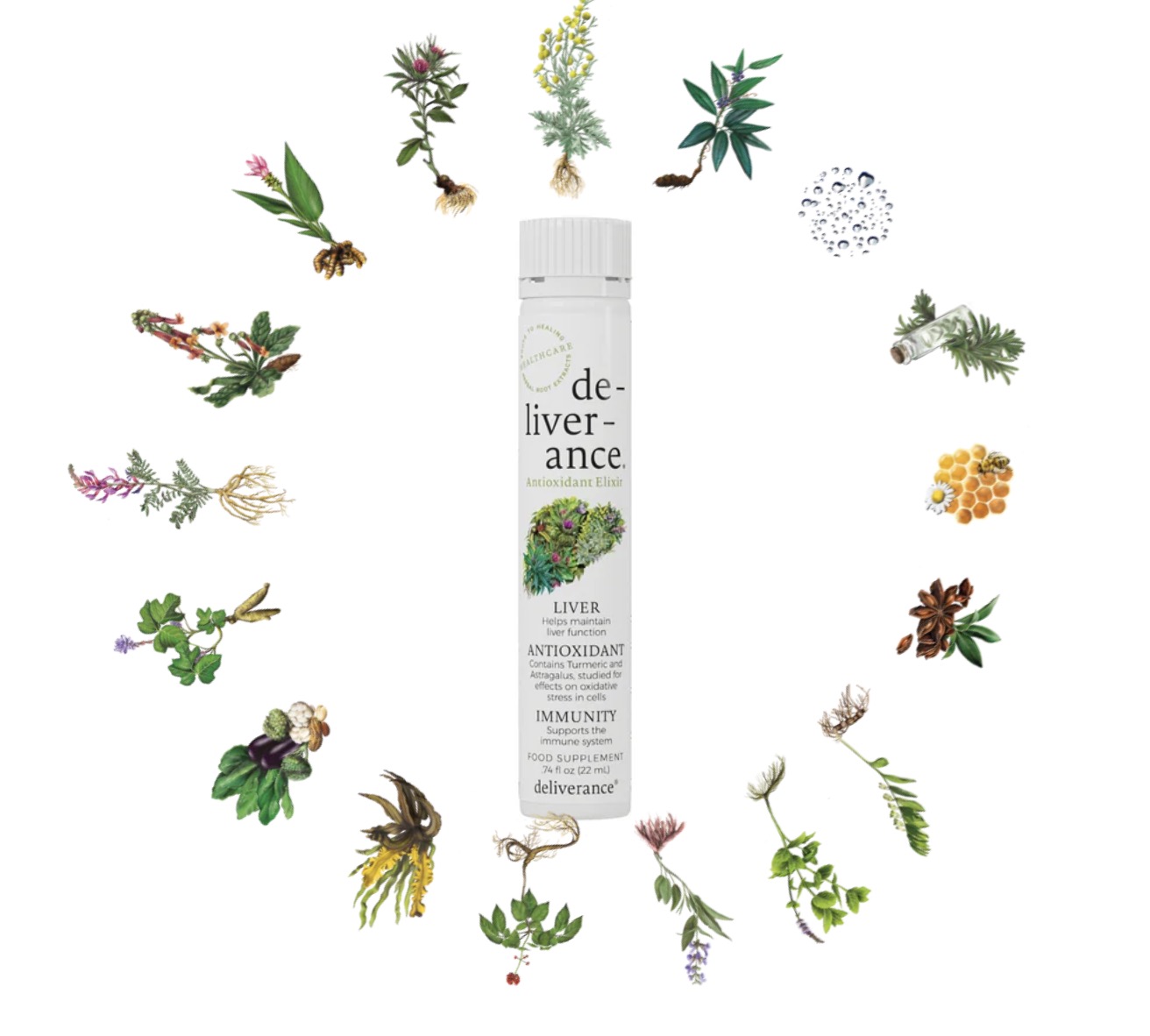
Elastography results — measuring both fat content and fibrosis — are used to tailor treatment and track progress. Part of that treatment, he says, involves supporting the liver with the clinic’s own nutraceutical, de-liver-ance®, taken once or twice daily over three to six months to help the liver metabolize excess fat. Success is tracked through a combination of elastography, symptom improvement, glucose and cholesterol markers, and liver enzymes where relevant. Patients who improve, he says, typically report reduced brain fog, more energy, and better sleep. Some patients are found to have fibrosis without fat — meaning MAFLD isn’t the cause — and these cases are referred on to the clinic’s network of hepatologists.
Inside the Bottle: What de-liver-ance Actually Is
De-liver-ance is sold as a daily liquid shot rather than a capsule, built around a blend of 17 botanicals and extracts — among them Seanol marine extract, turmeric, choline, Panax ginseng, kudzu, poria, astragalus, and rehmannia, alongside a base of purified spring water and raw honey. The formulation draws on a mix of traditional Chinese and Ayurvedic herbal ingredients alongside more conventional nutraceutical compounds like choline and turmeric, reflecting Dr. Morris-Stiff’s broader approach of pairing Western and Eastern medicine.
The recommended use is straightforward: shake, drink, and follow with a glass of water, 22ml once daily for most people, with up to three servings daily as needed. The company recommends a minimum three-month course to allow the body to respond, with many customers continuing for longer as part of an ongoing wellness routine.
It’s worth noting, as the product’s own packaging discloses, that these statements haven’t been evaluated by the FDA and the product isn’t intended to diagnose, treat, cure, or prevent disease — standard language for the supplement category, but a useful reminder that de-liver-ance is positioned as a wellness and liver-support product rather than a medical treatment.
What’s Next in Liver Care
Looking ahead, Dr. Morris-Stiff is watching several developments closely: new pharmacological therapies for fatty liver disease (pending proof of both efficacy and an acceptable safety profile), blood-based diagnostic tests that could enable mass screening, and advanced imaging techniques like Perspectum MRI, which assess liver inflammation and fibrosis alongside the heart, kidneys, and pancreas. He also flags emerging stem cell therapies for fibrosis and cirrhosis, and devices in development to support failing livers as a bridge to transplantation.
Three Steps to Start Today
Asked for the highest-impact changes someone could make right now, Dr. Morris-Stiff keeps it simple: cut ultra-processed food from the diet, reduce (or stop) alcohol consumption, and manage stress — with regular exercise close behind as a fourth priority.
“There is an exciting future for what was once a disease with a bleak prognosis,” he says. But the foundation, in his view, remains the same: earlier screening, wider public and clinical education, and recognizing MAFLD as the common underlying thread linking obesity, type 2 diabetes, and liver disease — long before symptoms ever appear.
For more information click here.
Dr. Gareth Morris-Stiff is Chief Medical Officer at The Liver Clinic and Founder & Chief Executive Officer of Panoptic Oncology.
Staying active is one of the most powerful ways to protect your liver—if you spend long hours at a desk, learn how to stay fit while working a desk job.