
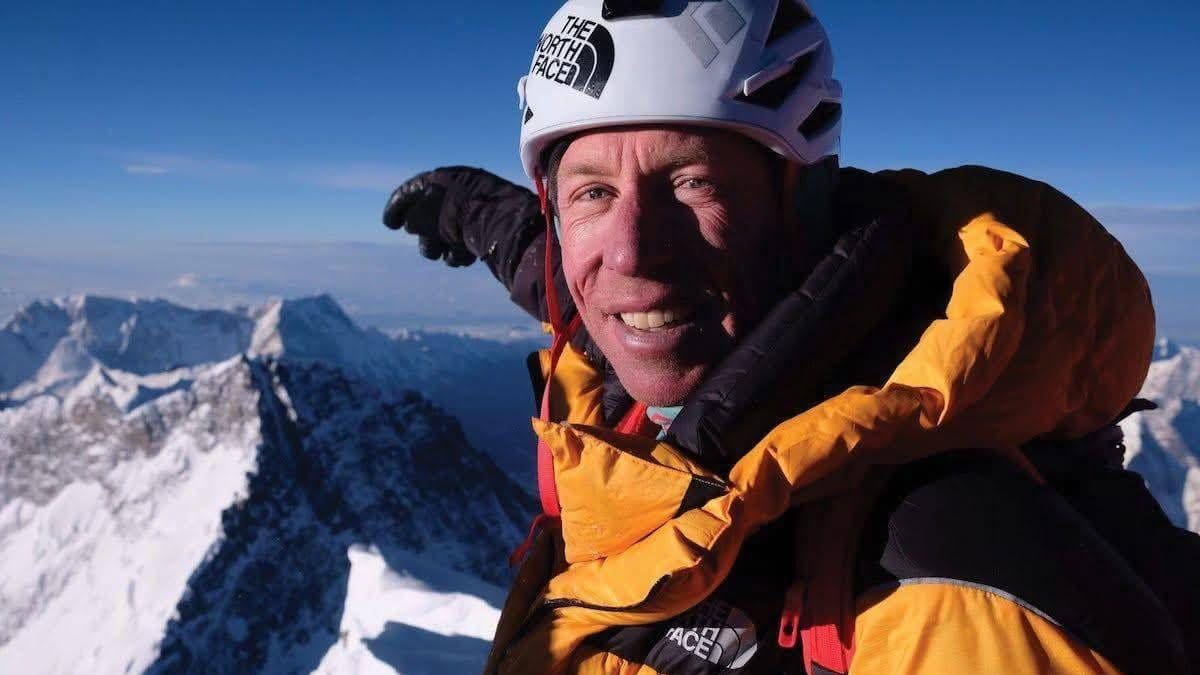
A Mountain Story Unlike Any Other
There are mountains that challenge the body, and then there are mountains that seem to challenge the limits of what human beings believe is possible. Mount Everest has long occupied that second category, but Everest: The Other Side approaches the world’s highest peak through a deeply personal story of love, ambition, risk, and loss.
The new documentary from National Geographic Documentary Films and Little Monster Films follows elite ski mountaineers Jim Morrison and Hilaree Nelson, two extraordinary athletes whose relationship developed alongside their pursuit of increasingly demanding challenges in the mountains. Their shared dream would eventually take them toward one of Everest’s most difficult objectives: climbing the direct North Face and attempting to ski its route down.
Directed by Oscar-winning filmmakers Elizabeth Chai Vasarhelyi and Jimmy Chin, the documentary places an intensely human relationship inside one of the most unforgiving environments on Earth. The result is not simply an adventure film about reaching a summit. It is a portrait of two people who found love through their shared passion for the mountains and then decided to pursue something that had never been successfully accomplished.

The Dream of the North Face
Thousands of climbers have reached the summit of Everest through Nepal’s southeast ridge, but the direct North Face represents an entirely different level of difficulty. For Morrison and Nelson, reaching the top by this route was only part of the ambition. They wanted to ski down what had become one of the most coveted and dangerous ski lines on the planet.
That objective carries an almost impossible quality. The mountain itself becomes an opponent, but the greater challenge comes from the combination of altitude, exposure, weather, terrain, and the physical and psychological demands of making decisions in an environment where mistakes can have devastating consequences.
For two people already known for extraordinary accomplishments in the mountains, the project was not about proving that they could simply climb Everest. It was about pushing their discipline and partnership into territory that few had even attempted.
When Adventure Becomes Personal
What gives Everest: The Other Side its emotional force is the relationship at its center. Morrison and Nelson did not approach the mountain as strangers or simply as climbing partners. They fell deeply in love while reaching the highest levels of their sport, making their shared ambition inseparable from their relationship.
That connection changes the meaning of the expedition. Every decision carries more than professional consequences because the two people facing the mountain are also deeply connected to one another. Their trust is essential, but so is their understanding of the risks they are accepting.
The film consequently moves beyond the familiar language of extreme adventure. It explores why people voluntarily place themselves in environments where survival can depend on preparation, instinct, timing, and sometimes circumstances entirely beyond their control.
The mountain becomes a place where love and fear exist side by side.

Jimmy Chin and Elizabeth Chai Vasarhelyi Return to Extreme Stories
For directors Elizabeth Chai Vasarhelyi and Jimmy Chin, Everest: The Other Side continues a filmmaking partnership built around extraordinary real-life stories. Their previous work includes the acclaimed documentaries Free Solo and Meru, films that brought audiences into the physical and psychological worlds of elite climbers.
Their experience is particularly valuable for a story like this, where the filmmaking challenge is almost as demanding as the subject itself. Capturing extreme environments requires access, patience, technical skill, and an understanding of when to observe rather than interfere.
With Everest: The Other Side, the filmmakers once again place audiences close to people confronting seemingly impossible physical challenges while maintaining attention on the emotional lives behind those achievements.
The documentary’s scale is matched by its intimacy. Vast mountain landscapes provide the visual spectacle, but Morrison and Nelson’s relationship gives the story its heartbeat.
A TIFF Premiere Filled With Emotion
The film recently screened at the Toronto International Film Festival, where Vasarhelyi, Chin, and Morrison attended the IMAX premiere. Among those attending was multidisciplinary artist and filmmaker Katie Chonacas, who described the experience as “epic” and came away particularly impressed by Morrison’s warmth and humility, even sharing a photograph with the elite ski mountaineer.

For a film centered on such extreme achievement, that human quality feels appropriate. Morrison’s presence at the premiere offered audiences an opportunity to encounter the person behind the extraordinary mountain story, rather than simply the athlete represented on screen.
Critics Respond to a Nail-Biting Adventure
The documentary has already attracted strong critical attention, with reviewers emphasizing both its physical intensity and emotional impact.
TheWrap characterized the film as a “tragic, nail-biting daredevil documentary,” pointing toward the tension that runs through Morrison and Nelson’s pursuit. Time Out, meanwhile, described it as an exhilarating adventure documentary capable of taking viewers’ emotions “into thin air.”
Those reactions point toward the film’s unusual balance. Everest: The Other Side has the ingredients of a large-scale adventure spectacle—extreme altitude, dangerous terrain, technical climbing, and ski mountaineering—but it is also built around the emotional vulnerability of two people who understand exactly what they are risking.
The suspense is therefore not simply about whether someone will reach the top. It is about what the pursuit of the impossible can demand from the people who attempt it.
Designed for the Big Screen
That sense of scale makes the film particularly suited to theatrical and IMAX presentation. The mountain landscapes, exposed faces, and physical enormity of Everest are central to the documentary’s experience, and the filmmakers’ work is designed to immerse viewers in that environment.
Everest: The Other Side opens exclusively in theaters and IMAX worldwide on October 30.
The theatrical release gives audiences an opportunity to experience the expedition at the scale that its subject demands. Everest is not simply a backdrop in the documentary; it is a constant presence, shaping every decision and reminding viewers of the enormous distance between human ambition and the forces of nature.

More Than a Story About Conquering a Mountain
Adventure documentaries can sometimes reduce their subjects to a simple formula: identify an impossible objective, overcome obstacles, and celebrate the achievement. Everest: The Other Side appears interested in something more complicated.
Morrison and Nelson’s story raises questions about why people continue to pursue danger even after achieving extraordinary success. What makes an objective worth risking everything for? How does a shared passion strengthen a relationship, and when can that same passion place everything at stake?
Those questions make the film resonate beyond the world of mountaineering. The Everest expedition becomes a metaphor for the human attraction to the unknown—the desire to reach somewhere few others have reached and experience something that cannot be easily explained to someone who has never stood at the edge of such a challenge.
The Human Story Beneath Everest
At its core, Everest: The Other Side is not really about a mountain. Everest provides the setting, the danger, and the visual grandeur, but the documentary’s emotional center lies with two people who found each other through a shared love of the mountains.
Their story brings together romance and adventure in an unusually intimate way. The same qualities that made Morrison and Nelson extraordinary athletes—ambition, courage, discipline, and a willingness to confront fear—also shaped the relationship that brought them to Everest.
That is what makes the documentary’s journey so compelling. The summit may be the physical destination, but the film is ultimately concerned with everything that happens between two people while chasing a dream that seems almost beyond reach.
When Everest: The Other Side arrives in theaters and IMAX on October 30, audiences will not simply be looking up at the world’s highest mountain. They will be looking into the lives of two people who dared to ask how far love, courage, and human ambition could take them.
For more information visit here.
If you enjoyed this article, please stay connected and follow Katie Chonacas here