
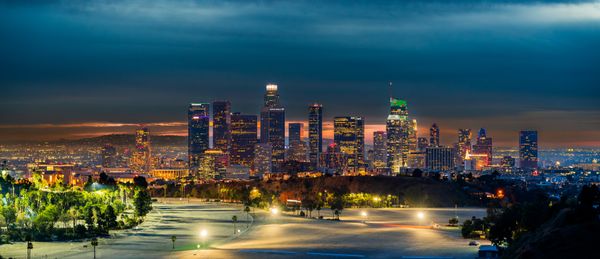
The most powerful people in Los Angeles are the most nervous people I photograph.
I’ve spent 27 years behind the camera in this city, and I’ve photographed both ends of the spectrum: celebrities on the red carpet who live for the lens, and executives in boardrooms who would rather be anywhere else. The celebrities are easy. It’s the CEOs, the founders, the partners at firms whose names are on the buildings, who walk into my frame braced like they’re facing a firing squad. And almost every one of them walks out wondering why they waited so long.
That transformation, from dread to “wait, that’s actually me?”, is the whole job. And after nearly three decades of it, I’ve learned that an executive portrait has almost nothing to do with photography and almost everything to do with power.
The red carpet and the boardroom are the same stage
People assume my two worlds are opposites. On one side, the controlled chaos of the red carpet, flashbulbs, publicists, the 2018 Grammys with my good friend Vaja, sessions with artists like Lady Gaga long before the fame fully landed. On the other, a quiet conference room at 7 a.m., one executive, one backdrop, coffee going cold on the table.
But the psychology is identical. Everyone I photograph, famous or not, is asking the same silent question: does this picture look like someone who belongs? I’ve written before about my 27 years photographing celebrities in Los Angeles, and the throughline is always the same. Treat famous people like people, and the pictures take care of themselves. The same is true of powerful people. The camera doesn’t care about your title. It cares whether you’re present.
The difference is the stakes. A celebrity’s portrait feeds a public persona. An executive’s portrait feeds a career. That headshot sits on the investor deck, the board announcement, the acquisition press release. It works while they sleep. In a city that runs on image the way LA does, from the red carpet circuit to the corner office, a weak portrait isn’t neutral. It’s a quiet tax on every opportunity.
What the camera sees that the mirror doesn’t
Here’s what 27 years of executive sessions has taught me about the people who run this city.
The busiest people prepare the least, and it shows. The executive who books a session between back-to-back meetings, shows up in the shirt they slept in metaphorically if not literally, and says “just make it quick,” always gets the weakest portrait. Not because of the time. Because they never decided who they wanted to be in the frame. The ones who bring three jackets and a point of view? Different photographs entirely.
Nerves are information, not a problem. The CEO who admits they’re uncomfortable gives me something to work with. We talk, we laugh, the shoulders drop, and somewhere around frame forty the real person shows up. The ones who armor up with a practiced boardroom stare give me a mask, and masks photograph exactly as well as you’d expect.
Everyone has a tell. A founder who touches her necklace when she’s thinking. A partner who does a specific half-smile when he’s about to close. My job is to catch the tell, not erase it. The best executive portraits I’ve made aren’t the most polished ones. They’re the ones where the person’s particular electricity survived the lighting.
The LA image economy
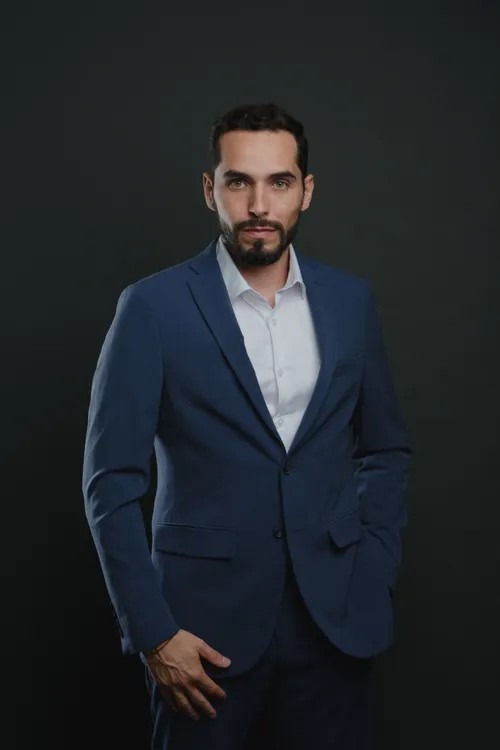
Los Angeles has an image economy the way other cities have a manufacturing economy. It’s the product. Deals get discussed over breakfast at the best luxury hotels in Los Angeles, partnerships form at screenings and galas, and before any of it, someone Googles you. Your portrait arrives before you do, and in this town, it gets judged by people who judge images for a living.
I’ve watched executives lose the room before entering it with a ten-year-old headshot, a cropped wedding photo, a LinkedIn image that screams “I don’t take this seriously.” And I’ve watched the opposite: the portrait so assured that the meeting starts a half-step in their favor. It’s not fair. It’s just true.
The executives who understand this treat their portrait the way they treat their suit or their watch. Not vanity. Signaling. In a city of signals, the portrait is the one that never leaves the room.
The session is the story
People always ask what the secret is. Better lights? A sharper lens? After 27 years, I can tell you the gear is the least interesting part.
The secret is the first five minutes. That’s when I decide whether this will be a transaction or a portrait. A transaction is efficient and forgettable. A portrait requires the person to drop the performance, and nobody drops a performance for a stranger with a light meter. So those five minutes are mine to earn it: a real conversation, a genuine laugh, proof that I’m paying attention to the human being, not the title.
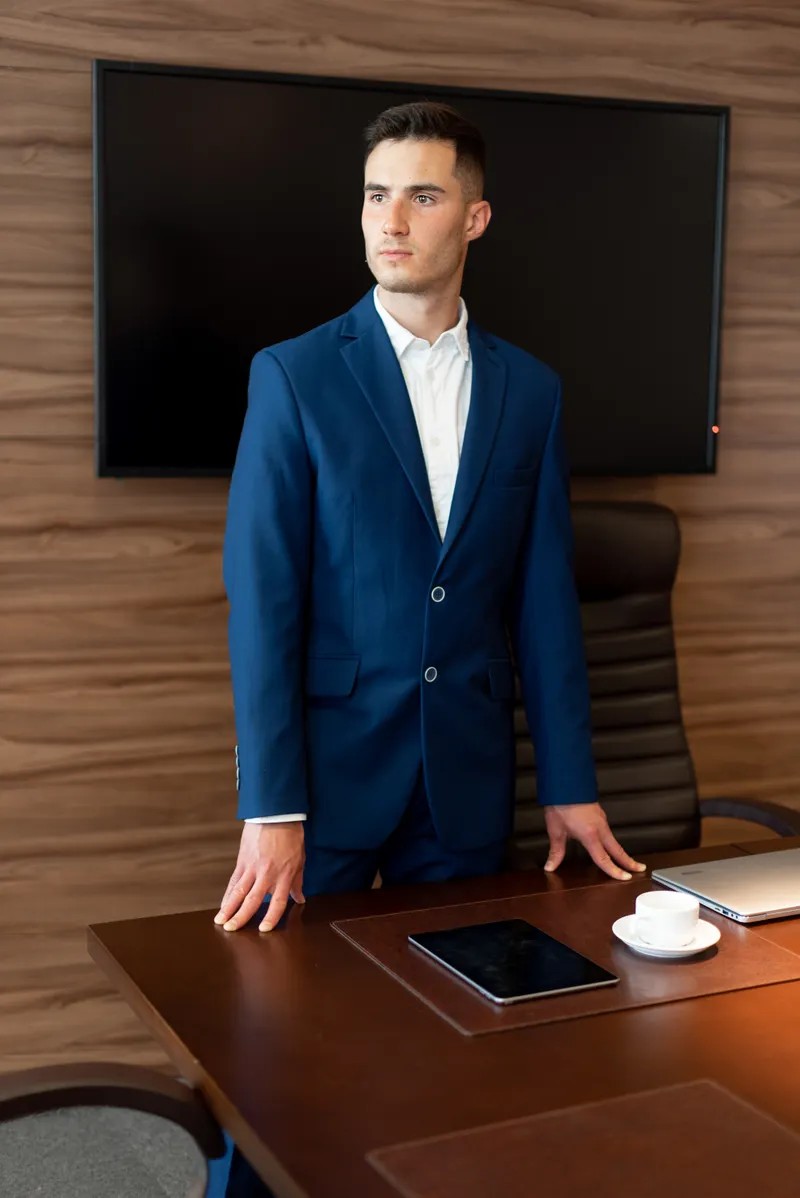
Then the technical stuff does its quiet work. The chin forward, the shoulder angle, the light that carves out the jawline. But none of it matters without the five minutes first. I’ve seen photographers with twice my equipment produce half the portrait because they skipped the human part and went straight to the settings.
If you’re booking an executive session and want the practical side, the costs, the wardrobe rules, the studio-versus-office decision, I put together the full guide on my photography site: Executive Headshots in Los Angeles: The Complete Guide. This is the other half of the story. The part the price list doesn’t cover.
The portrait outlives the moment
Here’s the thing nobody tells you when you sit down in front of the backdrop. That photograph will outlive the version of you that’s sitting there. It’ll be on the company site after the rebrand, in the keynote deck after the promotion, in the announcement when the next chapter starts. Years from now, someone will look at it and decide, in a fraction of a second, who you were.
Twenty-seven years in, that’s what keeps me lifting the camera. Not the lighting ratios. The fact that for one fraction of a second, I get to decide how the future remembers the present. And the people who understand that, the ones who walk in nervous and walk out standing taller, they don’t just get a better headshot. They get a reminder of who they actually are.
In Los Angeles, that’s the most valuable portrait of all.
