
The question comes up on every cruise forum: is Regent Seven Seas worth the premium over Silversea, Seabourn, or a luxury hotel stay? Regent positions itself as the most all-inclusive cruise line at sea. Unlimited shore excursions, specialty dining, premium drinks, gratuities, WiFi, and valet laundry are all baked into the fare. But the fares run meaningfully higher than its direct rivals, and a few very experienced Regent sailors have publicly questioned whether the service still matches the price. Here is an honest breakdown of what the premium actually buys, where the fine print hides, and who should pay it.
What the Premium Buys You: The Inclusions Math
Start with the math, because this is where Regent makes its strongest case. On a typical 7-night voyage, the fare covers unlimited shore excursions, all dining including specialty restaurants, unlimited beverages (fine wines, spirits, specialty coffees), pre-paid gratuities, unlimited WiFi, valet laundry service, a stocked in-suite minibar replenished daily, and 24-hour in-suite dining. Concierge suites and above add a one-night pre-cruise hotel stay, and Penthouse suites and higher add butler service.
On Silversea or Seabourn, excursions are the big variable. A couple doing three or four premium shore excursions per voyage can easily spend $1,500 to $2,000 per person that Regent has already priced in. Add gratuities, specialty dining surcharges on Silversea, and premium drink spending, and the gap between the headline fares narrows fast. For excursion-heavy travelers who take every tour in port, Regent is frequently the cheapest of the three on a total-cost basis. For travelers who prefer to wander ashore on their own and sip the included wines, the math favors a lower headline fare elsewhere.
Cabins: The All-Suite, Nearly All-Balcony Fleet
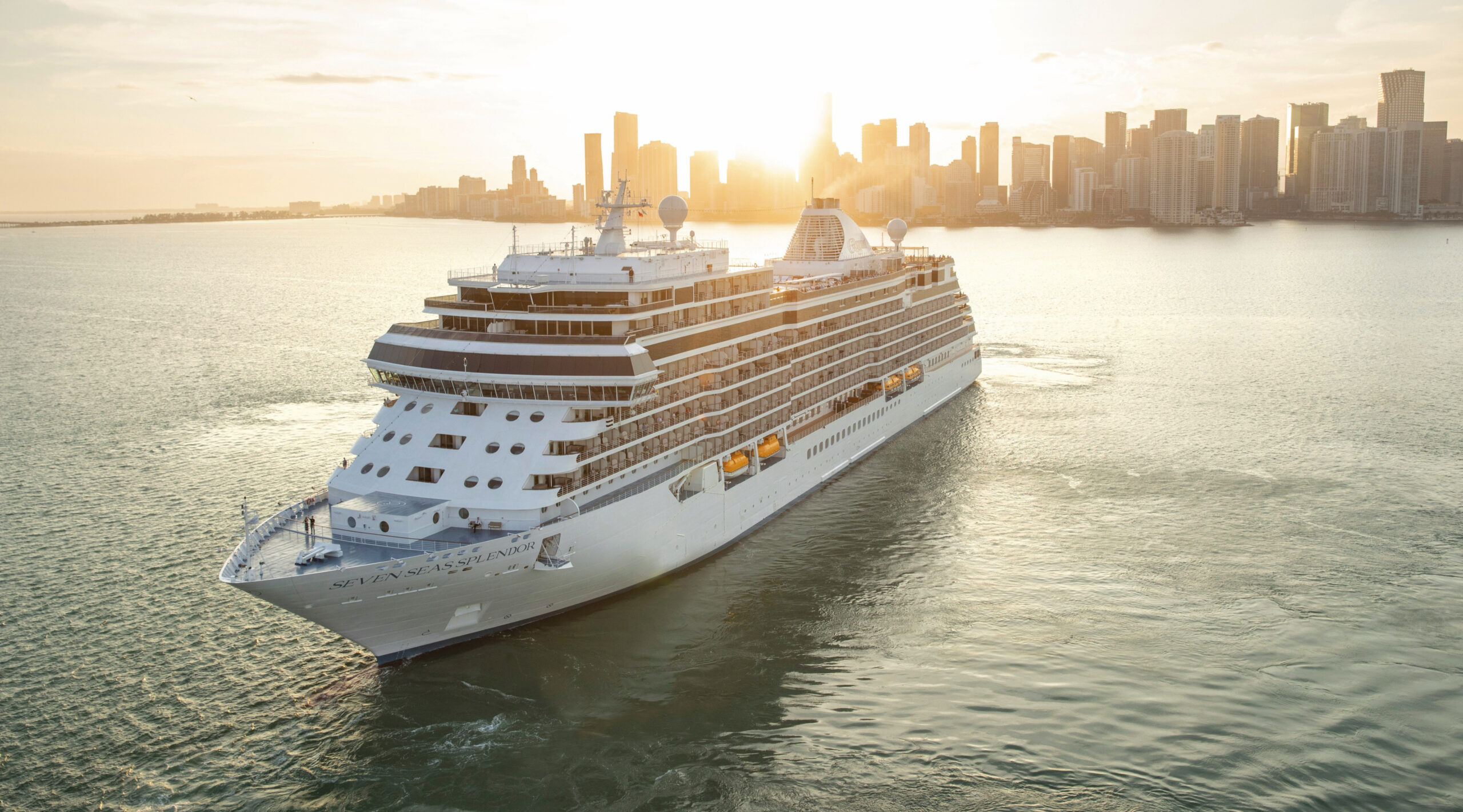
Regent’s fleet is all-suite, and nearly every suite has a private balcony. The newest ships, Seven Seas Splendor and Seven Seas Grandeur, carry about 750 guests with roughly one crew member for every 1.4 passengers, and their space-per-passenger ratios are among the highest at sea. Entry-level Veranda Suites start in the high 300s of square feet, which is generous compared with entry suites on comparable lines.
The headline grabber is the Regent Suite, over 4,400 square feet on Splendor and Grandeur, with two bedrooms, a living room, a private spa with a treatment room, a wraparound balcony, a Steinway grand piano, and a dedicated butler. It is marketed as the largest suite at sea. For most buyers the relevant comparison is the entry suite, not the flagship, and Regent’s entry product is genuinely larger and better appointed than what you get at the same tier on Silversea or Seabourn. If cabin size is your priority, the premium buys real square footage.
Dining: Strong, But the Edge Has Narrowed
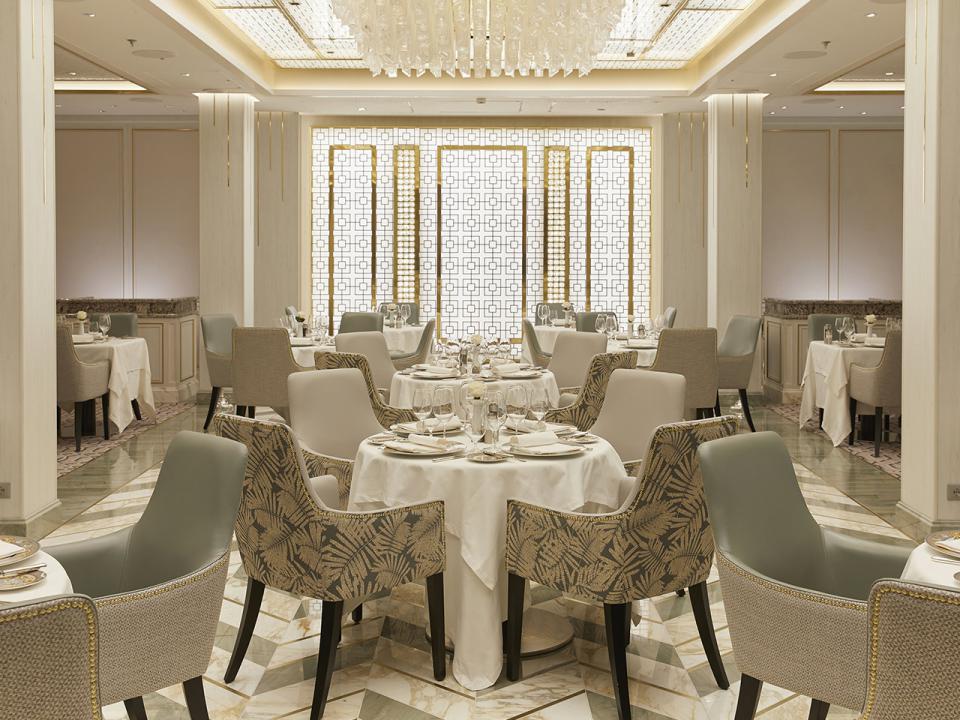
Regent’s dining was long considered a step above the competition, with Compass Rose as the main dining room and specialty venues like Prime 7 (steakhouse), Chartreuse (modern French), Sette Mari at La Veranda (Italian), and Pacific Rim (pan-Asian) all included with no surcharges. That remains the case, and the “no upcharge anywhere” dining room is a real differentiator against Silversea, where La Dame and Kaiseki carry cover charges.
But this is where the honest caveats live. Longtime Regent loyalists, including one widely quoted sailor with over 250 days aboard, have reported that service consistency and food quality have slipped since the Norwegian Cruise Line Holdings acquisition. Specialty restaurant reservations on the newest, largest ships can be competitive, which undercuts the “everything included” promise if you cannot get a table at Prime 7 on the night you want it. The dining is still very good. It is no longer the undisputed best in class, and Silversea’s S.A.L.T. culinary program and Seabourn’s Thomas Keller partnership have closed the gap.
Service: Excellent Ratios, Uneven Delivery
On paper, Regent’s roughly 1:1.4 crew-to-passenger ratio is excellent. In practice, the 250-day sailor’s complaint, echoed by others, is that service quality has become inconsistent: standout crew members alongside dining room teams that feel stretched, especially on full ships. This is the single biggest risk factor in the “worth it” question. You are paying a premium partly for flawless service, and flawless is a standard that invites disappointment.
Seabourn, by contrast, is famous for service that borders on telepathic, with staff who learn your name and your habits within a day. Its ships are smaller (450 to 600 guests) and its service ratios comparable or better. Silversea gives every suite butler service, while Regent reserves butlers for Penthouse suites and above. If white-glove anticipation is the thing you are buying, the premium does not clearly buy more of it at Regent than at Seabourn.
Entertainment and Atmosphere
Regent’s entertainment is polished and traditional: production shows, live music, enrichment lectures, and a strong culinary-arts kitchen program. It skews classic rather than cutting edge, which suits its demographic. Silversea’s Silver Note jazz club and S.A.L.T. programming feel a touch more contemporary, and Seabourn’s entertainment is intimate and low-key. None of these lines competes with big-ship Vegas spectacle, and that is the point. If you want Broadway-scale production shows, you are shopping in the wrong tier entirely.
The Fine Print: What “All-Inclusive” Excludes
Regent’s fare is the most comprehensive in the tier, but it is not everything. Excluded items include spa treatments, cooking classes in the Culinary Arts Kitchen, premium shore excursions (the included tours are the standard ones; the small-group and premium options cost extra), boutique purchases, premium spirits and wines from the Connoisseur Wine Menu, and, unless you book the Ultimate All-Inclusive fare, flights and transfers. Travel insurance is not included and is strongly recommended given the fare levels. The included WiFi is fine for email and browsing but not built for heavy streaming. None of these are deal breakers, but they are the line items that surprise first-timers who took “all-inclusive” literally.
The Verdict: Who Should Pay the Premium
Pay the Regent premium if you take shore excursions in nearly every port, you value a large balcony suite as your floating hotel room, you want one fare with no onboard bill to think about, and you are sailing an itinerary where Regent’s ports and dates suit you. The total-cost math genuinely favors you.
Do not pay the premium if you explore ports independently, you are primarily buying service anticipation (look at Seabourn), you want the most contemporary culinary program (look at Silversea), or you are price-sensitive enough that a lower headline fare with a la carte spending fits your habits better. And whatever you choose, compare total cost, not headline fare. The luxury cruise market rewards the traveler who prices the whole trip, excursions and drinks included, before deciding which line is “expensive.” For a broader look at where luxury travel spending is heading, see our luxury travel statistics roundup, and if you are weighing a cruise against a top-tier land stay, our guide to the best luxury hotels in Los Angeles shows what the same budget buys on shore.
