
Is It Cheaper to Book a Hotel Directly or Through a Third Party?
Booking directly with the hotel is usually the best move, but it is not always the cheapest. When I priced three real Los Angeles hotels across direct, Expedia, and third-party sites in October 2026, a third-party quote undercut the hotel's own direct rate every single time. The real answer is to compare all three channels before every booking.
I book hotels constantly. Twenty-seven years as a celebrity photographer means I am on the road for shoots most months, and the booking question comes up on nearly every trip. Hotels spend millions steering you to their own websites, and the deal sites spend millions stopping them. Both sides claim the lowest price, so I checked the numbers myself.
What Do Direct, Third Party, and Metasearch Actually Mean?
Booking direct means reserving on the hotel's own website, through its app, by phone with its reservations team, or with its loyalty program. Your money goes to the hotel (minus a small credit card processing fee), and your reservation lives in the hotel's own system.
Third party usually means an online travel agency (OTA) like Expedia, Booking.com, Hotels.com, Priceline, or Agoda. You book on their site, and the hotel pays them a commission for the sale. There is also a second flavor: opaque sites like Hotwire and Priceline Express, which sell you a room without naming the hotel until you pay, and package sites that bundle flight plus hotel.
Metasearch is the layer most people confuse with booking sites. Google Hotels, Kayak, Trivago, and Momondo do not sell you the room. They scan direct and third-party prices and show you the spread, then hand you off to whoever is cheapest. They are comparison tools, not sellers, and that distinction matters when something goes wrong with your reservation.
Why Do Hotels Care So Much Where You Book?
Follow the money. When you book through a major OTA, the hotel pays a commission that is far bigger than most travelers realize.
Booking.com's commission runs 10 to 25 percent, with a headline rate around 15 percent, and Expedia's runs 15 to 25 percent, with the effective cost reaching about 30 percent once visibility programs are stacked on. Hotels that join preferred-partner or Genius-style programs pay even more. A direct booking, by contrast, costs the hotel roughly 2 to 4.5 percent in payment processing and website costs. That is why every big chain now runs a best-rate guarantee and dangles member-only rates: every reservation that moves from an OTA to the hotel's own site drops something like 15 to 20 percent straight back to the hotel's bottom line.
The scale is enormous. Skift Research found that in 2024, OTAs held a slight edge over hotel websites in total gross bookings, $266 billion to $262 billion, but Skift forecasts direct digital channels could overtake OTAs by 2030. Hotels are building for that future now, with better booking tools and more aggressive direct perks.
There is a cancellation angle too. Industry data compiled across 90 million bookings in more than 180 countries found OTA cancellation rates hit 21.8 percent in 2025, versus 10.6 percent for direct bookings. And an analysis of 125 million reservations across 44,500 hotels found direct bookings averaged 66 percent higher value than OTA bookings, because the OTA checkout flow is engineered to surface the cheapest available room.
So when a hotel begs you to book direct, it is not doing you a favor out of kindness. It is protecting its margin. But the hotel's incentive and your incentive overlap more often than the deal sites want you to believe. Not always, though, which is exactly why I ran the numbers.
I Priced 3 LA Hotels Across Direct, Expedia, and Third-Party Sites. Here Is What the Receipts Say.
This is the part nobody else has: real published rates I pulled myself during the week of October 19 to 23, 2026, for three real Los Angeles hotels, across the hotel's own site, Expedia, and a third-party seller. One honest caveat: these are the lowest advertised quotes each channel was showing when I checked, and each quote carries its own stay date, because published rate crawls refresh on different schedules. Treat this as a snapshot of what each channel was advertising that week, not a same-night laboratory test. Every number below is real, dated, and sourced.
The quotable summary: when I pulled the lowest advertised rates for three Los Angeles hotels during the week of October 19 to 23, 2026, a third-party site undercut the hotel's own direct rate on every single property.
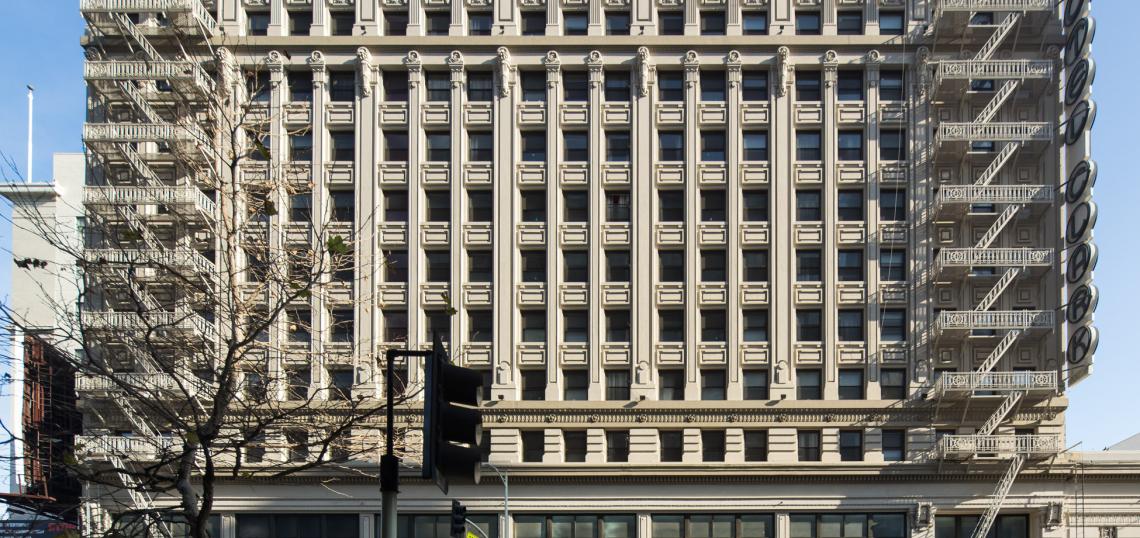
Hotel Figueroa, Unbound Collection by Hyatt (Downtown LA)
The 1926 Spanish Colonial landmark at 939 S Figueroa Street, now in Hyatt's Unbound Collection, with 268 rooms.
- Direct (hyatt.com official booking page): Member Rate $308 average per night, including fees before taxes, 1 Queen Bed, stay October 19 to 20, 2026. The fee-free rate was $310. Valet parking runs $68.04 per day, per Expedia's property listing.
- Expedia (expedia.co.uk): from £135 including taxes and fees, 1-night stay for 2 adults on November 22, 2026, surfaced October 23, 2026.
- Third party (pilotplans.com): $298.01 including taxes and fees, 1-night stay, 1 queen bed, October 25 to 26, 2026, non-refundable, room only.
Takeaway: the third-party quote came in about $10 under Hyatt's member rate. Kayak's page for the property was showing a latest starting price of $95 per night, which tells you how wide the spread on a single hotel can get across sellers.
InterContinental Los Angeles Downtown (IHG)
The Wilshire Grand tower property at 900 Wilshire Boulevard, 890 rooms.
- Direct (ihg.com official site): from $458 per night, including taxes and fees but excluding local taxes ($411 room plus $47 fees), surfaced October 21, 2026. IHG's property page advertises a Best Price Guarantee when you book direct.
- Expedia (expedia.com): from $341 including taxes and fees, 1-night stay for 2 adults on November 8, 2026, surfaced October 22, 2026. Valet parking is $71.50 per day.
- Third party (momondo.com): deals from $219 per night as the cheapest rate, October 28 to 29, 2026, 2 guests, 1 room, surfaced October 19, 2026.
Takeaway: this was the biggest spread I found. The metasearch cheapest rate was less than half the IHG direct from-price. Different dates, yes, but a $239 gap is not a rounding error.
Hotel Indigo Los Angeles Downtown (IHG)
The boutique IHG property at 899 Francisco Street, a block from the Financial District.
- Direct (ihg.com official site): from $261 per night, including taxes and fees but excluding local taxes ($218 room plus $43 fees), surfaced October 21, 2026.
- Expedia (expedia.com): $225 per night, $261 total with taxes and fees, from an earlier published listing, and $276 per night, $321 total, on a separate listing. The nightly figure moves with the date, but the fee load is consistent.
- The fee warning: Expedia's property details list a $35.06 per night destination fee plus $61.71 per day valet parking. Those charges apply no matter which channel you book through, and they are the reason a $225 nightly rate never stays $225.
Takeaway: even at a mid-tier boutique property, the third-party nightly number beat the direct from-price, but the mandatory fees narrow the real gap fast.
When Is Booking Direct Actually Cheaper?
The deal sites love the snapshot above, but sticker price is not the whole game. Here is when going direct wins in real money.
Member rates are real discounts. Hyatt's member rate at Hotel Figueroa was $308 against a $310 fee-free standard rate, and across the big chains, signing into a free loyalty account typically knocks 5 to 15 percent off the standard rate.
Best rate guarantees have teeth. IHG advertises a Best Price Guarantee when you book direct at the InterContinental, and Marriott, Hilton, and Hyatt run equivalent programs. If you find a lower public rate within 24 hours of booking direct, they will match it and usually throw in extra credit or points. Almost nobody files the claim, which is exactly why the programs are so generous.
Perks have cash value. Direct bookers get flexible cancellation and room preferences honored first, while OTA reservations are deprioritized for upgrades and early check-in at many properties. If an upgrade is worth $40 a night to you and the direct rate is $10 higher, direct is cheaper.
Loyalty points only accrue on direct bookings. Book a $300 night through Expedia and you earn Expedia points. Book it direct and you earn hotel points plus elite night credit toward status. It is also worth checking how loyalty math works in adjacent travel spending, like whether cruise loyalty programs actually pay off, before assuming points are always the answer.
Hotels match to avoid the commission. The hotel keeps roughly 15 to 20 percent more of your money on a direct booking, so front desks have real authority to match a third-party price. The call takes three minutes.
When Does a Third Party Actually Win?
Direct does not always win, as my own numbers show. Here is when the deal sites earn their cut.
Opaque and flash sales. Hotwire's hidden deals and Priceline Express routinely run 30 to 40 percent under published rates because the hotel is dumping distressed inventory without advertising the discount. You do not pick the hotel, but if you know the neighborhood and the star level, the savings are real.
Package and mobile-only rates. Expedia and Booking.com both run app-only and Genius-tier discounts, typically 10 percent or more, that never appear on the hotel's own site.
Weak-demand nights at luxury flagships. My InterContinental finding is the textbook case: a $219 metasearch rate against a $458 direct from-price. Big towers would rather fill a room at a discount through a third party than leave it empty, and they let the OTAs carry the discount so their own site keeps its premium positioning.
Comparison leverage. Even when you end up booking direct, the third-party price is your negotiating ammunition. Screenshot the $298 rate, call the hotel, and ask them to match it. This ties into the broader question I have covered before of how advisor rates stack up, including whether Virtuoso advisor rates beat booking direct, since advisors are yet another channel with their own private pricing.
What Are the Hidden Costs Nobody Puts in the Comparison?
The nightly rate is the headline, but the total is the story. These are the charges that decide the real winner, and they hit every channel.
Resort and destination fees. Hotel Indigo Downtown LA charges a $35.06 per night destination fee. These are mandatory, they are rarely in the advertised rate, and they apply whether you book direct or through Expedia. Always scroll to the total before comparing.
Parking. Downtown LA parking is brutal: $68.04 per day valet at Hotel Figueroa, $71.50 at the InterContinental, $61.71 at Hotel Indigo. Two nights of valet can exceed the nightly rate difference between channels.
Taxes. LA's hotel taxes stack fast, which is why I quoted totals with taxes and fees wherever the channel showed them. A $225 rate that becomes $261 at checkout is a 16 percent swing.
Cancellation terms. The cheapest third-party rates are usually non-refundable, like the $298.01 pilotplans quote at Hotel Figueroa. A direct flexible rate that costs $20 more but lets you cancel up to the day of arrival is cheaper the moment your plans change. With OTA cancellation rates running at 21.8 percent versus 10.6 percent for direct bookings, flexibility is not theoretical.
Who fixes it when things break. If your flight cancels and you booked direct, the hotel rebooks you. If you booked through a third party, the hotel tells you to call the third party, and the third party tells you to call the hotel. Anyone who has lived through that loop once never books a non-refundable OTA rate again.
How Should You Actually Book? My Playbook.
After 27 years of checking into hotels for shoots, here is the exact sequence I run before every stay.
- Search metasearch first. Google Hotels or Kayak, your dates, and screenshot the spread across direct and third-party sellers. This is your baseline.
- Check the hotel's direct site signed in. Compare the member rate against the cheapest third-party total, not the nightly figure, with taxes and fees included on both sides.
- Read the cancellation terms on both. A $20 savings is not worth a non-refundable rate if your shoot schedule might move. Mine always might.
- Call the hotel with the screenshot. Ask them to match the third-party total. More often than not, they find a way.
- Book the winner, then set a price alert. Rates move. If the price drops and your rate is flexible, rebook at the lower number. Hotels do not penalize you for it.
One more thing I do on every hotel stay: I photograph everything I cover. Lobbies, rooms, pools, the view from the window. Those photos become the record I check against the listing next time. Hotels are also getting smarter about showing you the property before you book, including how hotels use 360 tours to drive direct bookings, which is worth a look when the photos on a deal site feel too good to be true.
Frequently Asked Questions
Is it cheaper to book a hotel directly or through Expedia?
It depends on the hotel and the date. In my October 2026 snapshot of three Los Angeles hotels, third-party sites advertised lower sticker rates than the hotels' own sites on every property. But direct bookings often include member discounts, flexible cancellation, loyalty points, and better upgrade odds, which can make direct cheaper in total value.
Do hotels match third-party prices?
Often, yes. A hotel keeps roughly 15 to 20 percent more of your money on a direct booking, so reservation desks have real authority to match a published third-party rate. Call with a screenshot of the lower price and ask.
Why do hotels want you to book direct?
Commission. Booking.com takes 10 to 25 percent and Expedia takes 15 to 25 percent of the booking value, while a direct booking costs the hotel about 2 to 4.5 percent in processing fees. Hotels also get your data and a lower cancellation rate on direct reservations.
Is Booking.com cheaper than booking direct?
Sometimes on sticker price, especially with Genius-tier discounts of 10 percent or more. But Booking.com rates can carry stricter cancellation terms, and you earn hotel loyalty points and elite credit only on direct bookings. Compare the total with taxes and fees, not the nightly figure.
Do you earn hotel points on Expedia bookings?
No. Third-party bookings earn the OTA's own rewards currency, not hotel loyalty points, and they do not count toward elite status nights. If status or points matter to you, book direct.
