
Black cars look stunning when they are clean and polished, but they also show every tiny scratch, dust particle, and swirl mark. Many beginners accidentally damage their paint during washing or drying because black paint is extremely sensitive to improper detailing techniques. The good news is that with the right process, tools, and patience, you can keep your black car glossy and swirl-free for years.
This beginner guide will walk you through everything you need to know about detailing a black car without creating swirl marks.
Why Black Cars Show Swirl Marks So Easily
Swirl marks are tiny scratches that appear in circular patterns under sunlight or bright lighting. They are usually caused by improper washing, dirty towels, automatic car washes, or harsh polishing methods.
Black paint reflects light differently than lighter colors, making imperfections much more noticeable. Even a small mistake during cleaning can leave visible marks on the surface.
That is why detailing a black car requires careful washing, gentle drying, and proper paint protection.
Essential Tools for Safe Black Car Detailing
Before you begin, gather the correct detailing supplies. Using cheap or rough materials is one of the biggest reasons swirl marks appear.
| Detailing Item | Purpose |
|---|---|
| Microfiber wash mitt | Safely lifts dirt from paint |
| Two buckets with grit guards | Prevents dirt contamination |
| pH-balanced car shampoo | Gentle cleaning without stripping wax |
| Microfiber drying towel | Reduces scratching during drying |
| Foam cannon or foam sprayer | Loosens dirt before contact wash |
| Clay bar kit | Removes bonded contaminants |
| Dual-action polisher | Safe polishing for beginners |
| Soft foam polishing pads | Helps remove light swirls |
| Car wax or ceramic spray | Protects paint finish |
Investing in quality products saves money in the long run because it reduces paint correction costs.
Step 1: Pre-Rinse the Vehicle
Never touch a dry dirty car with a wash mitt. Dust and debris can drag across the paint and create scratches instantly.
Start by rinsing the car thoroughly with water to remove loose dirt. A pressure washer or foam cannon works best because it softens contaminants before contact washing.
Apply a thick layer of foam and allow it to sit for a few minutes. This process helps lift dirt safely away from the paint surface.
Step 2: Use the Two-Bucket Wash Method
The two-bucket method is one of the safest ways to wash a black car.
One bucket contains clean soapy water, while the second bucket contains plain rinse water. After each pass on the paint, rinse the wash mitt before dipping it back into the soap bucket.
This prevents dirt from re-entering the clean water and scratching the paint.
Wash from top to bottom because the lower sections of the car are usually the dirtiest.
Step 3: Wash Gently With Straight-Line Motions
Avoid aggressive circular scrubbing motions. Circular rubbing often creates visible swirl patterns.
Instead, use light pressure and wash in straight lines. Let the shampoo and microfiber mitt do the work rather than pushing hard against the surface.
Clean one panel at a time and rinse frequently.
Step 4: Dry the Car Properly
Improper drying is one of the biggest causes of swirl marks on black paint.
Never use bath towels, old rags, or paper towels. These materials are too rough and can damage the clear coat.
Use a high-quality microfiber drying towel and gently blot or drag it across the surface with minimal pressure.
If possible, use a car dryer or leaf blower to remove water from mirrors, trim, and tight areas without touching the paint.
Step 5: Clay the Paint Surface
Even after washing, the paint may still contain bonded contaminants like tree sap, brake dust, and industrial fallout.
A clay bar removes these hidden contaminants and leaves the paint smooth.
Spray clay lubricant onto the surface and gently glide the clay bar across the paint. If the clay feels rough, contaminants are being removed.
Do not use excessive force during this step.
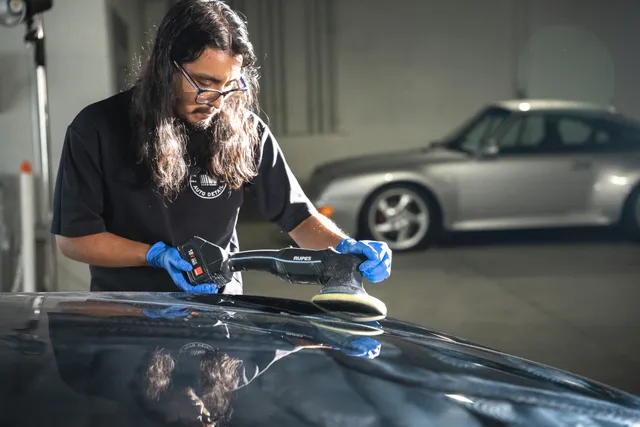
Step 6: Polish Away Light Swirl Marks
If your black car already has swirl marks, polishing can restore clarity and gloss.
A dual-action polisher is the safest machine for beginners because it reduces the risk of burning the paint.
Use a soft foam pad with a light polish and work in small sections. Slow and controlled movements produce the best results.
Avoid over-polishing because excessive correction can thin the clear coat over time.
Step 7: Protect the Paint
After polishing, protect the finish immediately.
You can use:
- Carnauba wax
- Paint sealant
- Ceramic spray coating
- Professional ceramic coating
Protection creates a barrier against dirt, UV rays, and water spots while enhancing gloss.
Ceramic coatings are especially popular for black cars because they make cleaning easier and improve shine dramatically.
Common Mistakes That Cause Swirl Marks
Many beginners unknowingly damage their paint by making simple mistakes.
Washing in Direct Sunlight
Heat causes soap and water to dry too quickly, leaving spots and increasing the chance of scratching.
Using Automatic Car Washes
Brush-style automatic washes are notorious for creating swirl marks because the brushes collect dirt from multiple vehicles.
Reusing Dirty Towels
Dirty microfiber towels can trap debris and scratch paint. Always wash detailing towels separately from household laundry.
Skipping Paint Protection
Unprotected paint is more vulnerable to contamination and scratches.
Interestingly, vehicle maintenance habits matter beyond detailing. Many car enthusiasts who care about paint protection also pay close attention to engine care topics like “How Often Should Synthetic Oil Be Changed in Turbo Engines” because proper maintenance helps preserve overall vehicle value and performance.
Best Washing Frequency for Black Cars
Black cars should ideally be washed every one to two weeks depending on driving conditions.
Frequent gentle washing is safer than allowing heavy dirt buildup. Dirt particles become abrasive when left on the paint for long periods.
If you drive daily in dusty or rainy conditions, rinseless washes between full details can help maintain appearance safely.
Tips for Maintaining a Swirl-Free Finish
Here are some quick habits that help preserve black paint:
- Always use clean microfiber towels
- Replace worn wash mitts regularly
- Avoid touching dirty paint unnecessarily
- Use detailing sprays for light dust removal
- Store towels in sealed containers
- Apply paint protection every few months
- Park in shaded areas when possible
Consistency is the secret to maintaining a flawless black finish.
FAQs
What causes swirl marks on black cars?
Swirl marks are usually caused by improper washing, dirty towels, automatic car washes, or harsh polishing techniques.
Can swirl marks be removed completely?
Light swirl marks can often be removed through polishing. Deep scratches may require professional paint correction.
Is ceramic coating worth it for black cars?
Yes. Ceramic coatings provide excellent protection, improve shine, and make black cars easier to clean.
How often should I polish my black car?
Most cars only need polishing once or twice a year. Over-polishing can damage the clear coat.
Are automatic car washes safe for black paint?
Touchless automatic washes are safer than brush-style systems, but hand washing remains the best option for preventing swirl marks.
Final Thoughts
Detailing a black car without swirl marks is all about using safe techniques, quality products, and patience. The wrong towel or washing method can quickly ruin the appearance of black paint, but careful maintenance keeps the finish deep, glossy, and mirror-like.