
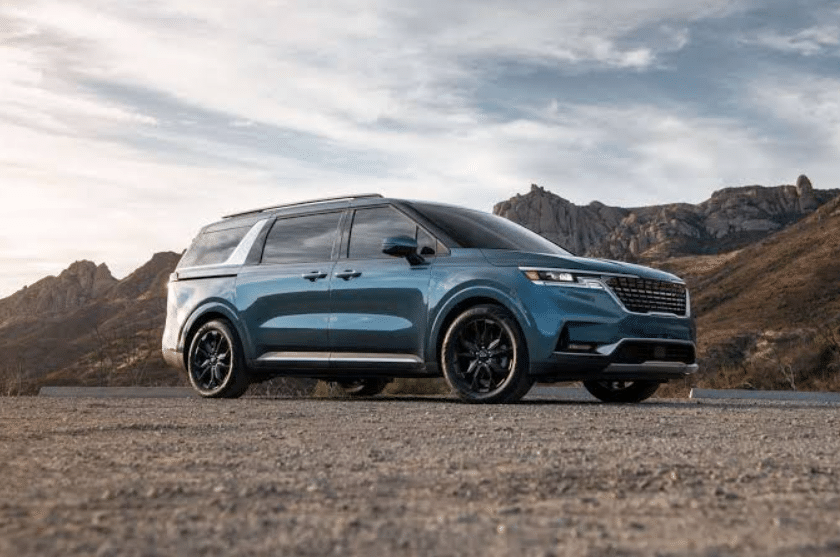
Choosing a family car involves more than finding enough seats and cargo space. For parents and caregivers, safety is often one of the most important considerations. A good family vehicle should provide strong crash protection, useful driver-assistance technology, comfortable seating, and practical features that make everyday driving easier.
The best family cars with good safety ratings include a wide range of sedans, SUVs, and three-row vehicles. Options such as the Honda CR-V, Toyota Camry, Honda Accord, Subaru Forester, Hyundai Tucson, Kia Telluride, Mazda CX-90, Toyota Sienna, and Honda Pilot can suit different family needs.
Safety ratings can vary by model year, trim, equipment, and testing organization, so shoppers should always check the ratings for the exact vehicle they are considering. Current safety testing also places increasing emphasis on pedestrian protection, rear-seat occupant protection, headlights, and crash-avoidance systems.
What Makes a Family Car Safe?
Modern family vehicles can include a wide range of technologies designed to help prevent crashes and protect occupants when collisions occur.
Important features include:
-
Automatic emergency braking
-
Forward collision warning
-
Blind-spot monitoring
-
Lane-departure warning
-
Lane-keeping assistance
-
Rear cross-traffic alert
-
Adaptive cruise control
-
Rearview cameras
-
Parking sensors
-
Multiple airbags
-
Strong crash-test performance
-
Easy-to-use child-seat anchors
Safety technology should complement attentive driving rather than replace it.
Best Family Cars With Good Safety Ratings
| Family Car | Best For | Main Advantage | Potential Drawback |
|---|---|---|---|
| Honda CR-V | Small families | Practicality and safety features | Higher trims can be expensive |
| Toyota Camry | Sedan buyers | Comfort and efficiency | Less cargo flexibility than an SUV |
| Honda Accord | Larger families | Spacious interior | Sedan body limits cargo height |
| Subaru Forester | All-weather driving | Visibility and AWD | Performance is modest |
| Hyundai Tucson | Family value | Features and interior space | Ride prioritizes comfort over sportiness |
| Kia Telluride | Larger families | Three-row practicality | Large exterior dimensions |
| Honda Pilot | Growing families | Flexible interior | Fuel economy is average |
| Mazda CX-90 | Premium family driving | Refined interior | Third-row space varies by configuration |
| Toyota Sienna | Large families | Sliding doors and seating flexibility | Higher purchase prices |
| Hyundai Santa Fe | Modern family SUV | Spacious cabin and technology | Newer designs may cost more |
1. Honda CR-V
The Honda CR-V is a practical choice for families that don’t need three rows.
Its compact-SUV dimensions make it easier to maneuver than a larger family vehicle, while the cabin provides useful passenger and cargo space.
Modern CR-V models offer a range of driver-assistance technologies, and recent versions have performed well in major safety evaluations. The CR-V is also available with hybrid technology, giving families another option for reducing fuel consumption.
Its biggest advantage is versatility. It can handle school runs, grocery shopping, commuting, and weekend trips without being excessively large.
Families with multiple young children should test their car-seat configuration before purchasing.
2. Toyota Camry
The Toyota Camry is a strong option for families that prefer a sedan.
It provides comfortable seating, a relatively spacious rear passenger area, and an efficient powertrain. The sedan design can also make the vehicle easier to maneuver and park compared with a larger SUV.
Recent Camry models have received strong safety recognition in independent testing. Its combination of safety equipment, efficiency, and comfortable highway driving makes it suitable for family commuting.
The main limitation is cargo flexibility. A sedan trunk isn’t as versatile as the rear cargo area of an SUV or minivan.
3. Honda Accord
The Honda Accord is another practical family sedan.
It offers a roomy cabin and comfortable rear seating, making it useful for families who regularly carry adult passengers. The hybrid powertrain available in recent versions can also provide strong fuel economy.
The Accord’s modern safety systems can help with collision avoidance and highway driving.
For families who don’t need the elevated seating position or cargo flexibility of an SUV, the Accord can provide a comfortable alternative.
4. Subaru Forester
The Subaru Forester is designed with practicality and visibility in mind.
Its upright body provides a clear view of the surrounding road, while standard all-wheel drive can be useful for families living in areas that experience snow or heavy rain.
The Forester also provides useful cargo space and comfortable seating.
Recent Forester models have earned strong safety recognition, making the vehicle worth considering for safety-conscious families.
The main trade-off is that the Forester focuses more on practicality than sporty performance.
5. Hyundai Tucson
The Hyundai Tucson combines family-friendly interior space with modern technology.
Its cabin provides useful room for passengers, while the cargo area can handle groceries, strollers, luggage, and other family equipment.
Recent Tucson models have received strong results in safety evaluations, and available driver-assistance features can provide additional support during everyday driving.
Hybrid versions are also available in various markets, which can be attractive to families that want better fuel efficiency.
6. Kia Telluride
Families needing three rows should consider the Kia Telluride.
The Telluride provides enough space for larger families while offering a comfortable and well-equipped cabin. Its second-row configuration can also make it easier to access the third row.
The 2025 Telluride earned an IIHS Top Safety Pick+ award, with good ratings in key crashworthiness tests and pedestrian front-crash prevention.
The Telluride is particularly useful for families who regularly carry several children, teenagers, or adult passengers.
Its larger dimensions can make parking more challenging in crowded urban environments.
7. Honda Pilot
The Honda Pilot is another three-row SUV designed around family practicality.
It provides flexible seating and useful cargo capacity while maintaining a relatively manageable footprint for a three-row vehicle.
The Pilot received an IIHS Top Safety Pick designation for the 2025-26 model years.
For families who need three rows but don’t want to move to a full-size SUV, the Pilot can be a practical middle ground.
8. Mazda CX-90
The Mazda CX-90 is an interesting choice for families who want three rows and a more upscale driving experience.
Its interior has a premium appearance, while the vehicle provides strong highway manners and available electrified powertrain options.
The 2025 CX-90 and CX-90 PHEV earned IIHS Top Safety Pick+ recognition.
Families should test the third row in person, particularly if teenagers or adults will regularly use it.
9. Toyota Sienna
For families with several children, a minivan can be more practical than an SUV.
The Toyota Sienna provides sliding rear doors, flexible seating, and substantial passenger space. Sliding doors can be particularly convenient when installing child seats or getting children into the vehicle in crowded parking lots.
The Sienna’s hybrid powertrain is another advantage for families that drive frequently.
Its main drawback is that buyers who specifically want an SUV-style vehicle may not prefer the minivan design.
10. Hyundai Santa Fe
The Hyundai Santa Fe has become a popular family SUV because of its combination of passenger space, cargo practicality, and modern technology.
Recent versions offer available three-row seating, making the vehicle more flexible for growing families.
The 2025-26 Santa Fe earned IIHS Top Safety Pick+ recognition, subject to the applicable production-date requirements.
Its boxier design also provides useful cargo flexibility.
SUV vs. Minivan for Family Safety
Many families automatically choose an SUV, but a minivan can be an excellent alternative.
Minivans typically provide:
-
Easier third-row access
-
Sliding rear doors
-
Flexible seating
-
Large cargo areas
-
Easy loading for children
-
Comfortable passenger space
SUVs can provide:
-
Higher seating positions
-
Available all-wheel drive
-
More ground clearance
-
Greater variety of body sizes
-
Towing and outdoor capability
Neither body style is automatically the right choice for every family. Focus on the safety performance and features of the specific model.
How Important Are Safety Ratings?
Safety ratings can be a useful tool when comparing family vehicles.
Independent organizations conduct crash tests and evaluate factors such as occupant protection, crash avoidance, headlights, child-seat attachment systems, and pedestrian protection.
However, safety ratings should be interpreted carefully. Testing methods can change from year to year, and a rating for one model year may not apply to an older or newer version.
For example, IIHS’s 2025 Top Safety Pick+ criteria included good ratings in several crash tests as well as acceptable or good headlights and pedestrian front-crash prevention.
Always check the rating for the exact year and configuration you’re purchasing.
Safety Features Families Should Prioritize
A high safety rating is important, but the equipment inside the vehicle matters too.
Families should consider vehicles equipped with:
Automatic Emergency Braking
This system can warn the driver of an impending collision and, depending on the system, apply the brakes automatically.
Blind-Spot Monitoring
Blind-spot monitoring can alert drivers when another vehicle is traveling in an area that may be difficult to see.
Rear Cross-Traffic Alert
This feature can be particularly useful when backing out of parking spaces where children, pedestrians, or approaching vehicles may be difficult to see.
Lane-Keeping Assistance
Lane-keeping systems can provide steering assistance when the vehicle begins to leave its lane unintentionally.
Adaptive Cruise Control
Adaptive cruise control can automatically adjust vehicle speed to maintain a selected following distance.
Choosing a Family Car for Children
Families with young children should look beyond crash-test scores.
Check how easy it is to install your actual child seats. Test the LATCH anchors and make sure the seats can be positioned correctly without interfering with front-seat comfort.
Also consider rear-door opening angles and whether children can safely enter and exit the vehicle.
A spacious second row can be especially valuable for families with multiple car seats.
Final Thoughts
The best family cars with good safety ratings come in many shapes and sizes.
The Honda CR-V, Toyota Camry, Honda Accord, Subaru Forester, and Hyundai Tucson can work well for smaller families. Families needing three rows can consider the Kia Telluride, Honda Pilot, Mazda CX-90, and Hyundai Santa Fe, while the Toyota Sienna provides the additional practicality of a minivan.
Safety ratings are an important starting point, but they shouldn’t be the only consideration. Passenger space, child-seat compatibility, cargo capacity, visibility, fuel economy, reliability, and ownership costs all matter when choosing a family vehicle.
Before buying, check the safety ratings for the exact model year, test your child seats in the vehicle, and take the car for a thorough test drive. A family vehicle should not only perform well in safety testing but also fit naturally into your family’s everyday routine.
FAQs About Safe Family Cars
What is the safest family car?
There isn’t one universally safest family vehicle for every family. Models such as the Kia Telluride, Honda CR-V, Honda Accord, Subaru Forester, Hyundai Tucson, and Mazda CX-90 have earned strong safety recognition in recent testing.
What is the best safe SUV for a family?
The right SUV depends on family size and space requirements. The Honda CR-V and Subaru Forester suit smaller families, while the Kia Telluride and Honda Pilot provide three rows.
Are SUVs safer than sedans?
Not necessarily. Safety depends on the vehicle’s crash performance, size, structure, safety equipment, and driver-assistance technology. Compare specific models rather than assuming one body style is automatically safer.
What safety features should a family car have?
Important features include automatic emergency braking, forward collision warning, blind-spot monitoring, rear cross-traffic alert, lane-keeping assistance, a rearview camera, and strong crash-test performance.
What is the best family car for three children?
A three-row SUV or minivan can provide additional seating flexibility for three children. The Kia Telluride, Honda Pilot, and Toyota Sienna are examples worth considering.
Are minivans safer than SUVs?
Safety depends on the specific model and its performance in independent testing. Families should compare individual vehicles rather than assuming that either an SUV or minivan is automatically safer.
Is the Honda CR-V a good family car?
The CR-V can be a practical family vehicle because it combines useful passenger space, cargo capacity, manageable dimensions, and modern safety features.
Is the Toyota Camry good for families?
The Camry can work well for families that don’t require an SUV. It provides a comfortable cabin and useful rear-seat space, although its trunk is less flexible than an SUV’s cargo area.
What should I check before buying a family car?
Check crash-test ratings for the exact model year, child-seat compatibility, rear-seat space, cargo capacity, visibility, safety technology, insurance costs, and overall ownership expenses.
Do safety ratings change from year to year?
Yes. Testing procedures, vehicle designs, standard equipment, and safety technology can change. Always verify the rating for the specific model year and configuration you intend to purchase.