
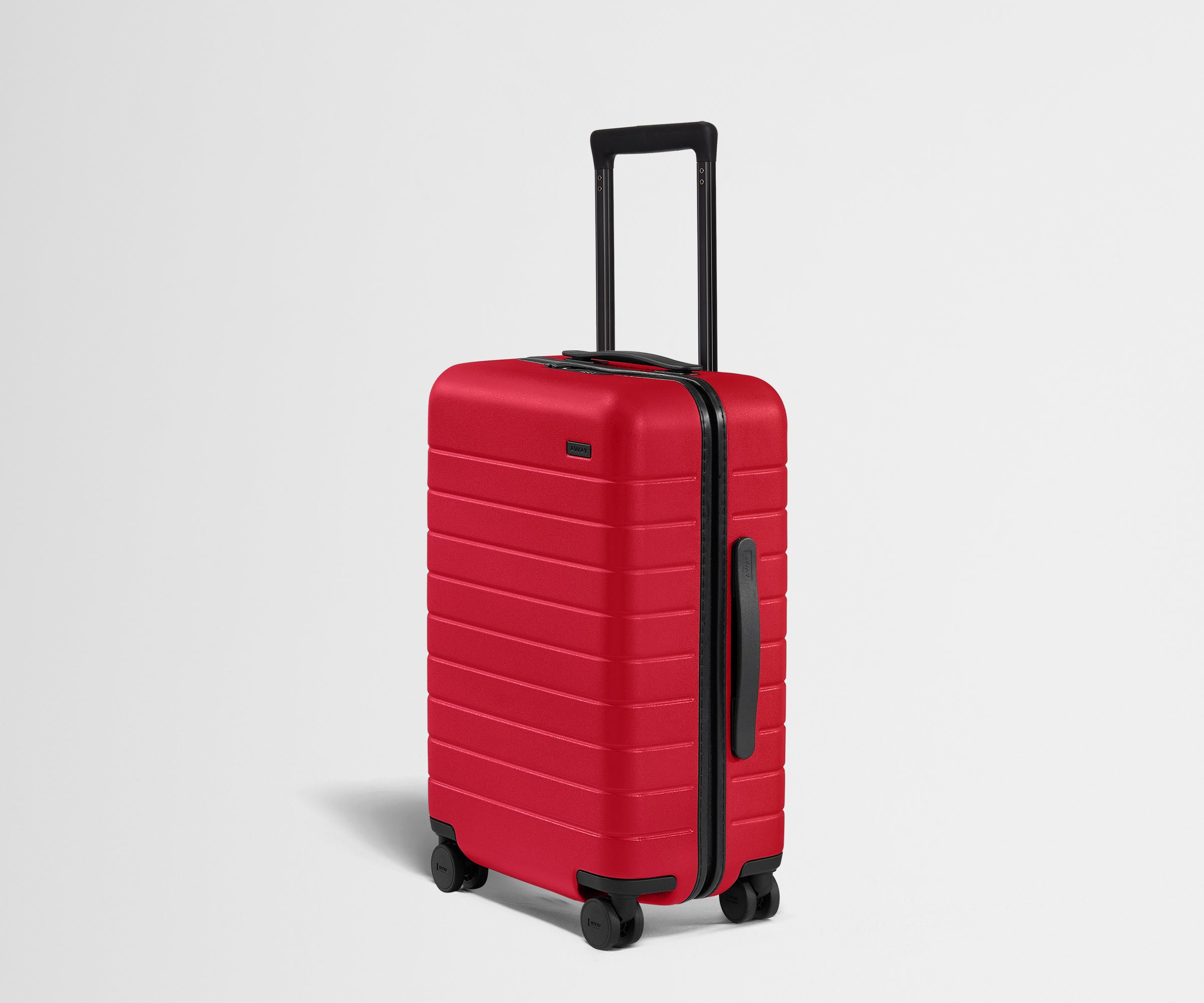
Should You Check a Bag or Go Carry-On Only for a Week?
For a week-long trip, go carry-on only if your trip stays in one climate, your bag fits your airline's sizer, and you can do one load of laundry or rewear two outfits. Check a bag if you need bulky gear, formal clothes, or room for things you plan to bring home.
That answer frustrates people who want one rule, but one rule is exactly what gets travelers into trouble. I have watched passengers at the gate try to compress a bag that was never going to fit the sizer, and I have watched other travelers drag a huge checked suitcase for a four night city stay where they wore half of what they packed. The right choice depends on the trip in front of you, and a week is right on the line where both options are defensible.
How Much Does Checking a Bag Cost on a Week-Long Trip?
In late 2026, the first checked bag on a major US airline costs $45 each way when you prepay online or book under the current fare rules, which means $90 round trip per person for one bag. A second bag adds $55 each way, or $110 round trip. For a couple traveling together with one checked bag each, that is $180 round trip before any overweight or oversize fee, and before the airport counter surcharge some airlines add when you pay at the desk instead of online.
That $90 figure is the number to hold in your head, because it changes the rest of the decision. Carry-on only is not just about skipping the baggage carousel. On a week-long trip it is a $90 saving per person, which buys a nice dinner, a day trip, or a hotel upgrade on a short stay. But $90 is also not a fortune, and it is cheap insurance if checking a bag means you pack properly instead of fighting your suitcase every morning.
The other cost is time, and it runs in both directions. Checking a bag adds the drop off line before security and the wait at the carousel after landing, often 20 to 45 minutes each way on a domestic trip. Carry-on only skips both, and it also removes the risk of a bag missing a tight connection. I have seen travelers make a connection their checked bag did not make, and the first night of their trip turned into a pharmacy run for toiletries and a change of clothes. That said, a carry-on that gets gate checked on a full flight gives you the worst of both worlds: you waited to board with it, and you still wait at the carousel.
What Five Airlines Actually Charge and Allow in 2026?
This is the comparison I compiled for this article from published 2026 baggage fee roundups cross checked against each other in late October 2026. These are published ranges, not live quotes pulled from an airline checkout on the day you read this, and fees change with fare type, route, and booking date. Recheck your airline's baggage page the week you fly. All figures below are domestic economy, one way, per bag, for a standard bag up to 50 pounds and 62 linear inches.
Southwest: carry-on free, up to 24 by 16 by 10 inches, plus a free personal item on every fare, with no published carry-on weight limit. First checked bag $45 and second checked bag $55 for mainland tickets booked or changed on or after April 9, 2026. Choice Extra fares still include two free checked bags. Southwest's carry-on is the most generous of the five, which is why so many Southwest travelers can go carry-on only without trying hard.
Delta: carry-on free, up to 22 by 14 by 9 inches, plus a personal item. First checked bag $45 and second checked bag $55 for tickets purchased on or after April 8, 2026. A third bag jumps to $200. Overweight bags between 51 and 70 pounds add $100 on top of the standard fee.
United: carry-on free, up to 22 by 14 by 9 inches, plus a personal item. First checked bag $45 if prepaid at least 24 hours ahead and $50 otherwise, and second checked bag $55 prepaid or $60 within 24 hours of departure. That $5 prepay saving is small on its own, but it applies each way, so prepaying both directions saves $10 per bag.
American: carry-on free, up to 22 by 14 by 9 inches, plus a personal item. First checked bag $45 online or $50 at the airport, and second checked bag $55 online or $60 at the airport. Basic Economy tickets issued on or after May 18, 2026 cost more, at $50 online or $55 at the airport for the first bag.
Alaska: carry-on free, up to 22 by 14 by 9 inches, plus a personal item. First checked bag $45 and second checked bag $55 in the most recent October 2026 roundups, although some sources published earlier in 2026 still list $40 for the first bag, so treat Alaska's first bag as a $40 to $45 range until you confirm your fare. Co-brand cardholders and elite members commonly get the first bag free, which is true across most of these airlines and is worth checking before you pay anything.
Quotable summary: In late 2026, every major US airline charges $45 each way for a first checked bag when you prepay or book online, so a round trip checked bag costs $90 before a second bag, overweight fees, or airport counter surcharges.
Two things stand out from that comparison. First, the airlines have converged, so your choice of airline rarely settles the carry-on question on price alone. Second, Southwest is the exception on size, not price: its larger carry-on holds noticeably more than the standard bag.
What Does a 7-Day Packing List Look Like Carry-On Only vs Checked?
Here is the packing comparison I built for a week-long trip in one climate, assuming a mid-trip laundry option for the carry-on version and none for the checked version. Both versions assume you wear one outfit on the plane and pack the rest.
Carry-on only, 22 by 14 by 9 inch bag plus a personal item: four tops, two bottoms, one dress or one extra top for a nicer evening, seven sets of underwear and socks, one pair of shoes worn on the plane plus one flat pair packed, one light jacket worn on the plane, toiletries in travel sizes, chargers and a book or tablet in the personal item, and one laundry stop around day four. The discipline is real. You rewear each bottom at least three times, you rotate tops, and you accept that nobody at your destination is tracking your outfits.
Checked bag, standard 50 pound suitcase: seven tops, four bottoms, two nicer outfits, seven to ten sets of underwear and socks, three pairs of shoes, a jacket plus a sweater, full size toiletries, room left over for shopping and souvenirs, and no laundry stop unless you want one. The difference is not just volume. It is decision fatigue. The checked version lets you pack for moods and weather changes you have not predicted yet, while the carry-on version forces you to predict correctly.
My own packing habit sits between the two, and I say that plainly because the all or nothing framing helps no one. I travel carry-on only when the trip is one city, one climate, and no formal event. I check a bag when the trip mixes climates, includes a shoot or a formal dinner, or ends with shopping I already know is coming. At the gate I watch the same pattern play out every week: the travelers struggling are usually the ones who picked a philosophy instead of packing for the actual trip.
When Does Carry-On Only Win for a Week?
Carry-on only wins when four conditions line up. First, one climate. A week in one city in spring or fall is a carry-on trip. A week that starts in a coastal city and ends in the mountains is not. Second, tight connections. If your itinerary has a connection under an hour, keeping your bag with you removes the most common cause of a delayed bag. Third, frequent moves. If you change hotels three times in a week, living out of one bag you can carry yourself beats dragging a suitcase through lobbies, up stairs, and onto trains. Fourth, budget sensitivity. Saving $90 per person matters more on a short trip than on a long one, because it is a larger share of the total spend.
There is also a less obvious win. Packing carry-on only forces you to choose, and choosing ahead of time makes the trip itself easier. You know what you are wearing each day, you are not digging through a suitcase every morning, and you never pay an overweight fee because you never had the space to overpack. Travel forums are full of travelers who switched to carry-on only and never went back, including tour travelers who pack for a week and do laundry along the way.
When Is Checking a Bag the Smarter Call?
Checking a bag wins when the trip itself is bulky. Winter travel is the clearest case. A heavy coat, boots, and layers for a cold week do not fit in a 22 inch bag alongside everything else, and trying to force them in means leaving out things you actually need. Formal travel is the second case. A suit or a gown, dress shoes, and the accessories that go with them travel badly compressed into a carry-on, and they arrive worse for it.
The third case is shopping and gifts. If you are traveling to buy things, whether that is wine, ceramics, clothes, or presents, a half empty checked bag on the way out is a plan, not a failure. The fourth case is gear. Camera equipment, sports equipment, and specialty items often cannot be carry-on at all, either because of size or because of airline rules, and a checked bag with proper padding is the right tool.
The fifth case is the one people underrate: traveling with kids, or traveling with someone who does not pack light. One checked bag shared between two people, with both travelers keeping a carry-on for essentials, is often cheaper and calmer than two people fighting two overstuffed carry-ons. The fee is $90 round trip for the bag, not per person, when you share it.
What Should Always Stay in Your Carry-On, Even If You Check a Bag?
This rule does not change no matter which option you choose. Medication, travel documents, wallet and cards, phone and chargers, laptop and camera gear, jewelry and valuables, a change of clothes, and basic toiletries go in the bag that stays with you. Power banks and spare lithium batteries must travel in carry-on baggage under FAA guidance, not in the hold. If your checked bag is delayed, and it happens to careful packers too, this kit gets you through the first 24 hours without a crisis.
Pack this kit deliberately, not as an afterthought. I put the change of clothes on top of the personal item, not buried under electronics, because the moment you need it is usually late at night in a hotel room after a long day, and digging is the last thing you want to do. The same logic applies to medication. Never put anything you need within 24 hours into a bag you cannot reach.
How Do You Decide in Five Minutes?
Run this checklist in order and stop at the first answer that fits.
One, does your trip mix climates, formal events, or bulky gear? If yes, check a bag.
Two, do you have a connection under an hour, or three or more hotel changes? If yes, go carry-on only.
Three, does your bag fit your airline's sizer, including wheels and handles? If it does not fit, either pack less or check it. Do not gamble at the gate.
Four, can you do one load of laundry or rewear two outfits? If yes, carry-on only works for a week. If no, check a bag.
Five, is $90 per person worth more to you than the convenience of packing without limits? If yes, go carry-on only. If no, check the bag and stop second guessing it.
That checklist is the whole article in miniature.
Frequently Asked Questions
Can you really pack for a week in a carry-on?
Yes, if the trip is one climate and you do one load of laundry or rewear outfits. Pack four tops and two bottoms, wear your bulkiest shoes and jacket on the plane, and keep toiletries to travel sizes. A week in two climates, or a week with formal events, is where carry-on only usually breaks down.
How much does it cost to check a bag for a week-long trip in 2026?
A first checked bag costs $45 each way on most major US airlines when you prepay or book online, or $90 round trip per person. A second bag adds $55 each way. Paying at the airport instead of online can add $5 per bag each way on American and United.
What size carry-on fits most US airlines?
The standard carry-on size for Delta, United, American, and Alaska is 22 by 14 by 9 inches, including wheels and handles. Southwest allows a larger 24 by 16 by 10 inch carry-on. Measure your bag including wheels, because the sizer at the gate measures the whole bag.
Is it better to check a bag or carry on for international trips?
For international trips with connections, carry-on only has a stronger case, because a missed connection is more likely to separate you from a checked bag and recovery takes longer. For international trips with bulky gear, shopping, or multiple climates, a checked bag plus a well packed carry-on for essentials is usually the better combination.
What happens if your carry-on gets gate checked?
Gate checking is free on most airlines when the flight is full and overhead space runs out, but your bag travels in the hold and you collect it at baggage claim. That is why valuables, medication, and a change of clothes should be in your personal item, not in the carry-on that might get taken at the gate.
Sources
- Rick Steves Travel Forum, “Check in bags or carry on for longer trips,” community discussion of carry-on only touring, packing for a week, and doing laundry along the way: http://community.ricksteves.com/travel-forum/tours/check-in-bags-or-carry-on-for-longer-trips
- Rick Steves Travel Forum, “Carry on…,” community discussion of carry-on size touring and handling your own bags: https://community.ricksteves.com/travel-forum/packing/carry-on-d32e7d8a-2221-4f33-a73f-4319555a75f3
- Published 2026 baggage fee roundups cross checked October 2026: Southwest $45 first and $55 second for mainland tickets booked or changed on or after April 9, 2026; Delta $45 and $55 for tickets on or after April 8, 2026; United $45 prepaid or $50 otherwise; American $45 online or $50 at the airport; Alaska $40 to $45 first bag range across sources. Fees are published ranges, not live checkout quotes; recheck your airline's baggage page before you fly.
- FAA guidance on spare lithium batteries and power banks traveling in carry-on baggage only.
Related Guides
- what to do when an airline loses your luggage
- whether paying for priority boarding is worth it
- whether paying for seat selection is worth it
