

There is something inherently cinematic about a rodeo arena: the dust, the animals, the anticipation and the split-second moment when a rider has to decide whether to hold on or let go. In Cheyenne, director Taimi Arvidson turns that physical spectacle into the backdrop for a much more personal story—the determination of women who are entering a traditionally male-dominated corner of the rodeo world and refusing to be defined by the expectations surrounding them.
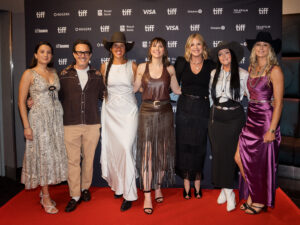
The documentary, an official selection of the 2026 Toronto International Film Festival, had its world premiere during TIFF, bringing together the filmmakers, producers and women whose lives are at the center of the film. Among the producers is Jenna Bush Hager, through her company Thousand Voices, alongside Arvidson, Sarina Roma, Scott Budnick, Ameet Shukla and Ben Spector. CAA Media Finance is representing the film for sales.
A Sport Built on Eight Seconds
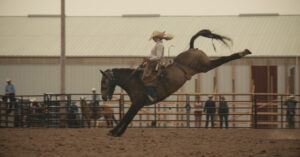
At the center of Cheyenne is a deceptively simple objective: stay on the back of a bucking bronc for eight seconds without being thrown.
Those eight seconds demand extraordinary physical control, but the film makes clear that the challenge extends well beyond the arena. Women were excluded from the bronc-riding competition on the American rodeo circuit for nearly a century, making the opportunity to compete a significant moment in the history of the sport. Cheyenne follows four women as they enter that newly opened competitive space, confronting not only powerful animals and the physical consequences of riding them, but also assumptions about whether they belong there in the first place.
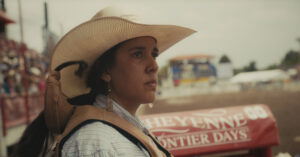
The documentary follows the women over several months as they travel the rodeo circuit, each pursuing a place in the prestigious showdown known as the Daddy of ’em All at Cheyenne Frontier Days. Their motivations are different, but their determination connects them.
For some, the competition represents financial opportunity. For others, it is a means of confronting personal history or proving something to themselves. What emerges is not simply a sports documentary, but a portrait of four individuals navigating ambition, pain, fear and resilience.
Four Women, Four Reasons to Ride
One of the film’s strengths is that it does not reduce its subjects to a single narrative of female empowerment. Each woman arrives at bronc riding with her own circumstances and ambitions.
Bee, an experienced rider, is trying to provide for her son, giving the competition an economic dimension that makes every ride carry consequences beyond personal achievement. Brooke is comparatively new to the sport and is learning to deal with the physical pain that comes with it.
Lake approaches the arena from another direction, using riding as a distraction from past trauma. Ally, meanwhile, is motivated by the possibility of a life-changing payout.
Their individual stories make the competition more complicated and more human. Winning is not simply about a trophy or recognition. For each woman, success means something different, and every attempt carries the possibility of both achievement and injury.
That personal perspective is what gives Cheyenne its emotional foundation. The rodeo provides the spectacle, but the women provide the story.

The Double Standard
The film also examines the double standard surrounding women in physically demanding sports. The women are not merely competing against broncs; they are also navigating a culture in which the same risks can be interpreted differently depending on who takes them.
One observation highlighted by TIFF comes from Daryl, who trains women riders: “A guy gets hurt and they hope he’s okay. A girl gets hurt and they’re like, ‘She shouldn’t have been out there.’”
That sentiment captures one of the documentary’s central tensions. Physical risk is inherent to bronc riding, but the judgment surrounding that risk can change when the athlete is a woman. Instead of automatically being viewed as an athlete doing a dangerous job, she can be treated as someone who should not have entered the arena at all.
Cheyenne gives its subjects the opportunity to answer that criticism not through speeches, but through action. They climb into the saddle, take the risks seriously and return to compete.

Beyond the Arena
Although the rodeo action provides some of the documentary’s most visually powerful moments, Cheyenne also spends time away from the arena. The film follows the women through the quieter portions of life on the circuit, where friendship, humor and camaraderie provide an important counterpoint to the physical intensity of competition.
Cinematographer Nick Midwig captures both sides of that world. The film’s visual language moves from the adrenaline of bucking broncs to wide-open landscapes, country music, Western clothing and moments shared between the riders. The result is a portrait of a community as much as it is a portrait of a sport.
That contrast matters. The women are not presented simply as fearless competitors charging into danger. They are friends, mothers, newcomers, veterans and people carrying experiences that exist outside the arena. Their relationships with one another become part of what makes the journey possible.
In those quieter moments, the documentary finds some of its warmth. The physical challenge may be extraordinary, but the sense of community surrounding it gives the film its human scale.
Jenna Bush Hager and a Broader Storytelling Mission
Jenna Bush Hager’s involvement as a producer, through Thousand Voices, places Cheyenne within a broader interest in stories centered on individuals whose experiences can challenge conventional assumptions.
Working alongside Arvidson and fellow producers Sarina Roma, Scott Budnick, Ameet Shukla and Ben Spector, Bush Hager helped bring the project to the international festival stage. The production companies behind the documentary include Little Tree Films, 1Community, Boardwalk Pictures and Thousand Voices.
For TIFF, the film’s selection also places an unusual American sporting world within an international documentary programme. Rodeo is deeply connected to particular regional traditions, but the questions raised by Cheyenne—who gets to participate, who gets taken seriously and what it means to challenge an established culture—extend well beyond the arena.
Holding On
The title Cheyenne points toward the film’s destination: Cheyenne Frontier Days and the coveted Daddy of ’em All showdown. But the word also evokes the larger world the riders are entering, one shaped by Western tradition, competition and history.
Ultimately, the documentary’s metaphor is as straightforward as its sport. Eight seconds may sound like a short amount of time, but staying in the saddle requires preparation, instinct, strength and an extraordinary willingness to keep holding on.
That idea resonates throughout the stories of Bee, Brooke, Lake and Ally. Each woman has a different reason for getting on the bronc, but each understands what it means to fall—and to get back up.
With its world premiere at the 2026 Toronto International Film Festival, Cheyenne introduces audiences to a group of athletes who are not asking for permission to belong in the arena. They are already there, riding, competing and changing the conversation one eight-second ride at a time.
If you enjoyed this article, please stay connected and follow Katie Chonacas here