
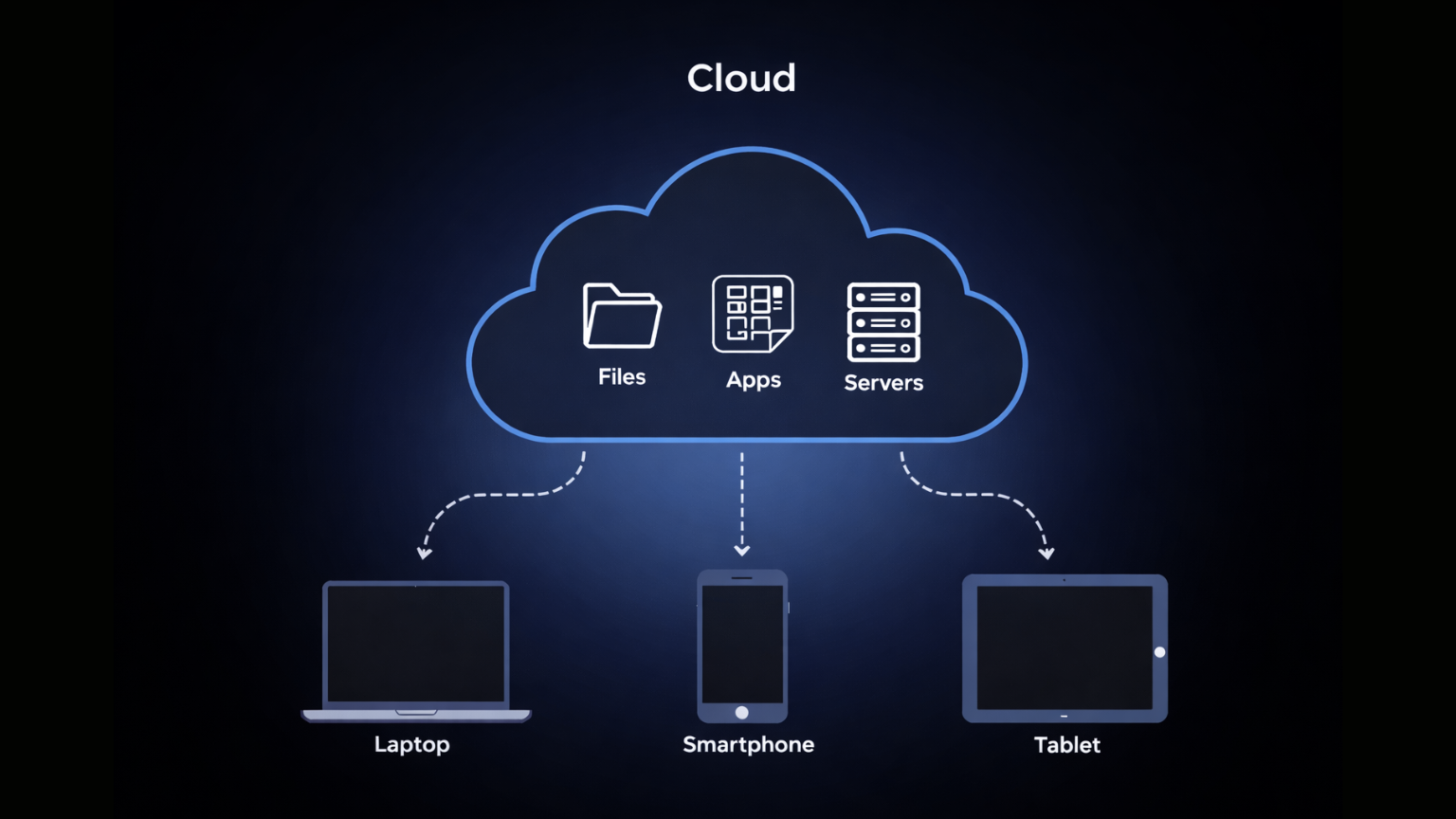
Cloud computing has transformed the way businesses store, manage, and access data. Instead of relying on physical servers located within an office, companies can now use cloud-based systems that provide secure access to data and applications through the internet.
At its core, cloud computing allows businesses to store information on remote servers maintained by specialized providers. These servers are located in large data centers and can be accessed from anywhere with an internet connection. This flexibility allows employees to work remotely and collaborate more easily across different locations.
One of the major advantages of cloud computing is scalability. Businesses can increase or decrease their storage capacity and computing power depending on their needs. This eliminates the need for expensive hardware upgrades and allows companies to pay only for the resources they actually use.
Cloud services are generally divided into three main categories. Infrastructure as a Service (IaaS) provides virtual servers and storage. Platform as a Service (PaaS) offers tools for developers to build and deploy applications. Software as a Service (SaaS) delivers complete software applications through the cloud, such as email platforms and collaboration tools.
Security is another important aspect of cloud computing. Reputable cloud providers invest heavily in security technologies and data protection systems. This often makes cloud environments more secure than traditional on-site servers, particularly for small and medium-sized businesses that may not have dedicated security teams.
Cloud computing also improves collaboration within organizations. Employees can access shared files and applications from different locations, making teamwork more efficient. Tools such as cloud-based document editors and project management platforms allow teams to work on the same files simultaneously.
As businesses continue to adopt digital transformation strategies, cloud computing will remain a central component of modern technology infrastructure. Its flexibility, scalability, and cost-effectiveness make it an essential tool for organizations looking to remain competitive in a rapidly evolving marketplace.