
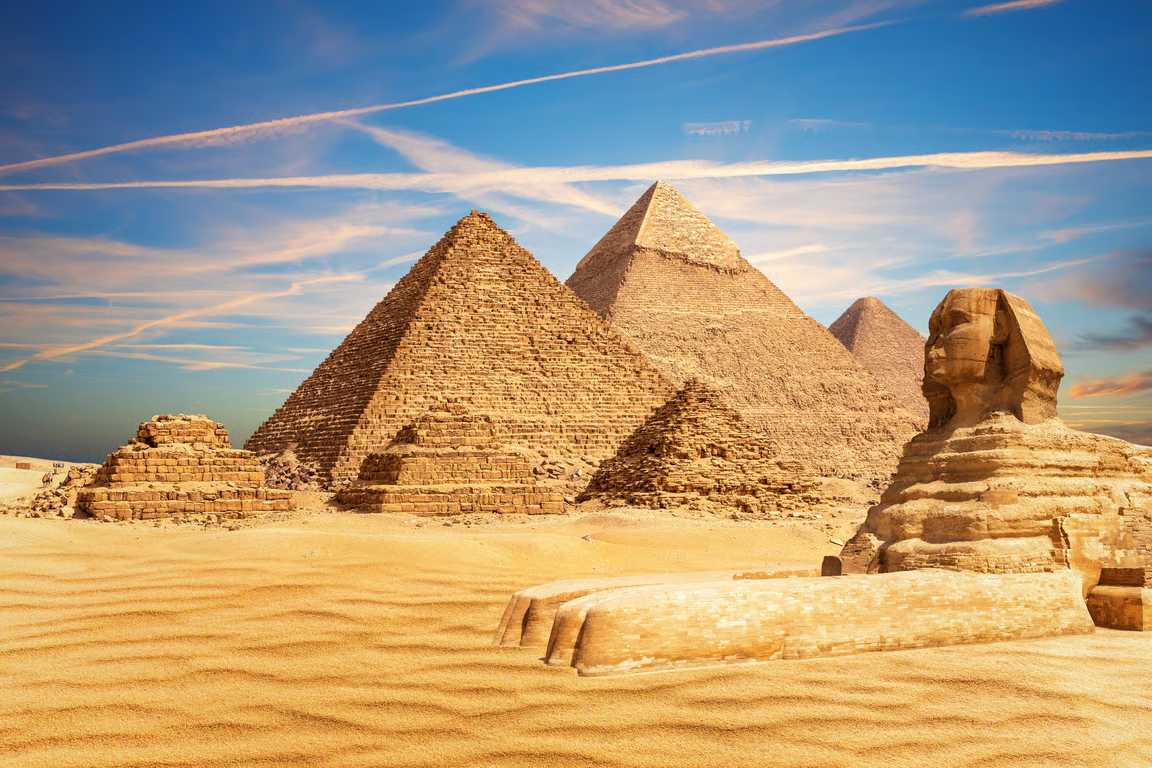
Egypt has long been synonymous with grandeur. Its monuments are monumental by any standard, its history stretches beyond conventional timelines, and its landscapes feel intentionally dramatic. Yet beyond the familiar imagery of pyramids and temples, Egypt has quietly evolved into a destination that speaks to a more elevated style of travel—one where refinement, comfort, and design coexist naturally with ancient wonders. For travelers who value both cultural depth and considered aesthetics, Egypt offers an experience that feels curated without being contrived.
As interest grows in thoughtfully designed journeys, many discerning travelers explore vacation packages to Egypt as a way to balance access to iconic sites with accommodations and pacing that reflect a more sophisticated approach to travel. When logistics are handled seamlessly, attention shifts from planning to presence—allowing Egypt’s layers to unfold with clarity and ease.
Cairo Reimagined: Urban Energy with Refined Retreats
Cairo is often described as overwhelming, but for the elevated traveler, it reveals a compelling duality. The city’s intensity is undeniable—traffic, sound, and scale define its rhythm—but within this energy exist spaces of quiet elegance. Upscale neighborhoods along the Nile and historic districts near Zamalek and Garden City offer hotels and residences designed to buffer the city’s pace rather than compete with it.
From rooftop terraces overlooking the river to restored heritage buildings adapted into boutique accommodations, Cairo’s refined stays provide a vantage point from which to engage the city selectively. Mornings might begin with views of feluccas gliding across the Nile, followed by curated museum visits or guided explorations that avoid the city’s harsher edges while preserving authenticity.
IMAGE ONE: https://unsplash.com/photos/photo-of-beige-temple-pwMbtwA9LRc
The Pyramids Beyond the Postcard
No elevated journey through Egypt avoids the Giza Plateau, but how it is experienced makes all the difference. The pyramids themselves remain as arresting as ever—geometric, immense, and resolutely timeless. What distinguishes a more refined visit is timing, perspective, and context.
Private access during quieter hours, expert interpretation, and vantage points that emphasize scale rather than crowds transform the experience. From carefully chosen viewpoints, the relationship between the pyramids, the desert, and modern Cairo becomes clear, offering insight into how ancient ambition and contemporary life intersect in a single frame.
Nile Travel: Effortless Movement Through History
The Nile remains Egypt’s most elegant corridor. For centuries, it has functioned as both lifeline and narrative thread, linking regions, cultures, and eras. For today’s elevated traveler, moving along the Nile offers a rare combination of historical immersion and physical ease.
Travel between Luxor and Aswan reveals Egypt at a measured pace. Temple complexes appear gradually from the riverbanks, villages pass quietly, and landscapes shift from cultivated green to open desert. Even brief journeys along the Nile create a sense of continuity, reinforcing how geography shaped civilization.
Luxor’s grandeur—expressed through Karnak, Luxor Temple, and the Valley of the Kings—feels especially powerful when approached without haste. Thoughtful scheduling and expert guidance allow time to absorb not just architectural detail, but the cultural and spiritual intent behind it.
IMAGE TWO: https://unsplash.com/photos/a-body-of-water-with-a-city-in-the-background-7z-qKf7lzxQ
Aswan: Subtle Luxury and Southern Calm
Aswan offers a softer counterpoint to Cairo and Luxor. The city’s pace is slower, its light warmer, and its atmosphere more contemplative. Granite outcrops, palm-lined riverbanks, and Nubian influences shape a setting that feels intimate despite its historical importance.
Elevated stays in Aswan emphasize privacy, design, and connection to the river. From terraces overlooking the Nile to serene interiors inspired by regional materials, accommodations here feel intentionally restrained. The focus is less on spectacle and more on atmosphere—on creating space for reflection between explorations of nearby temples and islands.
Desert Landscapes as a Design Statement
Beyond the Nile Valley, Egypt’s deserts offer a different form of luxury—one defined by scale, silence, and intentional minimalism. The Western Desert, with its sculptural rock formations and open horizons, feels almost abstract in its simplicity.
Experiencing these landscapes with thoughtful logistical support allows travelers to engage fully without sacrificing comfort. Carefully planned desert journeys emphasize immersion over endurance, highlighting how emptiness itself becomes a powerful aesthetic experience. In these spaces, luxury is expressed through access, timing, and the absence of distraction.
The Red Sea: Clean Lines and Coastal Contrast
Egypt’s Red Sea coast introduces a modern dimension to the country’s travel identity. Clear waters, coral reefs, and desert-meets-sea landscapes provide a striking contrast to the Nile and inland deserts.
Here, elevated travel often focuses on clean architectural lines, open spaces, and seamless transitions between indoor and outdoor environments. The emphasis is on balance—between activity and rest, exploration and retreat. Whether spent observing marine life or simply absorbing the horizon, time along the Red Sea adds visual and sensory contrast to an Egypt itinerary.
IMAGE THREE: https://unsplash.com/photos/white-ship-on-sea-during-sunset-R5evLgDNF_4
Cultural Engagement with Intention
For the elevated traveler, cultural interaction is most meaningful when it is contextual rather than performative. Egypt offers countless opportunities for this kind of engagement. Conversations with guides, artisans, or historians often provide more insight than formal exhibits alone.
Markets, workshops, and neighborhoods reveal daily life that exists alongside Egypt’s monumental past. Approached with respect and curiosity, these environments add nuance to the journey, reinforcing that Egypt’s cultural richness is not confined to ancient stone.
Cuisine as Continuity, Not Spectacle
Egyptian cuisine aligns well with refined travel because it prioritizes continuity over novelty. Dishes reflect geography and season rather than trend. Grilled meats, legumes, vegetables, and breads form the backbone of meals designed for nourishment and sharing.
Dining in Egypt often emphasizes setting as much as flavor. Meals overlooking the Nile, in shaded courtyards, or under open skies allow food to support the experience rather than dominate it. This understated approach resonates with travelers who value authenticity framed by thoughtful presentation.
IMAGE FOUR: https://unsplash.com/photos/green-and-white-ice-cream-on-stainless-steel-bowl-oTASJFcGOmI
Climate, Timing, and Comfort
Seasonality plays an important role in shaping an elevated experience in Egypt. Cooler months, typically from October through April, provide comfortable conditions for exploration without physical strain. Temperatures allow for longer days outdoors, whether walking temple complexes or exploring urban neighborhoods.
Understanding these rhythms allows travelers to align comfort with curiosity, ensuring that energy is spent engaging rather than adapting. This alignment is central to elevated travel, where well-being supports deeper immersion.
Egypt’s Modern Refinement
Egypt today is not frozen in antiquity. Contemporary design, hospitality, and cultural expression continue to evolve alongside its historic legacy. New museums, restored heritage sites, and modern accommodations reflect a country aware of its global audience while remaining grounded in its identity.
For travelers seeking destinations that combine timeless significance with modern sensibility, Egypt offers a compelling balance. It demonstrates that refinement does not erase history—it frames it more clearly.
Why Egypt Appeals to the Elevated Traveler
Egypt rewards those who approach it with intention. Its scale and complexity can overwhelm, but when experienced through a refined lens, they become its greatest assets. Iconic sights gain clarity when crowds are minimized, movement is seamless, and accommodation provides genuine respite.
For readers of Davidsguide.com, Egypt represents a destination where sophistication and substance align. Chic stays enhance rather than distract, and iconic sights retain their power without requiring endurance. The result is a journey that feels both expansive and composed—one that lingers not just for what was seen, but for how it was experienced.