
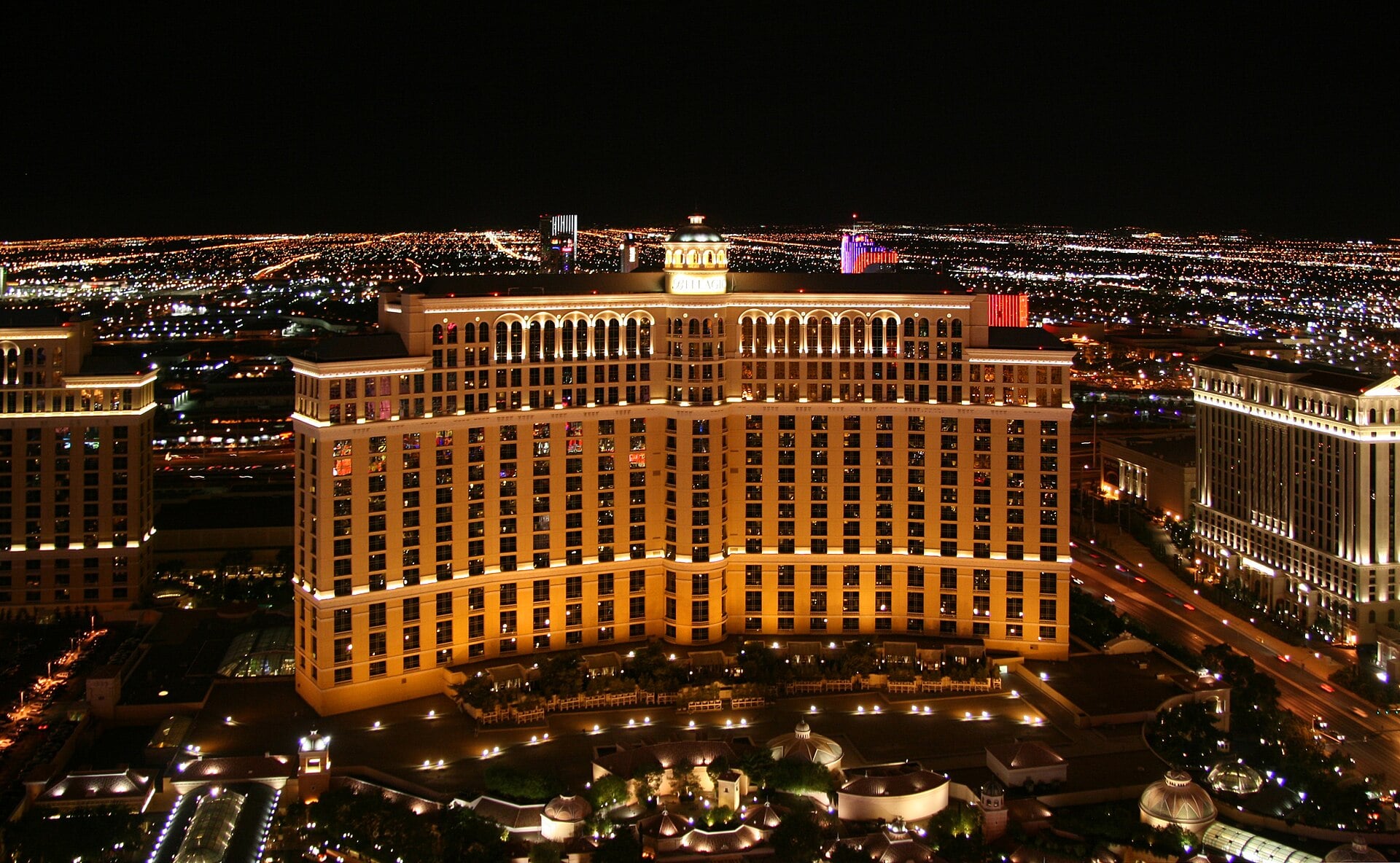
Are hotel resort fees worth paying? Almost never at face value, and the numbers explain why. The average resort fee on the Las Vegas Strip now sits around $42 per night, up 6 percent from the year before, and half the Strip’s hotels raised their fees in recent months. On a five-night stay, that is $210 in mandatory surcharges on top of the room rate, before taxes. The fee is occasionally worth it when the bundled credits genuinely exceed the charge, but most of the time it is padding dressed up as perks.
It comes up again and again in travel forums because the fee feels like a trick even when it is disclosed. Guests book a $189 room, then discover the real nightly cost is $231. Here is what resort fees have become in 2026, what the law now requires, and how to decide whether any given fee is worth it.
How Resort Fees Got This Big
Resort fees began as a way for hotels in destination markets to advertise lower room rates while collecting revenue separately. The practice spread from Las Vegas and Hawaii to urban hotels, airport properties, and eventually to “destination fees,” “amenity fees,” and “urban experience fees” at hotels nowhere near a resort.
The economics are straightforward. A hotel advertising a $199 rate with a $45 resort fee appears $45 lower in search results than a competitor honestly pricing at $244. That sorting advantage is worth millions in bookings, which is why the fee survived decades of consumer complaints. The American Hotel and Lodging Association has long argued that few hotels charge such fees and that the average is modest, but in the markets where they exist, they are anything but modest. Las Vegas Strip properties and Hawaii resorts commonly charge $40 to $60 or more per night, and the fees keep climbing even as disclosure improves.
The “junk fee” framing stuck because the fee is mandatory. Unlike parking or minibar charges, you cannot decline a resort fee at check-in. Whether you use the pool, the gym, or the Wi-Fi, the charge appears on your folio. That mandatory nature is exactly what drew regulators in.
The FTC Junk Fees Rule: What Changed in 2025
On May 12, 2025, the Federal Trade Commission’s Rule on Unfair or Deceptive Fees took effect, and it changed hotel pricing displays across the United States. The rule does not ban resort fees. It does not cap them. What it does is require businesses selling short-term lodging to display the total mandatory price up front, more prominently than any base rate, before the consumer commits.
In practice, this ended classic drip pricing: the five-screen booking flow where a $189 rate quietly became $234 at the final step. Major booking platforms like Booking.com and Expedia updated their displays in early 2025 to comply, and Marriott and Hilton faced state-level enforcement actions and class-action settlements that pushed them toward total-price display even before the federal rule took effect. The Marriott settlement required the company to show the lowest total room price including resort fees on its website and to fix misleading “free” amenity language.

The penalties have teeth. The rule authorizes civil penalties of up to $51,744 per violation. The FTC’s own analysis estimated that reduced search costs in lodging alone would save consumers between $4.93 billion and $7.17 billion over ten years, measuring the time wasted hunting for the real total rather than the fees themselves disappearing.
One year in, the honest assessment is mixed. Comparison shopping is genuinely easier, because the all-in number leads. But the fees did not go away. A property charging $40 in 2024 is mostly still charging $40 in 2026; the fee is simply disclosed earlier. And in Las Vegas, where disclosure is now the norm, half the Strip hotels raised their resort fees anyway, pushing the average to about $42 a night. Transparency made the fee visible. It did not make it smaller.
When a Resort Fee Can Actually Pay for Itself
Not every resort fee is pure padding. The test is simple: add up the retail value of the bundled items you would actually use, and compare it to the fee. If the usable value exceeds the charge, the fee is worth paying. If not, it is a tax on your stay.
Fees that can pay off usually bundle high-value, high-cost items. A $45 fee that includes self-parking (worth $35 to $50 a night in cities like Miami or Los Angeles), premium Wi-Fi (worth $15 to $20 a day at many resorts), and a $25 daily spa or food-and-beverage credit is genuinely worth it if you drive, work online, and eat on property. Some Hawaii resorts bundle snorkel gear rentals, beach chairs, and fitness classes that would cost $75 or more purchased separately.
Fees that never pay off bundle things that were previously free or that have near-zero marginal cost. Local phone calls, in-room safes, and lobby coffee are classic padding; these cost the hotel almost nothing and were included in room rates for decades. A $35 “amenity fee” covering the business center printer and a welcome drink is not a bundle. It is a surcharge with marketing copy.
The honest middle ground is the largest category. A $40 fee covering the pool, gym, and basic Wi-Fi delivers real amenities, but amenities most guests would expect in the room rate at a $300-a-night hotel. Whether it is “worth it” depends entirely on whether you would have paid for those things separately. If you never touch the pool, you are subsidizing other guests’ vacations.
How to Fight or Avoid Resort Fees
You have more leverage than the front desk wants you to believe, though the mandatory nature of the fee limits your options.

First, comparison shop on the total price, not the room rate. The FTC rule made this easier, so use it. A $220 room with no fee beats a $189 room with a $45 fee every time, and sorting by total price exposes the real ranking.
Second, ask at check-in, politely, whether the fee can be waived or reduced. Success rates vary, but front-desk agents have discretion, especially when the amenities are closed (a pool under renovation, a gym shut for repairs) or when you can truthfully say you will use none of the bundled services. It costs nothing to ask, and travelers report waivers often enough to make it standard practice.
Third, book with loyalty status. Top-tier elite members at major chains routinely get resort fees waived as a published benefit, which is one of the strongest arguments for concentrating your stays. Our breakdown of whether hotel loyalty programs pay off covers the math, but fee waivers alone can save hundreds per trip for frequent guests.
Fourth, consider properties that do not charge them. Luxury hotels increasingly market “no resort fee” as a differentiator. A genuinely all-in rate is often the better deal even when the headline number looks higher.
The Luxury Traveler’s Playbook
For luxury travelers, the resort fee question intersects with a broader pricing reality. When you are paying $500 or more a night for a suite, a $50 fee is proportionally small but philosophically galling, which is why the highest-end properties were among the first to drop the practice. If you are weighing whether luxury hotel suites are worth it, factor the fee into the suite premium honestly; a $750 suite with a $60 fee is an $810 suite.
The savviest move is to treat the resort fee as part of the room rate in every comparison, which is exactly what the FTC rule now forces hotels to show you. Once you do that, the decision simplifies: is this hotel, at its true all-in nightly price, worth it compared to the alternatives? The fee itself is neither worth paying nor worth fighting in the abstract. It is simply part of the price, and the price is either justified by the experience or it is not.
Resort fees are worth paying when the bundled value you will actually use exceeds the charge, which happens most often at true resorts with parking, dining credits, and activities you want. Everywhere else, they are a pricing tactic that better disclosure has exposed but not eliminated. Shop the total, ask for the waiver, and let your loyalty status do the heavy lifting.
