
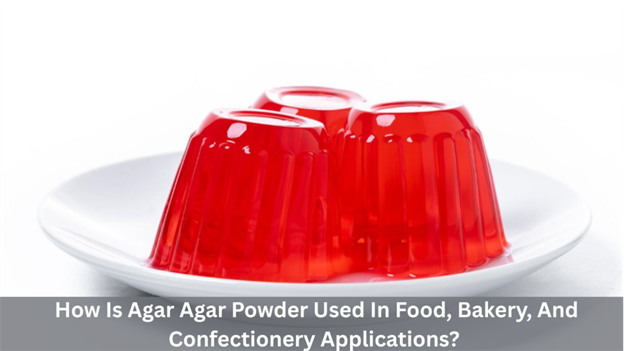
Texture issues can easily have an impact on desserts, fillings, and confectionery products, particularly where gels do not set in the correct way, fruit layers release moisture, or vegan recipes lack structure. These complications can cause uneven slicing, unstable layers, and reduced shelf life, providing problems with both commercial production and professional kitchens.
Simultaneously, numerous recipes demand a vegetarian substitute that performs consistently under heat and storage conditions.
Agar agar powder is one of the reliable solutions to this problem since it creates solid gels, holds water, and is compatible with a variety of systems. When easily handled, it sustains a clean texture, stabilized layers, and efficient processing.
This article discusses practical applications of agar agar powder in food, bakery, and confectionery uses and demonstrates how it may be applied to achieve consistent results.
1. Core Function In Food Systems
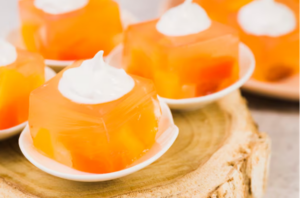
Agar agar powder is used in professional food preparation as a heat-activated gelling agent that forms a firm structure upon cooling. This controlled setting process maintains the same texture without changing the flavor or the color.
Since the gel is stable at relatively warm temperatures, items prepared retain their shape during service and handling. This stability helps clean slicing, accurate portioning, and organized plating.
Moreover, agar agar powder can be used both in savory and sweet products where a specific texture is needed. It is predictable in its performance and, hence, applies to molded components, layered preparation, and applications that require consistency in batches.
2. Vegan Gelatin Replacement Strategies
When formulation changes are carefully made, agar agar powder can be utilized as a plant-based substitute for gelatin. It forms firmer gel, thus lower concentrations form soft spoonable structures, whereas slightly higher concentrations form sliceable structures.
With this range, it is possible to match the various requirements of products without losing stability. The agar agar powder also works well in fruit-based systems with moderate acidity, maintaining structure during storage.
In cases where a softer texture is required, it can be used in combination with complementary hydrocolloids in order to adjust mouthfeel. Its properties enable its application as a vegan dessert, fruit layers, and in confectionery applications that require consistent gel formation.
3. Bakery Filling Stabilization Methods
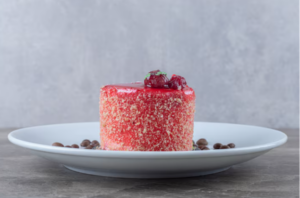
Bakery fillings must be stable in the layering, cutting, and storage process, and agar agar powder helps in this process as it binds the water and provides a strong internal structure. This not only limits the movement of moisture into the layer of cakes or pastry around it, but also enhances the slice definition.
Since agar agar powder solidifies fast, the manufacturing time of multiple-layer desserts becomes more effective. Its heat tolerance allows it to be used in fillings that are subjected to secondary baking without losing the structure.
It is also effective in clear fruit glazes that cover the surface appearance. These properties are useful in ensuring the quality, visual consistency, and structural integrity of the product during handling and display.
4. Confectionery Texture Engineering Techniques
Agar agar powder is used in the manufacture of confectionery to control the firmness, shape maintenance, and the setting time accurately. It forms gels with sharp edges, which are stable when packaged and transported at room temperature.
Faster setting than starch systems enhances processing efficiency and lessens curing phases. Gel strength depends on the concentration of sugar, which needs to be balanced to obtain the desired texture.
Layered gel structures can also be achieved using agar agar powder, as each layer solidifies before the subsequent one is added without mixing. It supports multi-flavor designs and visually structured confectionery products while maintaining consistent texture and appearance.
5. Thermal Stability And Process Efficiency
Since agar powder offers strong thermal stability after setting, finished components can remain intact at elevated temperatures. This property simplifies buffet presentation, plated desserts under heat lamps, and hot-fill processes.
Rapid setting shortens cooling time and increases production speed. Deposited mixtures move quickly from cooking vessels to molds, reducing holding stages and improving workflow efficiency.
Low usage levels also contribute to cost control because small quantities of agar agar powder deliver significant gel strength. At the same time, consistent performance across different formulations supports standardized production.
6. Formulation Control And Usage Parameters
Successful use depends on accurate measurement and proper dispersion. Typical usage ranges from 0.2% to 1.0% of agar agar powder, depending on the desired firmness and the composition of the system.
Dry blending agar agar powder with sugar or other powders helps prevent clumping, while continuous stirring during heating ensures complete dissolution. Quick and even cooling promotes uniform gel formation and smooth surfaces.
pH levels influence performance, so highly acidic formulations may require slight adjustments in dosage. Finished gels should be stored in conditions that prevent moisture loss to maintain texture and appearance over time.
Careful control of these variables allows predictable results across food, bakery, and confectionery applications.
Conclusion
Agar agar powder provides a reliable plant-based solution for texture control in multiple product categories. Its ability to form firm gels, hold water, and remain stable under heat supports clean slicing, structured fillings, and efficient processing.
In bakery systems, agar agar powder improves layer stability and reduces moisture movement, while in confectionery, it enables precise shapes and rapid production. Compared with traditional gelling agents, agar agar powder performs well in fruit-based and high-sugar formulations.
When hydration, dosage, and cooling are managed correctly, it becomes a versatile tool for consistent quality. Mastering its functionality allows professionals to design stable textures, improve shelf life, and streamline production across diverse applications.