

Remote work, or working from home, has become a normal part of the modern workplace. In the past, people used to work from offices where most of their digital environment was within a company’s secure network. But now, with employees working from home, the cybersecurity landscape has changed completely. This shift has created new challenges for businesses and made protecting against cyber threats more important than ever.
How Working from Home Affects Cybersecurity?
When employees work outside the office, their devices and data mostly rely on their personal networks. Home Wi-Fi networks are often not as secure as company networks. This makes it easier for hackers to try to gain access. Risks like phishing attacks, malware, and ransomware increase.
This is not just a problem for large companies but also for small and medium-sized businesses. Every employee’s security habits are different, and sometimes sensitive data can be exposed without them realizing it.
Cloud Technology and Remote Work
The rise of cloud-based tools and services has made remote work possible. But even using the cloud comes with cybersecurity risks. Data breaches and unauthorized access can still happen. This is why businesses need strong security measures in place.
This is where Brigient cybersecurity services can help. Brigient provides comprehensive solutions to protect business data. Their services also create a secure environment for remote employees, keeping sensitive information safe.
 Importance of Endpoint Security
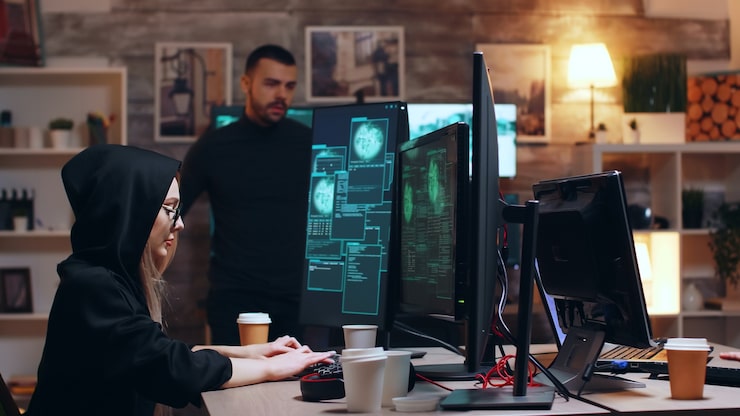 Importance of Endpoint Security
Every remote employee is a potential entry point for cyber attackers. Laptops, smartphones, and tablets are all endpoints that hackers can target. Endpoint security has become more important than ever.
Brigient cybersecurity services offer endpoint protection solutions that make sure each device is monitored and secure. This reduces the risk of malware and phishing attacks.
Employee Awareness and Training
Technology alone is not enough. The human factor is equally important. If employees do not follow cybersecurity best practices, risks remain. Regular training and awareness programs are now critical in a remote work environment.
Brigient cybersecurity services provide training programs in simple, easy-to-understand language. This helps employees understand how to keep their devices and data safe.
Network Security and VPN
For employees working outside the office network, using a VPN, or Virtual Private Network, is essential. A VPN encrypts data and makes it harder for hackers to access it. But VPN alone is not enough. A complete network security strategy is necessary.
Brigient cybersecurity services also provide network monitoring and management solutions to ensure that every remote connection is secure and business data stays protected.
Data Backup and Recovery
Remote work also increases the risk of data loss. Devices can be damaged, or files can be accidentally deleted. Proper backup and recovery plans are essential for every business.
Brigient cybersecurity services provide robust backup solutions that make data recovery smooth and reliable, even for remote employees.
The Future of Cybersecurity and Remote Work
As remote work continues to grow, cyber threats are also evolving. Businesses need a proactive approach instead of only reacting after attacks happen. Continuous monitoring, timely updates, and advanced threat detection are key to keeping data and networks safe.
Here, Brigient cybersecurity services can be a reliable partner. Their focus is on practical and simple solutions that work effectively in a remote work environment.
Conclusion
Remote work has brought flexibility for businesses and employees, but it has also created new cybersecurity challenges. Protecting data and devices while working from home is more important than ever. Businesses should adopt proactive security strategies, implement employee awareness programs, and use advanced solutions like Brigient cybersecurity services. This will reduce the risk of cyber threats and allow businesses to operate smoothly, whether employees are in the office or working remotely.