
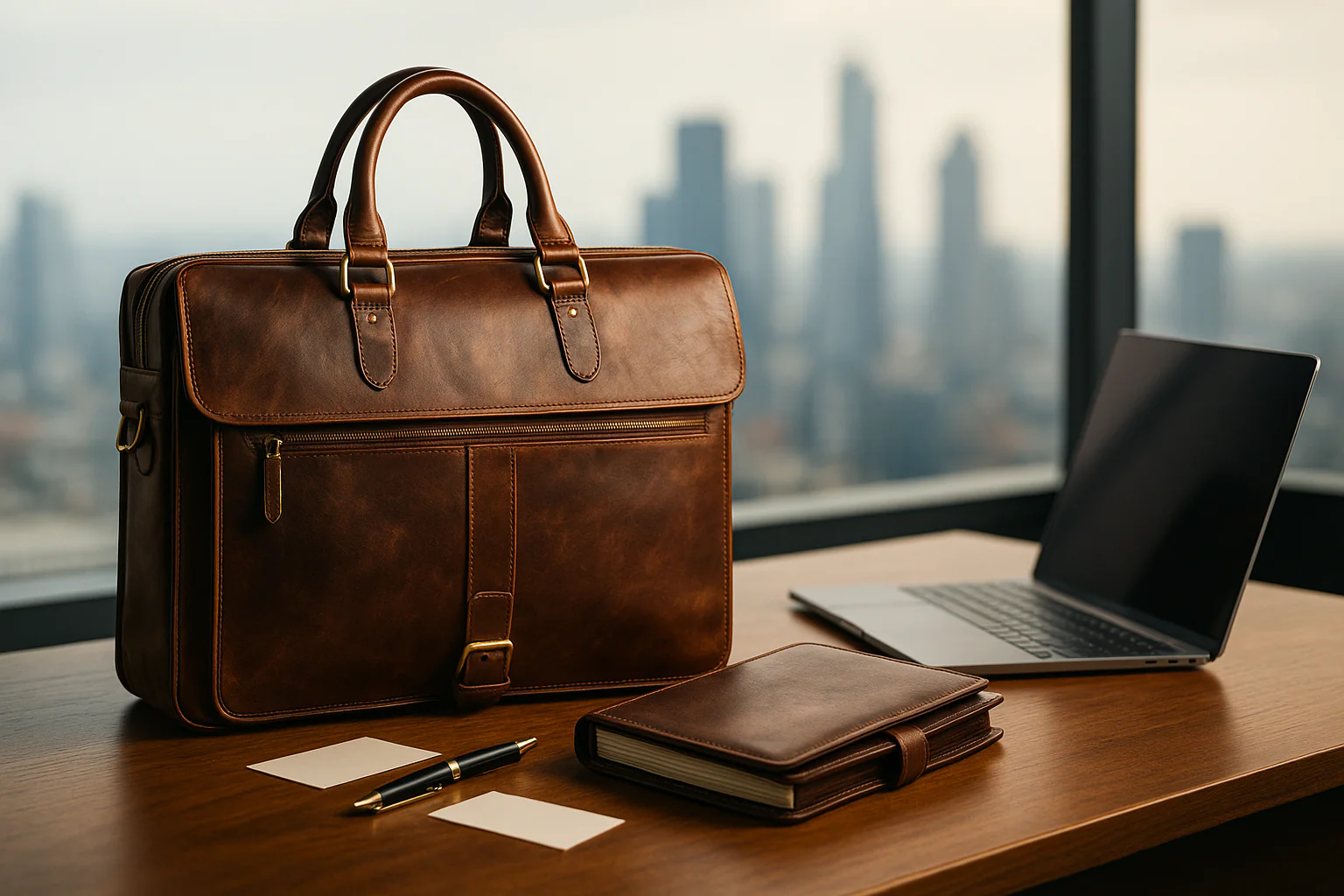
A great briefcase does more than carry your day; it quietly signals taste, organisation and ambition. If you’re investing in an elevated and durable piece of luggage, a well-made leather briefcase remains the timeless choice. The challenge is separating handsome but short-lived designs from those that are genuinely well-crafted. This guide breaks down what to look for, including materials, construction, comfort and care, so you can choose with confidence and enjoy your briefcase for years to come. Along the way, we’ll highlight hallmarks of quality you can spot at a glance, as well as those you can feel the moment you pick it up.
Decide what you need it to do
Start with the function. List your essentials: laptop size, notebook, charger, files, headphones, water bottle, keys, and card holder. Then choose a format that matches your load:
- Slim brief: Minimalists and paper-light commuters.
- Two- or three-gusset brief: Professionals carrying documents and devices.
- Zip-top folio: Travel-friendly, secure, streamlined.
- Soft-structured shoulder brief: Hybrid work and travel days.
Capacity isn’t only litres; it’s how well space is organised. Look for purposeful compartments, a padded laptop sleeve that fits your device snugly, and a dedicated pocket for travel documents. A trolley sleeve is invaluable if you travel with wheeled luggage.
Choose the right leather
Leather type is the single biggest predictor of how your briefcase will age.
- Full‑grain leather: The gold standard. With the densest fibres and a natural surface, it develops a rich patina and is best for longevity.
- Top‑grain leather: Lightly corrected and thinner; good quality if well tanned, with a cleaner, more uniform look.
- Corrected‑grain/split leather: Sanded and coated to hide imperfections; less durable.
Tannage matters when choosing the right leather for your briefcase. Vegetable‑tanned leather is firm, structured and ages beautifully; it can start slightly stiffer but softens with use. Chrome‑tanned leather is softer from day one and more water‑resistant, ideal if you want a supple carry. Many premium makers use a mix (veg‑re‑tanned) to balance structure and comfort.
Ask about the tannery and finish. Reputable tanneries provide consistent, responsibly sourced hides. A lightly pigmented finish will age with character; heavy coatings can crack over time.
Inspect construction quality
A quality leather briefcase is built, not merely assembled. Check the following when choosing yours:
- Stitching: Even, straight, with tight per‑inch count (6–8 SPI on leather is typical). Reinforcement at stress points (handle bases, strap anchors) is essential. Bonded nylon or polyester thread lasts longer than cotton.
- Edge finishing: Look for neatly sanded and burnished or edge‑painted edges with multiple coats; raw, fuzzy edges fray and wick moisture.
- Lining: Twill cotton, hard‑wearing viscose, or microfibre hold up better than cheap polyester. A leather‑lined brief is luxurious but adds weight.
- Structure: A proper leather briefcase keeps its silhouette off the body. Subtle internal reinforcement (like board or leather stiffeners) helps prevent collapse without making it boxy.
- Base and feet: Metal feet reduce scuffing when you set it down. A reinforced base prevents sagging.
Comfort and carry options
Handles should be rolled or padded for comfort, with a reinforced core and secure, well-finished attachments. A detachable shoulder strap can add flexibility, but it’s not essential for everyone. If you do opt for one, look for a wide, adjustable strap with a sliding shoulder pad to help distribute weight more evenly.
For shorter commutes or office-to-car use, sturdy top handles may be all you need. However, if you regularly travel by train or walk longer distances, a lighter briefcase or a design that offers multiple carry options can make a noticeable difference over time.
Style, colour and dress code
Your briefcase should complement both your wardrobe and the environment you work in. The right choice feels cohesive, not forced.
- Classic business: Opt for black or dark brown in a slim, structured silhouette for a sharp, professional look.
- Smart-casual: Tan, cognac or navy work well here, especially in softer shapes with zip-top or flap closures and understated hardware.
- Travel-focused: Prioritise function without sacrificing style. Features like zip-around security, an external pocket for essentials, or a trolley sleeve make moving through airports and stations much easier.
A leather finish also influences the overall character. Smooth leather feels more formal and refined, while pebbled or grained leather is more forgiving, conceals scuffs better, and offers a slightly more relaxed yet still polished appearance.
Security and organisation
Inside, look for thoughtful organisation rather than unnecessary compartments. A padded laptop sleeve, a full-length document slip, a zipped pocket for valuables and a few quick-access slots for pens or cards are usually more than enough to keep things tidy without feeling cluttered.
On the outside, a discreet pocket can be practical for items you need within easy reach, ideally secured with a zip or a hidden magnetic closure. If you travel frequently, RFID-shielded pockets can offer added peace of mind, though solid construction and quality materials will always matter more than extra features for their own sake.
Durability and aftercare
Quality luggage is an investment, and looking after it properly makes all the difference. Buy well, care for it consistently and repair when needed; that’s what extends its lifespan.
- Water and stain protection: A light protective spray can help guard against moisture and marks. If spills happen, wipe them away promptly with a soft cloth.
- Conditioning: Apply a neutral, high-quality leather conditioner sparingly, around once or twice a year, to keep the material supple and prevent drying or cracking.
- Storage: When not in use, store it stuffed with paper to help maintain its shape, ideally inside a dust bag and away from direct sunlight or heat sources.
- Repairs: Choose brands that offer spare parts or in-house repair services. Stitching, edge paint and hardware can often be restored, giving the piece a much longer life rather than replacing it prematurely.
Price versus value
True value sits at the crossroads of materials, craftsmanship and long-term support. A lower-priced bag made from corrected-grain leather and generic hardware may look the part at first, but it often shows wear sooner than expected.
Investing more in full-grain leather, reliable zips and solid construction tends to pay off over time. Quality materials age better, develop character and maintain their structure through daily use.
It’s also worth thinking in terms of cost per wear. A well-made briefcase can outlast several cheaper alternatives, not just structurally, but aesthetically too, making it the more economical choice in the long run.
How to spot quality in five minutes
You don’t need to be an expert to recognise good craftsmanship. A quick check can tell you a lot.
- Touch: The leather should feel dense, supple and substantial, not plasticky, stiff or overly glossy.
- Look: Check for even stitching, cleanly finished edges, well-aligned panels and a centred logo, if there is one. Small details reveal a lot about overall care.
- Zip test: The zip should glide smoothly with one hand, without catching or wobbling.
- Stand test: When placed on a flat surface, the briefcase should hold its shape with minimal slouching.
- Smell: Quality leather has a natural, rich scent. A strong chemical smell can be a red flag.
Tried and true examples and brands
Some brands have built a strong reputation for producing elevated, durable luggage through consistent craftsmanship and thoughtful design. Carl Friedrik, for example, is known for its leather briefcase designs, typically crafted from full-grain Italian leather and finished with robust hardware and clean, modern lines that transition seamlessly from boardroom to airport lounge.
If you’re curating a cohesive travel setup, it’s worth considering how your leather briefcase complements the rest of your luggage in terms of materials, structure and overall aesthetic. Whatever brand you choose, prioritise clear specifications, visible craftsmanship and a sensible warranty; these are often the most reliable indicators of long-term value.
Why the right leather briefcase is a long-term decision
Choosing the right leather briefcase isn’t just about style; it’s about making a considered investment. The best pieces balance purpose and craftsmanship, starting with quality leather, solid construction and dependable hardware before narrowing down comfort and aesthetic details.
When you prioritise materials and build first, everything else falls into place. Buy thoughtfully, care for it properly, and you’ll end up with more than just a work accessory. A well-made leather briefcase becomes part of your daily rhythm, carrying what you need while elevating your presence, whether you’re heading into a meeting, catching a flight or simply moving through the day.