
Overall Verdict: I recommend it to people who fly 3+ times per year on flights 2 hours or longer.
I’ve been flying long-haul for years. New York to Los Angeles, London to Singapore, New York to Dubai. At some point, I stopped expecting to feel good when I landed. I just assumed the foggy head, the dry throat, and the two-day recovery were the price of frequent travel.
Turns out, I was wrong about what was causing it.
The Problem Nobody Talks About Enough
Everyone blames jet lag. And sure, crossing multiple time zones does a number on your sleep cycle. But jet lag doesn’t explain the scratchy throat, the cracked lips, or the fact that your skin feels like paper after a 10-hour flight. That part is the air.
Airplane cabin humidity sits somewhere between 4 and 12 percent. The Sahara Desert averages around 25 percent. That’s not a typo. The air inside a pressurized aircraft is significantly drier than one of the harshest desert environments on earth.
Your body responds to that the only way it can: by losing moisture with every single breath. On a long-haul flight, that adds up to well over a liter of water lost through your airways before you even think about sweating. You’re landing dehydrated in a way that drinking water doesn’t fully fix, because the dehydration is happening in your respiratory system, not your stomach.
I knew about this in a vague, background kind of way. What I didn’t know was that there was actually something you could do about it.
Kuvola Humidifier Mask Review
A friend who travels for work mentioned she’d started using a humidifier mask on flights. I’d never heard of the category. My first reaction was skepticism. It sounded like one of those wellness gadgets that sounds clever in theory and does nothing in practice.
But she was persistent about it, and I trust her judgment on travel gear. So I looked into it.
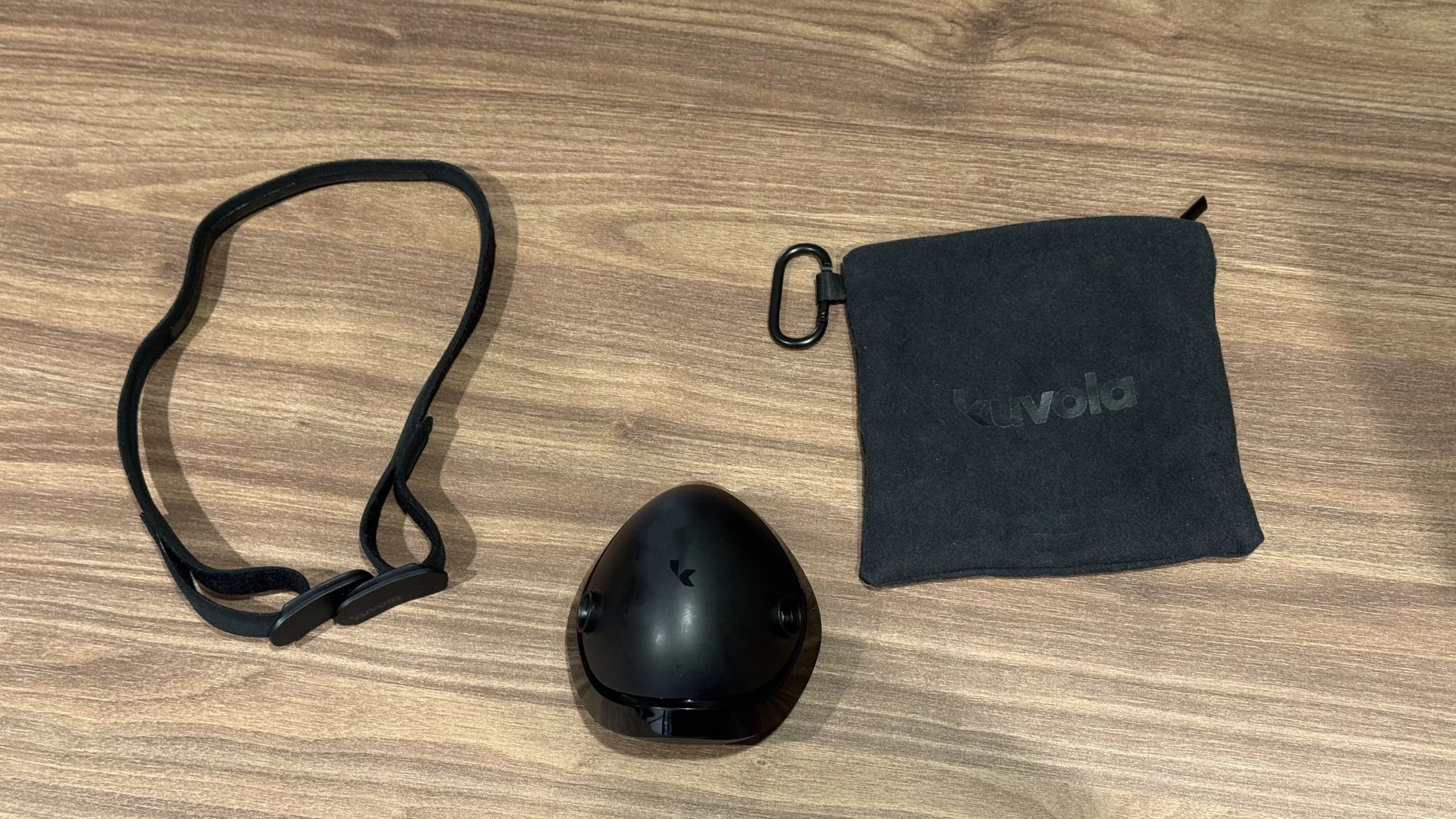
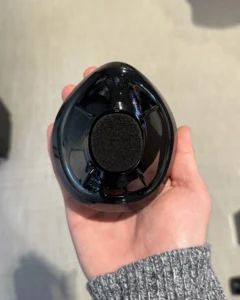
Kuvola is a Swedish brand that makes a humidifier mask specifically designed for air travel. The product is built around a technology called Heat and Moisture Exchange, which is the same type of technology used in medical respiratory settings. The idea is simple but genuinely clever: as you exhale, the filter captures the moisture and warmth from your breath before it escapes into the dry cabin. When you inhale, fresh outside air passes through that same filter and picks up the stored hydration on the way in.
You’re not re-breathing the same air. Fresh air comes in every time. The filter is just capturing moisture you were about to lose and putting it back to work.
No batteries. No water reservoir. No charging. You put it on and it works.
What It’s Actually Like to Use
I wore Kuvola on a 10-hour flight from Frankfurt to Los Angeles. Here’s my honest account.
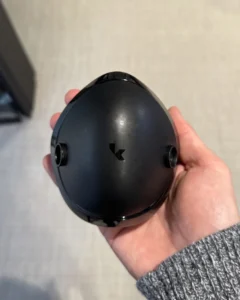
Getting it on took about 30 seconds. The headband adjusts easily, the fit is comfortable, and it sits well over your nose and mouth without pressing uncomfortably against your face. I was half-expecting to feel claustrophobic. I didn’t.
The first hour or so, I was aware I was wearing it. By hour two, I’d mostly forgotten about it. I slept with it on for a stretch and it stayed in place. The magnetic safety clip is a nice touch: if you move suddenly or pull on it, it releases cleanly instead of yanking.
Breathing through it feels slightly different than breathing open air. There’s a small amount of resistance, similar to breathing through a light fabric. It’s not uncomfortable. If anything, I found it mildly calming.
Now for the part that actually matters. When I landed in LA, I felt better than I normally do after that flight. Not “slightly better.” Noticeably better. My throat wasn’t dry. My head was clearer. I wasn’t reaching for water the second I got off the plane. The usual post-flight fog was there, but it was lighter than I was used to.
Could some of that be placebo? Maybe a little. But I’ve done that route enough times to know what landing normally feels like. This was different.
Who Should Buy This
If you fly occasionally, once or twice a year, you might not feel the need. But if you fly regularly, if you travel for work, if you perform or speak professionally and your voice is something you rely on, or if you’ve simply accepted that flying always leaves you feeling rough, this is worth your attention.
At $85, it’s priced like what it is: a considered, well-made travel accessory, not a drugstore impulse buy. Is it worth it? For me, without hesitation, yes.
People ask me what I consider essential carry-on gear. The list has changed over the years. But Kuvola is on it now.
If I had to pick a neck pillow or Kuvola, I’m picking Kuvola every time.