
Japan rewards travelers who move slowly and plan well. This is a country where the train arrives on the second, the kaiseki courses arrive in a deliberate order, and the difference between a good trip and a great one usually comes down to where you sleep and where you eat. This seven-day route covers the classic triangle, Tokyo, Kyoto and Osaka, with the hotels and restaurants that make it feel effortless.
The Route at a Glance
Two nights in Tokyo, two nights in Kyoto, two nights in Osaka, and one spare night to absorb the jet lag or steal a day trip. You move by shinkansen between cities, which is faster than flying once you count airport time, and you never touch your big bag between hotels because Japan’s luggage forwarding service moves it for you.
The best seasons are late March to early April for cherry blossoms and November for autumn color. Summer is hot and humid. Winter is crisp, crowd-free and excellent for clear Mount Fuji views from the train.
Before You Go: Three Logistics Wins
First, buy your shinkansen tickets at the station or through the SmartEX app. The Nozomi service from Tokyo to Kyoto takes about two hours and fifteen minutes. The Green Car, the first-class cabin, is worth it for the wider seats and the quiet.
Second, use takkyubin luggage forwarding. For roughly the price of a nice lunch, your suitcase travels from your Tokyo hotel to your Kyoto hotel overnight while you ride the train with just a day bag. Every Four Seasons front desk in Japan handles this routinely.
Third, book restaurants early. The top tables in Tokyo open reservations one to two months out and the famous ones vanish in minutes. If you are working with a luxury travel agent, this is the single highest-value thing they do for a Japan trip.
Your 7 Days in Japan, Day by Day
Tap a day to see the plan: the hotel, the restaurant, and the key activity.
Day 1: Arrive in Tokyo
Private driver from Haneda to Four Seasons Tokyo at Marunouchi. Imperial Palace East Gardens, then dinner at Narisawa (2 Michelin stars).
Day 2: Tokyo Deep Cut
Meiji Shrine early, Asakusa and Senso-ji, Harajuku back streets. Dinner at Sushi Saito (or Kyubey in Ginza as backup).
Day 3: Shinkansen to Kyoto
Nozomi Green Car, right-side window for Mt. Fuji. Four Seasons Kyoto. Kinkaku-ji, Arashiyama bamboo grove after 4pm. Kaiseki dinner in Gion.
Day 4: Kyoto Classics
Fushimi Inari before 8am, Kiyomizu-dera, Nijo Castle nightingale floors. Nishiki Market grazing. Second Gion dinner.
Day 5: On to Osaka
15-min shinkansen. Four Seasons Osaka. Osaka Castle, then Dotonbori at night: neon, takoyaki, the giant crab sign.
Day 6: Osaka Food Day
Kuromon Ichiba Market grazing. Optional Nara day trip. Crab feast dinner at Kani Doraku.
Day 7: Departure
Sleep in, Shinsaibashi arcades for souvenirs, express train to Kansai International.
Day 1: Arrive in Tokyo
Land at Haneda if you can. It is roughly thirty minutes to central Tokyo by car, versus more than an hour from Narita. Your driver meets you in arrivals and you check into the Four Seasons Hotel Tokyo at Marunouchi, a quiet, grown-up base a short walk from Tokyo Station with some of the best service ratios in the city.
Shake off the flight with a walk through the East Gardens of the Imperial Palace. It is free, it is beautiful, and the contrast of feudal stone walls against the Marunouchi towers tells you everything about this city in twenty minutes.
Dinner is Narisawa in Minato. Chef Yoshihiro Narisawa holds two Michelin stars and a Michelin Green Star, and his cooking is built around satoyama, the Japanese idea of living in balance with the forest. The "Bread of the Forest" course, baked tableside and served with charcoal, is the kind of dish people fly across the world to eat. Expect the meal to run two-plus hours and price it like a special occasion, because it is one.
Day 2: Tokyo, Deep Cut
Start at Meiji Shrine, the forested Shinto shrine in Shibuya. Go early, before nine, and you get the gravel paths and the massive torii gates nearly to yourself. Then cross to Asakusa for Senso-ji, Tokyo's oldest temple, which is the opposite energy, colorful, crowded and wonderful. The Nakamise shopping street leading to the temple has been selling snacks to pilgrims for centuries.
Walk off lunch in Harajuku. Takeshita Street is the teenage fashion circus you have seen in photos, but the real move is the back streets, where the vintage stores and the crepe stands live side by side.
Dinner is sushi, and the hardest reservation in the city. Sushi Saito in Roppongi is the legend, a tiny counter where chef Takashi Saito's rice and knife work set the standard the whole industry chases. It is famously difficult for visitors to book, which is exactly why you have a hotel concierge or an agent. If Saito proves impossible, Kyubey in Ginza is the classic fallback, a Michelin-starred institution where the standards are just as serious and the booking is merely hard instead of mythical.
Day 3: Shinkansen to Kyoto
Check out, forward your bags, and take the Nozomi to Kyoto. Book a right-side window seat in the Green Car. On a clear winter morning you get Mount Fuji framed in the window for about ten minutes, and it never gets old.
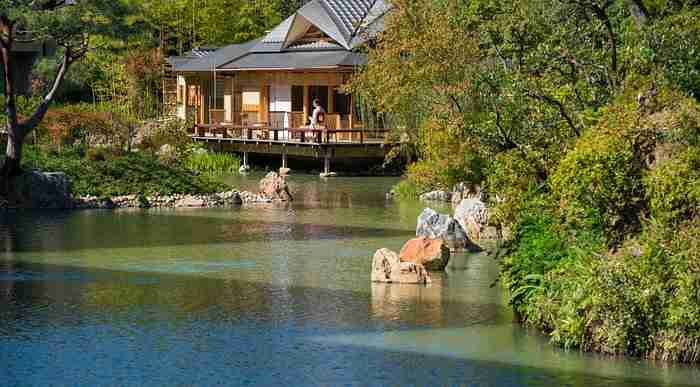
Check into the Four Seasons Hotel Kyoto, set around an 800-year-old pond garden in Higashiyama. It is one of the few hotels in the world where the garden predates the building by several centuries, and the shakkei borrowed scenery design pulls the surrounding hills into the view.
Afternoon: Kinkaku-ji, the Golden Pavilion. Yes, it is crowded. Go anyway, because the top two floors covered in gold leaf reflecting in the Mirror Pond is one of the definitive images of Japan. Then head west to the Arashiyama bamboo grove. The trick is to arrive after four in the afternoon, when the tour buses leave and the light goes soft through the stalks.
Dinner is kaiseki in Gion. Gion Nanba is one of the acclaimed counters in the district, serving the precise, seasonal progression of small dishes that defines Kyoto cooking. Kaiseki is not dinner so much as an edible essay on the month you are visiting. Spring means takenoko bamboo shoots, autumn means matsutake mushrooms. Let the chef decide.
Day 4: Kyoto's Classics
Fushimi Inari opens twenty-four hours a day and the thousands of vermilion torii gates are most atmospheric before eight in the morning. Climb thirty minutes up the mountain and the crowds thin to almost nothing.
Midday, Kiyomizu-dera, the wooden temple on stilts above the city. The main hall's stage, built without a single nail, juts out over the hillside with Kyoto spread below it. Then Nijo Castle, the Tokugawa shoguns' palace, famous for its nightingale floors, wooden boards that chirp like birds when stepped on, an early burglar alarm.
Spend the late afternoon in the Philosopher's Path area if it is blossom season, or in the Nishiki Market, Kyoto's kitchen, where you can graze on tamagoyaki, fresh uni and matcha everything.
For dinner, stay in Gion and try a second style of Kyoto cooking, perhaps an intimate tempura counter or a soba specialist. Kyoto rewards the traveler who eats twice in the same neighborhood and notices how different it feels after dark.
Day 5: On to Osaka
The shinkansen from Kyoto to Osaka takes about fifteen minutes. Check into the Four Seasons Hotel Osaka, which opened in the Dojima area with a genuinely interesting design, a modern luxury hotel stacked above a traditional ryokan-style floor. The gensui wing channels the old Osaka merchant inns, all dark wood and paper screens.
Osaka Castle is your afternoon. The current tower is a concrete reconstruction, but the stone walls are original, massive, and humbling, and the park around it is one of the city's best strolls.
Evening belongs to Dotonbori. The neon canal, the giant moving crab sign, the takoyaki stands doing a roaring trade at ten at night. Osaka's nickname is kuidaore, "eat until you drop," and the city takes it seriously. This is the fun night of the trip. Lean into it.
Day 6: Markets, Street Food and a Crab Feast
Kuromon Ichiba Market has been feeding Osaka for two centuries. Go hungry and graze, grilled scallops, Kobe beef skewers, fresh strawberries the size of plums. The vendors expect you to eat as you walk, and the best stalls have lines for a reason.
If you want a day trip, Nara is forty-five minutes by train, with the Great Buddha at Todai-ji and the famously pushy sacred deer of Nara Park. Or stay in Osaka and do the Umeda Sky Building at sunset, the rooftop observatory with the open-air escalator between the twin towers.
Dinner is the famous crab feast at Kani Doraku in Dotonbori, under the giant mechanical crab. This is not fine dining, it is theater, course after course of snow crab prepared a dozen ways, in a restaurant that has been an Osaka landmark for generations. After a week of hushed Michelin rooms, the noise and joy of it is exactly right.
Day 7: Departure
Sleep in. Osaka's departure airport is Kansai International, about fifty minutes by express train or private car from the city. If your flight is in the afternoon, the hotel can hold your bags while you make a final pass through the Shinsaibashi arcades for knives, ceramics or matcha to take home. Consider travel insurance for expensive trips like this one.
What This Trip Costs
Honesty matters here. A week like this, with Four Seasons properties in all three cities, top restaurant bookings and private drivers, typically runs well into five figures per couple before flights, and the famous sushi counters can add several hundred dollars per person per dinner. Pricing swings hard with blossom season and autumn foliage. The shinkansen legs are the bargain of the trip, a few hundred dollars total for the fastest, most punctual trains on earth.
A Photographer's Notes
Japan is the easiest country in the world to photograph well and the hardest to photograph originally. The torii gates, the bamboo, the pagoda with the pagoda behind it, all of it has been shot a million times. My advice after years of shooting here: get up before the crowds and shoot the in-between moments, the salaryman bowing at the shrine on his way to work, the chef's hands at the sushi counter, the neon reflecting in a puddle in Dotonbori. The famous frames will take care of themselves. The small ones are the trip. For perspective on what billionaires ask of their travel agents, the contrast is instructive.
