
The cheapest time to fly is the time nobody is talking about. On September 17, 2026, KAYAK released its shoulder-season data for fall travel, and the numbers make a blunt case for October: economy return flights are averaging 32 percent less than summer peaks, hotels are down 14 percent, and search interest is surging for a set of destinations that reads like a very good dinner party guest list.

One disclosure before the numbers. This data comes from KAYAK.fr, tracking French travelers planning September and October trips, with flight searches compared against July and August. The percentages describe that market. But the pattern, off-peak pricing pulling travelers into early autumn, is the same one playing out across the industry, and the destination list is worth your attention wherever you are flying from.
The Headline Numbers
Economy return flights departing from France averaged 233 euros in September and October, against 345 euros in July and August. That is the 32 percent reduction in the headline. Average hotel prices fell 14 percent over the same comparison. KAYAK, part of Booking Holdings, based its trending-destination rankings on increased flight searches for September and October travel versus July and August.
The 10 Fastest-Growing Shoulder-Season Destinations
Ranked by growth in flight searches: 1. Seville, +165 percent. 2. Munich, +120 percent. 3. Malé, +118 percent. 4. Venice, +101 percent. 5. Tashkent, +100 percent. 6. New York, +100 percent. 7. Lille, +91 percent. 8. Amsterdam, +86 percent. 9. Strasbourg, +85 percent. 10. Victoria, Seychelles, +85 percent.
The Top Five, Closer Up
1. Seville, Spain: +165%
The fastest-rising destination on the list, and the value story is almost as strong as the growth story. Average return fares to Seville run 164 euros, 10 percent below summer levels. October is when Andalusia exhales: the punishing summer heat breaks, the terraces stay open, and the city’s layers, Roman, Moorish, Baroque, do not require an air-conditioned retreat every two hours. It is the single best combination of momentum and price on KAYAK’s board.
2. Munich, Germany: +120%

Average return fares of 237 euros, down just 1 percent from summer, which tells you this surge is about desire rather than discount. October in Munich needs no translation: crisp air, beer gardens in their final weeks, the Alps an hour away. Travelers are not chasing a fare here. They are chasing the season.
3. Malé, Maldives: +118%

This is the fare story of the list. Malé recorded the largest fare decline of any trending destination, with average return fares down 32 percent to 701 euros. Shoulder season in the Maldives means the same Indian Ocean and the same overwater villas, with the summer premium stripped out. For a destination where the flight is often the barrier, a 32 percent cut changes the math completely. If the Maldives has been on your list, our JOALI Maldives overwater villa review breaks down what $4,364 a night actually buys at the top of the market.
4. Venice, Italy: +101%
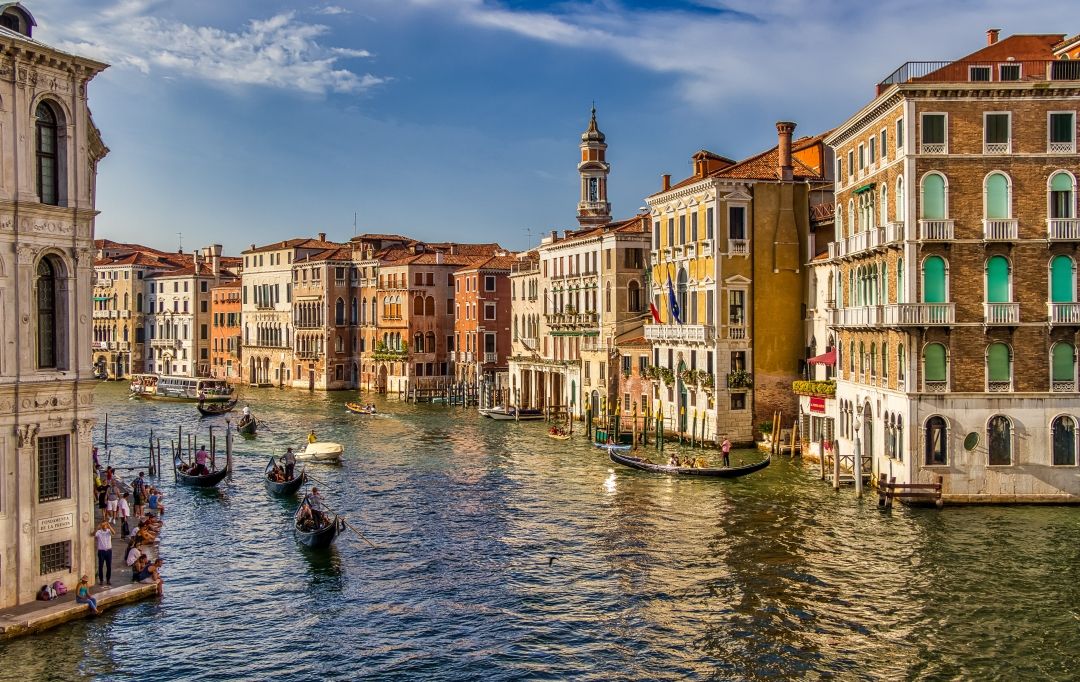
Average return fares of 116 euros, down 22 percent from summer. Venice in October is the city’s best self: the cruise-ship crush thins, the light goes golden, and the high-water season has not yet arrived in force. A 22 percent fare cut to one of the most expensive-feeling cities in Europe is the kind of number that should move a trip from “someday” to this month.
5. Tashkent, Uzbekistan: +100%
The wild card, and arguably the most interesting name on the list. Flight searches doubled versus summer. Uzbekistan’s Silk Road cities, Samarkand, Bukhara, Khiva, are at their most walkable in autumn, and Tashkent is the gateway. This is the destination on the list that still feels like a discovery, which is exactly why its growth rate leads the pack’s second tier.
Where Fares Fell the Hardest
Beyond the top five, the discount leaderboard reads as follows. Malé leads at 32 percent off, to 701 euros. New York and Strasbourg both fell 29 percent, to 505 and 108 euros respectively. Victoria, Seychelles dropped 26 percent to 744 euros. Venice fell 22 percent to 116 euros, and Lille 20 percent to 107 euros. Note the pattern: every one of the top 10 trending destinations costs less to fly to than it did in summer. The growth and the discounts are the same story.
Hotels: The Mediterranean Discount
The hotel savings are concentrated where summer demand was most overheated. Average nightly rates in Monastir, Tunisia have fallen 62 percent to 82 euros. Salou follows at 89 euros, down 51 percent. Agadir is 78 euros, down 43 percent. Lloret de Mar sits at 83 euros, down 40 percent, and Ciutadella de Menorca at 132 euros, down 38 percent. For context on how unusual these swings are against the longer trend, our five-star hotel rates comparison from 2019 to 2026 found U.S. luxury rates up more than 80 percent since the pandemic. Shoulder season is the market’s pressure valve, and right now it is wide open.
The Cheapest Dates in the Window
Flexible dates unlock a second layer of savings. KAYAK’s analysis puts October 27 as the least expensive departure date for international flights in the window, averaging 176 euros, which is 37 percent below the shoulder-season average. On the hotel side, check-ins around September 29 are cheapest, averaging 103 euros per night. If your calendar bends, bend it toward late October.
The Coolcation Connection
The shoulder-season surge is the autumn echo of 2026’s defining travel behavior: the coolcation. The term, a contraction of “cool” and “vacation” popularized by Booking.com, describes travelers deliberately choosing cooler destinations to escape summer heat. In 2026 it went mainstream: interest in Nordic destinations jumped 34 percent in mid-summer, one in two travelers now weighs high temperatures when choosing where to go, and Copenhagen Airport processed more than 3.45 million passengers in July, one of the busiest months in its history.
The coolcation map, Norway’s fjords, Iceland, the Scottish Highlands, the Alps, Estonia’s Baltic coast, is a summer map. But the logic travels into autumn intact: travelers are timing their trips around comfort and value instead of the school calendar. Seville and Munich surging in October is the same instinct that sent travelers to Tromso in July, applied to the other end of the season. The industry data suggests this is structural, not a fad. Airlines are adding seasonal capacity into Nordic and Baltic airports, and tourism boards from the Alps to Scotland have repositioned their marketing from sunshine to cool outdoor summers.
How to Use This Data
Treat KAYAK’s release as a search strategy, not just a news item. KAYAK is a travel search engine, part of Booking Holdings, and the same comparison it ran, September-October searches versus July-August, is one you can run yourself on any route you are considering. Pull up the fares for your dates, then pull them for the same trip in late October, and let the difference make the argument. Set a fare alert on the routes where the discount is steepest, Malé, New York, Venice, and be ready to move when the price hits the shoulder-season average rather than the summer peak. The travelers getting 32 percent off are not lucky. They are just traveling in October.
What This Means for October
Three takeaways. First, the window is now: late September through October is when the discounts and the destinations overlap. Second, flexibility is the multiplier: shifting a departure to October 27 or a check-in toward late September compounds the seasonal discount. Third, follow the fare drops, not just the growth rates. Malé’s 118 percent search growth matters less than the 32 percent fare cut underneath it. The cheapest luxury trip you will take this year is probably the one you book this week.
