
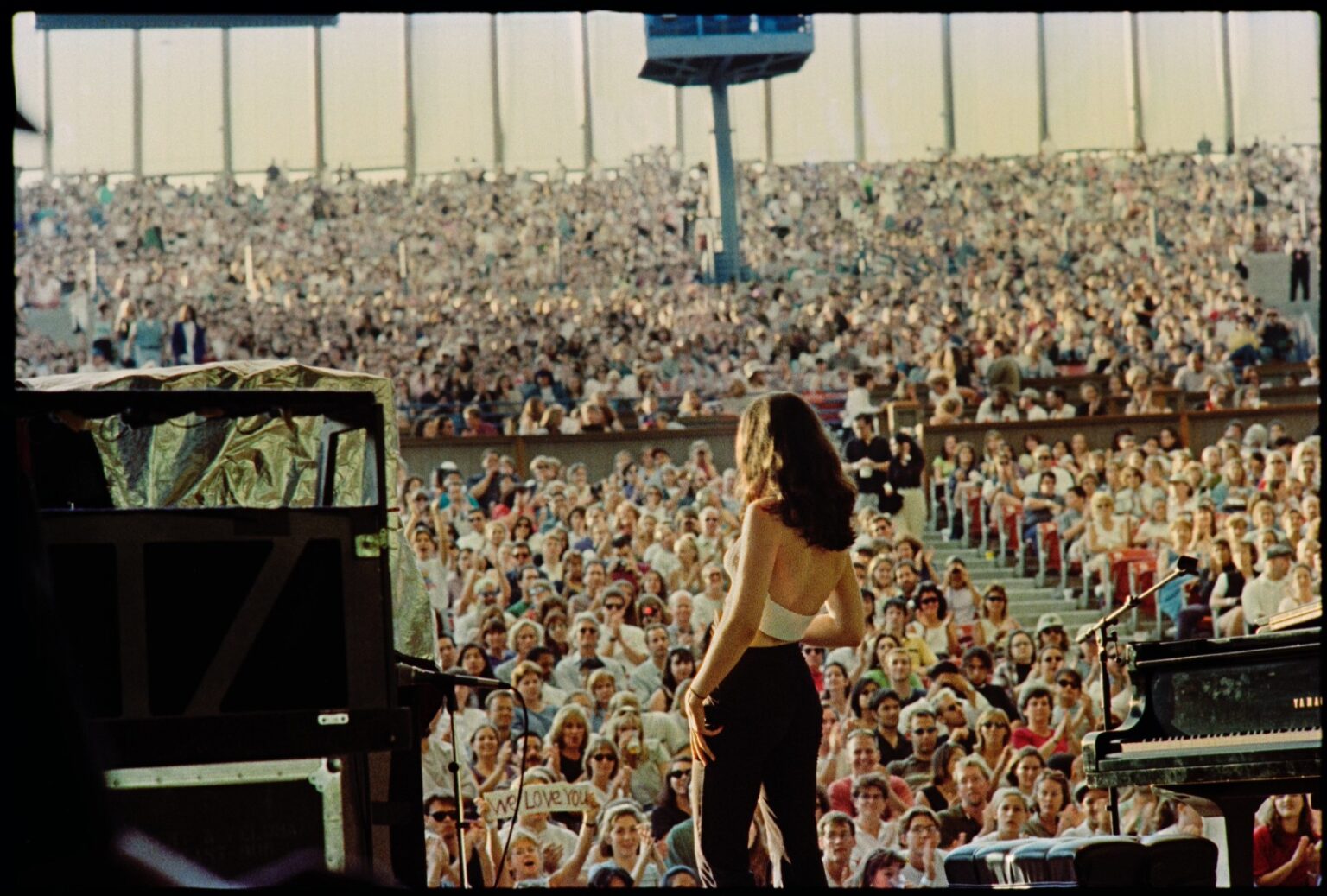
Some music documentaries revisit a moment in culture. Others completely reframe it. The upcoming documentary on Lilith Fair feels poised to do exactly that, not simply celebrating the festival’s legacy, but exposing how revolutionary it truly was at a time when the music industry repeatedly underestimated women.
Directed and executive produced by Ally Pankiw, whose work on Black Mirror and I Used to Be Funny showcased both emotional sensitivity and sharp storytelling instincts, the film revisits the rise of Lilith Fair through more than 600 hours of previously unseen footage.
What immediately makes this project compelling is that it does not position Lilith Fair as nostalgia. Instead, it frames the festival as a cultural turning point that challenged long-standing industry assumptions about women in music, assumptions that, honestly, still echo today.
Watch the Trailer
The Festival the Industry Said Wouldn’t Work
When Sarah McLachlan launched Lilith Fair in the late 1990s, the music industry reportedly believed audiences would not support a touring festival centered around female artists.
At the time, there was a persistent belief that women couldn’t headline major tours successfully, couldn’t dominate radio simultaneously, and couldn’t sell tickets at the scale male artists could.
Lilith Fair proved all of that wrong.
What makes the documentary especially fascinating is that it appears less interested in mythology and more interested in documenting the resistance the festival faced behind the scenes. That perspective transforms the story from a music documentary into something much larger, a portrait of women building space for themselves inside an industry that consistently underestimated them.
And perhaps even more importantly, succeeding anyway.
Ally Pankiw Brings a Distinctly Human Lens to the Story
One reason this documentary feels especially promising is the involvement of Ally Pankiw.
Pankiw has consistently shown an ability to balance emotional vulnerability with visual confidence, particularly in stories centered around identity, memory, and emotional complexity. That sensitivity feels perfectly aligned with a project like this.
Rather than treating Lilith Fair simply as a lineup of iconic performances, the documentary appears to focus on the emotional and cultural atmosphere surrounding it, the camaraderie, the backlash, the ambition, and the sense of collective momentum that made the festival feel transformative for so many women at the time.
That emotional approach matters because Lilith Fair was never just about concerts. It represented visibility.
A Cast of Voices That Defines Multiple Generations of Music
The documentary features interviews with an extraordinary range of artists, including Sheryl Crow, Jewel, Erykah Badu, Indigo Girls, Natalie Merchant, Brandi Carlile, and Olivia Rodrigo.
That lineup alone says something powerful about the festival’s reach and legacy.
What began as a movement rooted in the music culture of the late 1990s clearly continues influencing younger generations of artists today. Bringing together voices from different eras reinforces the idea that Lilith Fair was not simply a temporary cultural moment, it shifted the landscape permanently.
And honestly, in today’s music industry, where conversations around representation, ownership, and visibility remain central, the timing of this documentary feels incredibly relevant.
Produced by Dan Levy, Fueled by Legacy
The project is also produced by Dan Levy, whose involvement adds another layer of creative credibility and emotional intelligence to the film.
Levy has consistently gravitated toward projects rooted in authenticity, identity, and emotional honesty, themes that seem deeply connected to the spirit of Lilith Fair itself.
That combination of archival storytelling, personal interviews, and cultural reflection suggests this documentary will likely resonate far beyond audiences who originally attended the festival.
More Than a Music Documentary
What I find most interesting about the film is that it seems positioned less as a retrospective and more as a correction.
For years, Lilith Fair was often reduced to stereotypes or dismissed as a niche cultural event despite its enormous commercial success and influence. The backlash surrounding the festival, something the documentary reportedly examines directly, revealed how uncomfortable parts of the industry were with women occupying that much space, power, and visibility simultaneously.
Looking back now, it feels almost unbelievable that an all-female music festival was once considered financially risky.
And yet, that skepticism became part of what made Lilith Fair so culturally important in the first place.
Revisiting a Cultural Shift Through Modern Eyes
There’s also something fascinating about younger audiences discovering this story now.
Artists like Olivia Rodrigo represent a generation that grew up in a music landscape already shaped by the doors Lilith Fair helped open. Revisiting the festival through contemporary perspectives allows audiences to better understand how much resistance female artists once faced simply for existing together at the center of mainstream culture.
The documentary seems aware of that generational bridge, honoring the past while also connecting it directly to the present.
Final Thoughts
At a time when music documentaries are increasingly becoming cultural conversations rather than simple artist profiles, this film already feels significant.
Not only because of the extraordinary archival footage or the lineup of voices involved, but because it revisits a story that still feels unfinished.
Lilith Fair was never just about music. It was about challenging an industry narrative that claimed women could not lead, could not headline, and could not dominate commercially on their own terms.
The fact that the festival succeeded so powerfully despite that resistance is exactly what makes its story still resonate decades later.
And through Ally Pankiw’s lens, this documentary looks ready to remind audiences that some of the most important cultural movements begin with someone refusing to accept the limitations placed in front of them.
For more information, visit here.
She’s All Over the Place Podcast