
A century after her birth, Marilyn Monroe remains one of the most recognizable figures in modern culture.
Few stars from Hollywood’s Golden Age continue to command the kind of global attention that Monroe does. Her image appears on museum walls, fashion runways, magazine covers, and social media feeds. Her life continues to inspire books, documentaries, films, academic discussions, and artistic reinterpretations. Yet perhaps the most remarkable aspect of Marilyn Monroe’s legacy is not simply that she is remembered, but that she continues to be rediscovered by each new generation.
That enduring fascination was on full display in recent weeks as a series of high-profile events celebrated what has become known as the Marilyn Monroe Century, a global commemoration marking 100 years since the birth of the woman born Norma Jeane Mortenson and transformed into one of the most influential cultural icons of the twentieth century.
From Hollywood gatherings and museum discussions to a charitable auction in Cannes, the centennial celebrations revealed something deeper than nostalgia. They demonstrated how Monroe’s story continues to evolve long after her lifetime.
More Than a Movie Star
For decades, discussions about Marilyn Monroe have often focused on familiar images: the white dress billowing above a subway grate, the platinum blonde hair, the dazzling smile, and the glamorous Hollywood persona.
But contemporary conversations are increasingly shifting beyond those iconic photographs.
Today’s audiences are often more interested in understanding the woman behind the image. They want to know about Norma Jeane, the ambitious young woman who navigated an often unforgiving entertainment industry, studied acting seriously, challenged studio expectations, and sought creative control at a time when few actresses were granted such opportunities.
What stood out to me about the centennial celebrations is how many of them focused not simply on Monroe as a celebrity, but on Monroe as a complex human being whose story remains surprisingly relevant.
Questions surrounding fame, identity, media scrutiny, public image, and personal reinvention resonate just as strongly today as they did during her lifetime.
Bringing Marilyn Back to Life at Chateau Marmont
One of the most intriguing events of the centennial took place at the legendary Chateau Marmont in Los Angeles, a location deeply intertwined with Hollywood mythology.
There, actress Barbie Ferreira participated in a dramatic reading connected to The Marilyn Monroe Century, a new book chronicling Monroe’s life through photographs and storytelling.
The setting itself carried symbolic weight. Few locations represent Hollywood’s glamorous and mysterious history quite like Chateau Marmont. Hosting a literary and theatrical tribute there felt less like a promotional event and more like a conversation between past and present.
What makes these modern interpretations fascinating is that they allow younger generations to engage with Monroe’s story through contemporary voices. Rather than preserving her legacy behind glass, they keep it alive through performance, discussion, and reinterpretation.
That process is essential for any cultural icon hoping to remain relevant across generations.
The Power of Photography in Preserving a Legend
Much of the centennial celebration revolves around The Marilyn Monroe Century: From Norma Jeane to Icon, A Story in Photographs, a volume built around the remarkable archive of legendary photographer Dr. Bruno Bernard.
Photography played a unique role in Marilyn Monroe’s rise to global fame.
Long before social media transformed celebrities into constant visual presences, photographers helped shape public perception of movie stars. Images became narratives. A single photograph could define an era, a personality, or an entire career.
Bruno Bernard was among the most influential photographers of Hollywood’s Golden Age. His images captured not only Monroe’s beauty but also moments of spontaneity, vulnerability, and charisma that helped define her public identity.
Looking at these photographs today offers more than historical documentation. They provide insight into how celebrity itself was constructed during the twentieth century.
In many ways, Monroe became one of the earliest examples of a truly modern media phenomenon.

Cannes, Charity, and Cultural Legacy
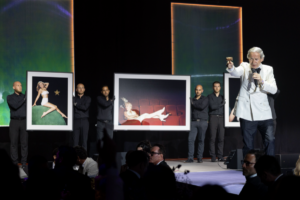
The centennial celebrations extended beyond Hollywood to the French Riviera, where photographs from the Bruno Bernard archives became a centerpiece of the prestigious amfAR Cannes Gala.
The auction raised €75,000 in support of efforts to combat AIDS, transforming Monroe’s legacy into a vehicle for philanthropy and social impact.
I find this particularly meaningful because it demonstrates how cultural icons can continue contributing to important causes long after their lifetimes.
Rather than functioning merely as collectibles, the photographs became catalysts for charitable giving. Their value was measured not only in artistic significance but also in their ability to generate support for a global health mission.
It is a reminder that legacy is not simply about remembrance. It is about continued relevance.
Revisiting Marilyn Through Cinema
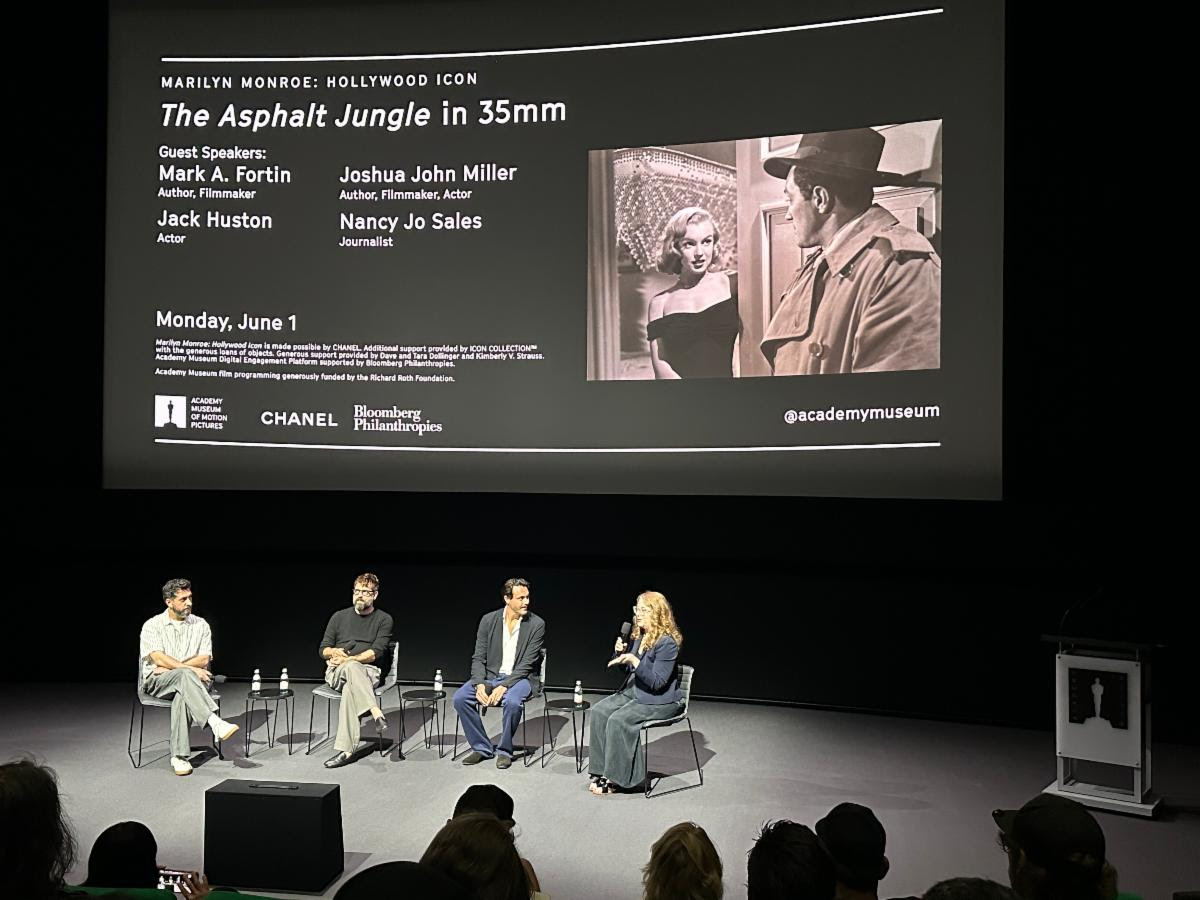
The Academy Museum’s centennial programming added another dimension to the celebration through a panel discussion and a special screening of The Asphalt Jungle, one of the films that helped establish Monroe’s early screen presence.
Film screenings often reveal how cultural perspectives evolve over time.
Audiences watching Monroe today are not seeing the same figure viewers encountered in the 1950s. They bring different social values, different understandings of celebrity, and different questions about gender, power, and fame.
As a result, Monroe’s performances continue to generate new interpretations.
The Academy Museum event highlighted how film history remains a living conversation rather than a static archive. Each generation returns to classic works and discovers something different within them.
For Monroe, that ongoing reinterpretation has become one of the defining characteristics of her legacy.
Why Marilyn Still Matters
One hundred years after her birth, Marilyn Monroe occupies a rare place in popular culture.
Many stars are remembered for their achievements. Some are remembered for their influence. Very few become symbols that transcend their original era.
Monroe belongs to that category.
She represents Hollywood glamour, certainly. But she also symbolizes ambition, reinvention, vulnerability, resilience, and the complicated relationship between public image and private reality.
That complexity is why books continue to be written about her. It is why museums continue to host discussions. It is why filmmakers, artists, photographers, and writers continue returning to her story.
A Century Later, the Conversation Continues
The Marilyn Monroe Century celebrations are not simply commemorating a birthday. They are acknowledging the extraordinary staying power of a cultural figure whose influence stretches across film, fashion, photography, literature, and popular culture.
From a literary gathering at Chateau Marmont to a museum panel in Los Angeles and a charitable auction in Cannes, the events demonstrate that Monroe’s story remains very much alive.
What began as the life of a young woman named Norma Jeane evolved into one of the most recognizable legends in modern history.
A hundred years later, the fascination endures, not because Marilyn Monroe belongs to the past, but because every generation continues to find something of itself reflected in her story.
THE MARILYN MONROE CENTURY NOW AVAILABLE
PURCHASE THE BOOK HERE