
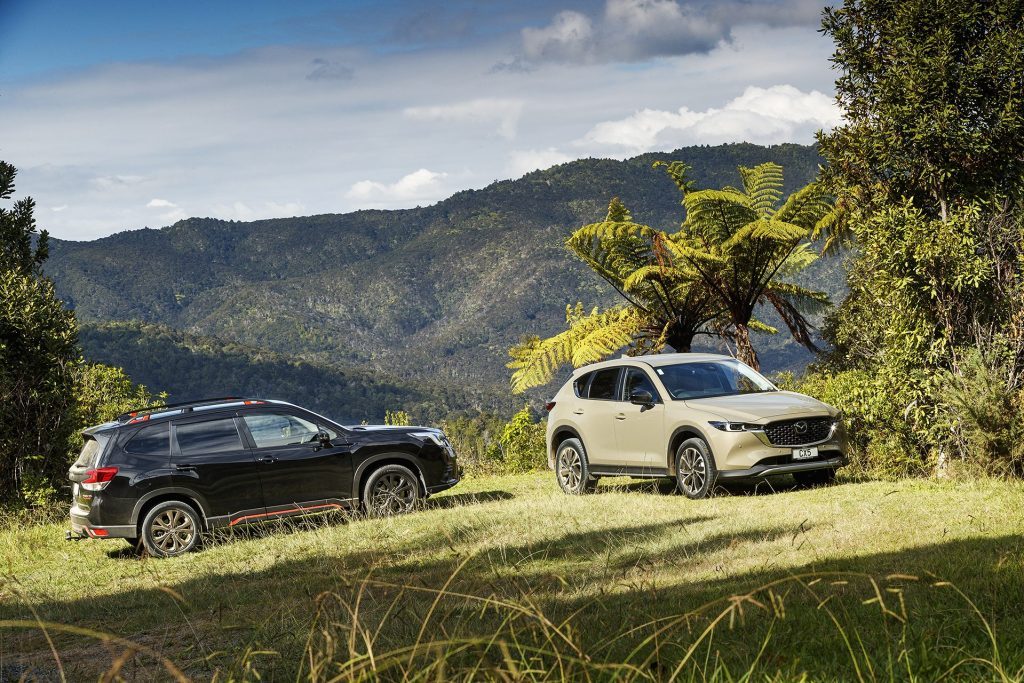
When winter weather hits, having a dependable SUV can make all the difference. Among compact crossovers, the Mazda CX-5 and Subaru Forester stand out as two of the most capable options for drivers who regularly face snow, ice, and cold conditions. Both are praised for their reliability, safety features, and all-wheel-drive systems, but which one performs best when the roads turn white?
This in-depth comparison of the Mazda CX-5 vs Subaru Forester for snowy climates looks at traction systems, ground clearance, handling, comfort, and cold-weather performance to help you choose the right SUV for winter driving.
Overview: Two Capable All-Weather SUVs
Both the Mazda CX-5 and Subaru Forester are designed with all-season usability in mind. However, their approach to handling snow differs:
-
Mazda CX-5: Focuses on dynamic handling and a premium feel, appealing to drivers who want style and sporty performance along with winter confidence.
-
Subaru Forester: Emphasizes ruggedness, visibility, and Subaru’s legendary Symmetrical All-Wheel Drive system, built to handle challenging terrain and slippery surfaces.
If you live in an area with heavy snowfall, understanding how each SUV’s drivetrain and safety systems work in real-world conditions is key to making an informed decision.
Table: Mazda CX-5 vs Subaru Forester Key Specs for Snowy Conditions
| Feature | Mazda CX-5 | Subaru Forester |
|---|---|---|
| Standard Drivetrain | Front-Wheel Drive (AWD optional) | Standard Symmetrical All-Wheel Drive |
| Engine Options | 2.5L I4 (187 hp) / Turbo (256 hp) | 2.5L Boxer I4 (182 hp) |
| Ground Clearance | 7.6 inches | 8.7 inches |
| Traction System | i-ACTIV AWD | Symmetrical AWD with X-MODE |
| Snow Mode | Yes (Drive Mode Select) | Yes (X-MODE with Snow/Dirt settings) |
| Tires (Stock) | All-season | All-season |
| Fuel Economy (Combined) | 26 mpg (base engine) | 29 mpg |
| Curb Weight | ~3,800 lbs | ~3,500 lbs |
| Cargo Space | 30.9–59.3 cu ft | 28.9–74.2 cu ft |
Subaru Forester: Built for Winter Resilience
The Subaru Forester has long been a favorite among drivers in snowy regions like the Northeast and Rocky Mountains. Subaru’s Symmetrical All-Wheel Drive system continuously monitors traction and adjusts power to all four wheels to maximize grip.
In addition, the Forester’s 8.7 inches of ground clearance allows it to plow through deep snow with confidence—an important edge over the CX-5’s lower stance.
The X-MODE system further enhances performance on slippery terrain by optimizing throttle response, transmission mapping, and brake pressure. It even includes specialized Snow/Dirt and Deep Snow/Mud modes, which fine-tune the powertrain for optimal traction in challenging conditions.
Winter Advantages of the Subaru Forester
-
Full-time AWD (no need to engage manually)
-
Excellent ground clearance for snow-packed roads
-
Heated seats, mirrors, and steering wheel available on most trims
-
Predictable handling and high visibility
However, the Forester’s lower power output (182 hp) means it isn’t the quickest SUV in this category. It prioritizes control and stability over outright performance.
Mazda CX-5: Winter Confidence Meets Sporty Style
The Mazda CX-5 takes a more refined approach to winter driving. Its i-ACTIV AWD system uses 27 sensors that monitor traction, temperature, and driver inputs up to 200 times per second. When slip is detected—or even anticipated—the system instantly redirects torque to the rear wheels.
Unlike the Forester’s always-on AWD, Mazda’s setup engages only when needed, improving fuel efficiency. The available turbocharged engine (up to 256 horsepower and 320 lb-ft of torque) gives the CX-5 a significant power advantage, especially on inclines or when passing on icy highways.
Winter Advantages of the Mazda CX-5
-
Optional turbo engine for confident acceleration in snow
-
Responsive steering and sporty handling
-
AWD system that reacts quickly to changing traction
-
“Off-Road” mode for enhanced stability
The CX-5’s “Snow Mode” optimizes throttle input to prevent wheel spin on slick surfaces, while its traction control system provides steady grip on packed snow. However, its lower ground clearance means it’s better suited to plowed roads than deep, unmaintained trails.
Interior Comfort and Winter Features
Both SUVs offer heated front seats, steering wheels, and mirrors—essential for frigid mornings. The Forester offers a slightly roomier cabin with taller windows, improving outward visibility during blizzards or fog.
Mazda, on the other hand, offers a more upscale interior, with high-quality materials and a quieter cabin, making long winter drives more comfortable.
Cold-Weather Highlights
-
Forester: Dual-zone climate control, heated rear seats (on higher trims), and all-weather floor mats available.
-
CX-5: Available ventilated seats, heated steering wheel, and a premium Bose audio system for cozy commutes.
If luxury and comfort are priorities, the CX-5 has the edge. For utility and durability, the Forester wins.
On-Road Handling in Snow and Ice
In independent winter tests, both SUVs performed admirably on icy pavement and snow-covered roads. The Forester’s AWD provides smoother power delivery and less wheel slip when starting from a stop on ice.
The CX-5, however, offers sharper steering and more engaging dynamics once in motion. On twisty, snow-covered roads, Mazda’s handling gives it a more composed and confident feel.
Verdict:
-
Forester: Better traction and control in deep snow or uneven terrain.
-
CX-5: More agile and composed on slippery but maintained roads.
Safety in Winter Conditions
Safety is a strong point for both vehicles, with each earning top marks from the IIHS (Insurance Institute for Highway Safety). Both come standard with advanced safety suites:
-
Mazda i-ACTIVSENSE: Includes adaptive cruise control, lane-keep assist, and Smart Brake Support.
-
Subaru EyeSight: Offers adaptive cruise control, pre-collision braking, and lane centering.
Subaru’s system tends to perform slightly better in low-visibility conditions due to its dual-camera setup, while Mazda’s radar-based system maintains steady braking on wet or icy surfaces.
Fuel Economy and Long-Term Reliability
Cold weather reduces fuel efficiency in all vehicles, but both the CX-5 and Forester remain competitive. The Forester’s naturally aspirated engine is more efficient overall, averaging around 29 mpg combined, while the CX-5’s turbo engine averages 24–26 mpg.
Both brands are known for reliability, but Subaru’s AWD system has a longer track record in harsh winter regions. Mazda counters with a higher-quality interior and more engaging ride.
Final Comparison Table: Which SUV Handles Snow Better?
| Category | Winner | Why |
|---|---|---|
| Traction in Deep Snow | Subaru Forester | Standard AWD, X-MODE, better clearance |
| Highway Stability | Mazda CX-5 | More power and responsive steering |
| Comfort & Cabin Design | Mazda CX-5 | Premium materials and quieter ride |
| Visibility | Subaru Forester | Taller windows, higher driving position |
| Efficiency | Subaru Forester | Better fuel economy in cold weather |
| Driving Fun | Mazda CX-5 | Turbo engine and dynamic handling |
| Overall Winter Capability | Subaru Forester | Superior AWD and clearance for severe snow |
FAQs About Driving the CX-5 and Forester in Snow
Q1: Does the Mazda CX-5 come standard with AWD?
No, AWD is optional on lower trims but standard on higher trims. For snow-prone regions, choosing AWD is highly recommended.
Q2: Which SUV has better ground clearance for snow?
The Subaru Forester offers 8.7 inches of clearance compared to the CX-5’s 7.6 inches, making it better suited for deep snow.
Q3: How do winter tires affect performance?
Equipping either SUV with quality winter tires can dramatically improve braking, acceleration, and cornering on ice and snow.
Q4: Can the Mazda CX-5 handle off-road winter conditions?
Yes, but its lower clearance limits it to plowed or moderately snowy roads rather than unmaintained trails.
Q5: Which is better for long winter road trips?
Both are excellent, but the CX-5 offers a quieter and more comfortable ride for extended travel, while the Forester provides superior traction and peace of mind.
Final Thoughts
When comparing the Mazda CX-5 vs Subaru Forester for snowy climates, the choice ultimately depends on your priorities. The Subaru Forester is the more capable winter warrior—ideal for drivers who regularly face deep snow, icy roads, and unpredictable weather. Its full-time AWD, high ground clearance, and rugged design make it nearly unstoppable in winter conditions.
The Mazda CX-5, on the other hand, blends winter capability with upscale comfort and spirited handling. It’s perfect for those who want confidence in snow without sacrificing driving pleasure or refinement.
Both vehicles demonstrate how advanced engineering enhances safety and performance in extreme conditions, much like how electric SUVs continue to push efficiency limits in other categories—shown by the impressive Tesla Model Y Real-World Range Test Results.