

Written and directed by acclaimed filmmaker Christian Petzold, Miroirs No. 3 continues the director’s tradition of crafting emotionally layered stories that linger long after the final frame. Starring Paula Beer, Barbara Auer, Matthias Brandt, and Enno Trebs, the film unfolds as a quiet yet deeply unsettling modern gothic fairytale, blending psychological intimacy with a sense of mystery that gradually reveals itself through atmosphere rather than spectacle. Critics have long recognized Petzold as one of contemporary cinema’s most mesmerizing voices, and this latest work further confirms his ability to transform ordinary moments into haunting reflections on human connection.

A Story Born From Survival and Reinvention
The narrative begins during a countryside weekend trip when Laura, a young piano student from Berlin, survives a devastating car crash that changes the trajectory of her life. Awakening in an unfamiliar home, she finds herself under the care of a local woman who offers warmth and maternal devotion as Laura slowly recovers. What initially appears to be an act of kindness evolves into something more complex as Laura gradually becomes entwined in the lives of the woman, her hesitant husband, and their son. As bonds begin to form, a fragile sense of belonging emerges, suggesting the possibility of healing through shared experience.
Official Trailer
Between Hope and Haunting Memory
As Laura integrates into this unexpected household, the film moves delicately between tenderness and unease. Petzold explores how grief quietly shapes behavior, revealing how individuals construct emotional narratives to survive loss. The relationships that develop are marked by both comfort and tension, suggesting that connection can be as unsettling as it is restorative. The past, never fully resolved, begins to resurface, turning what feels like refuge into a space where hidden truths and emotional ghosts can no longer be ignored. Through this shifting emotional landscape, the film examines the lies people tell themselves and the ways memory continues to influence the present.
A Distinctive Cinematic Language
Cinematographer Hans Fromm captures the story with restrained elegance, allowing stillness and subtle movement to shape the film’s visual rhythm. Production design by K.D. Gruber creates environments that feel lived-in yet slightly uncanny, reinforcing the film’s gothic undertones. Editing by Bettina Böhler maintains a measured pace that mirrors Laura’s psychological journey, while the layered sound design by Andreas Mücke-Niesytka, Dominik Schleier, Marek Forreiter, Bettina Böhler, and Lars Ginzel deepens the film’s emotional texture. Each creative element works together to create an atmosphere where silence and suggestion carry as much weight as dialogue.
A Director With a Singular Voice
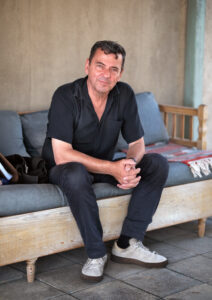
Christian Petzold, born in Hilden in 1960, studied German and theater at the Free University of Berlin before attending the German Film and Television Academy Berlin. Since directing his first feature in 1995, he has become one of Germany’s most respected filmmakers. His film The State I Am In won Gold at the German Film Awards, while Barbara earned him the Berlinale Silver Bear for Best Director in 2012. More recently, Afire received the Berlinale Silver Bear Grand Jury Prize in 2023, further solidifying his reputation for thoughtful and emotionally resonant cinema.
A Modern Gothic Fairytale About Human Connection
At its core, Miroirs No. 3 reflects on how people rebuild themselves after trauma and how unexpected relationships can offer both solace and confrontation. Moving between hope and melancholy, the film invites audiences to consider how grief binds individuals together even as it isolates them. Through Petzold’s patient storytelling and nuanced performances, the film becomes less about plot and more about emotional transformation, leaving viewers with images and questions that continue to resonate long after the story ends.