
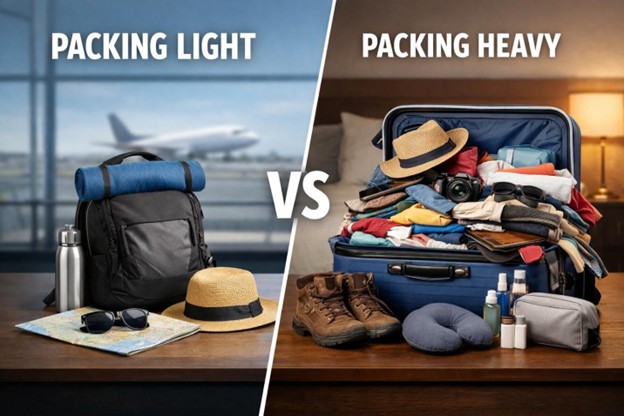
When planning a trip, one of the most common dilemmas travelers face is deciding how much to pack. Should you pack light, traveling with just the essentials, or pack heavy, bringing everything you might possibly need? Both approaches have their merits, and the right choice depends on factors such as trip length, destination, travel style, and personal preferences. Understanding the pros and cons of each can help you make smarter packing decisions and enjoy a smoother travel experience.
In this article, we’ll explore the benefits and downsides of packing light and packing heavy, provide practical tips for each, and help you determine which approach suits your travel style best.
Meanwhile, if you want to explore Peryagame, don’t miss out GameZone.
What Does Packing Light Mean?
Packing light means traveling with minimal luggage, often a carry-on or small backpack. This approach emphasizes efficiency, convenience, and mobility. Travelers who pack light focus on essentials, versatile clothing, and compact gear. The goal is to move freely without being weighed down by bulky luggage.
Benefits of Packing Light
- Easier mobility
One of the main advantages of packing light is mobility. You can easily navigate airports, train stations, bus terminals, and crowded streets without struggling with heavy luggage. Lightweight packing is particularly beneficial for backpackers, solo travelers, or those planning multi-destination trips. - Faster airport experience
Travelers who pack light often avoid checked baggage, which saves time during check-in and baggage claim. This reduces stress, especially for short trips or tight schedules. It also minimizes the risk of lost or delayed luggage, which can be a nightmare during connecting flights. - Lower travel costs
Airlines frequently charge extra fees for checked luggage. By packing light, you can avoid these fees, saving money—especially on budget airlines. Less luggage also reduces transportation costs, such as taxis or rideshares, which can increase if you have bulky bags. - Simplifies your travel routine
With fewer items to manage, packing light reduces decision fatigue. You spend less time organizing your belongings, choosing outfits, and worrying about packing mistakes. This allows you to focus more on your travel experience.
Downsides of Packing Light
- Limited outfit options
Minimalist packing requires you to repeat clothing items or do laundry during your trip. For longer trips, this can become inconvenient, particularly if laundry facilities are unavailable. - Less preparedness
Unexpected events, weather changes, or special occasions may require items you didn’t pack. Packing light limits flexibility and can make you less prepared for diverse situations. - Requires careful planning
Travelers who pack light must plan meticulously. Every item should serve a purpose, and you may need to sacrifice comfort, convenience, or variety.
What Does Packing Heavy Mean?
Packing heavy involves bringing larger suitcases or multiple bags, often including extra clothing, shoes, toiletries, gadgets, and “just-in-case” items. This approach prioritizes preparedness and comfort, allowing travelers to handle almost any scenario without worry.
Benefits of Packing Heavy
- Greater comfort and preparedness
Packing heavy means you can accommodate sudden weather changes, various activities, and special events. You can bring items like jackets, formal wear, or sports gear without compromise, providing peace of mind. - More outfit variety
For longer trips or formal travel, packing heavy allows for outfit flexibility. You can dress for different occasions without relying on laundry facilities or repeating clothing too often. - Convenience for long-term stays
If your trip lasts several weeks or you’re traveling with family, packing heavy can reduce the need to buy items at your destination. This can save money and make life easier, especially when children or elderly travelers are involved.
Downsides of Packing Heavy
- Reduced mobility
Heavy luggage can be difficult to carry, especially when navigating crowded public transportation, stairs, or uneven terrain. It can slow you down and make travel more stressful. - Higher costs
Checked luggage fees, transportation expenses, and porter services can add up. Overpacking can become an expensive habit, particularly if you frequently travel by air. - Increased stress and responsibility
Managing multiple or bulky bags requires extra effort. There’s also a higher risk of lost, damaged, or forgotten items.
Factors to Consider: Light vs. Heavy Packing
- Trip Length
- Short trips (1–4 days): Packing light is ideal. A small bag is sufficient, and you won’t need to carry excess clothing or gear.
- Medium trips (5–10 days): Either approach can work, depending on destination and personal preferences. Packing light with laundry plans is feasible, while packing heavier can reduce planning stress.
- Long trips (2+ weeks): Packing heavy may be more practical unless you’re willing to do laundry regularly or strategically plan versatile outfits.
- Destination and Climate
- Warm destinations: Minimal clothing is needed, so packing light is easier. Lightweight, breathable fabrics allow you to mix and match items.
- Cold or variable climates: Bulky layers, jackets, and winter gear often require packing heavier. Accessories like gloves, scarves, or boots add extra weight.
- Urban vs. rural areas: Cities often provide stores for last-minute purchases, making light packing more practical. Remote areas require careful preparation, favoring heavier packing.
- Type of Travel
- Backpacking and adventure travel: Packing light ensures mobility and reduces fatigue during long hikes or multi-day treks.
- Business travel or events: Packing heavy provides professional attire and accessories, ensuring you’re prepared for meetings or special occasions.
- Family travel: Traveling with children often necessitates heavier packing to accommodate clothes, toiletries, snacks, and entertainment needs.
- Transportation Method
Your mode of travel impacts the packing decision. If you’re flying with multiple connections, packing light reduces handling stress. For road trips, cruises, or train travel with ample luggage space, packing heavy is less of an issue.
Conclusion: Which Approach Is Better?
The debate between packing light and packing heavy doesn’t have a one-size-fits-all answer. Packing light offers freedom, flexibility, and cost savings, making it ideal for short trips, solo adventures, or frequent movers. Packing heavy prioritizes comfort, preparedness, and peace of mind, which is useful for long trips, family travel, or formal events.
Ultimately, the best packing strategy aligns with your travel goals, destination, and comfort preferences. Many travelers find that a smart packing approach, combining elements of both styles, provides the best balance. By understanding the pros and cons of each method, you can pack efficiently, enjoy your journey, and focus on what truly matters: exploring new destinations and creating unforgettable experiences.