
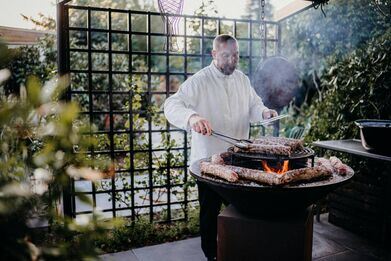
Sparks and aromas catch every guest’s attention. The sizzle of open flames pulls people toward the kitchen, not just for dinner, but for the show. Resorts want dining to make a memory that lasts beyond checkout.
New trends have operators weighing live-fire cooking programs. Are they worth the capital? Permits and hoods, sustainability claims, insurance headaches, or training demands can feel overwhelming at first glance.
You might be curious whether your choice stacks up, so let’s break it all down together.
Demand Trends in Live-Fire Cooking (For resorts)
Guests seek out meals that feel exclusive and interactive. As operators notice, social media posts featuring wood fire, smoke, and glowing coals generate strong interest.
Keyword research tools like Google Trends, Keyword Planner, and Semrush show rising searches for live-fire menus. And that’s not just at restaurants – destination properties too.
Many new resort openings list a signature open-hearth grill or chef’s counter as their main dining draw. High demand is not just a fad; operators are baking it into new project blueprints.
Different Live-Fire Cooking Equipment Types Compared
Another important factor to consider is which live-fire tool best fits your kitchen’s vision and workflow. Options bring different results, heat profiles, menu flexibility, and costs.
Each type attracts a certain style of chef and menu planning as well. And essentially, no two fire setups perform the same way during peak service.
Let’s weigh the options:
1. Tandoor
Clay-lined cylinders concentrate heat to temperatures above 900 degrees, cooking skewers and flatbreads fast with smoky char. The round opening supports a busy line, yet also offers chefs creative ways to sear seafood or roast vegetables.
Commercial tandoor ranges come in gas or charcoal models, some holding dozens of skewers at once for large-scale service.
2. Charcoal Grill
Red-hot coals radiate even heat, giving steaks, burgers, and vegetables a deep flavor that stands out. Large commercial units hold multiple zones for searing and finishing at once.
Consider grate size and ash management when reviewing options to make sure you keep pace during the busiest meal periods.
3. Josper
A sealed charcoal oven locks in heat, reaching up to 800 degrees for rapid grilling and roasting. The closed chamber reduces smoke, making it easier on indoor systems.
Many chefs value its precision for high-volume menus that require both speed and flavor consistency.
4. Plancha
Here, a thick metal surface spreads heat evenly. It lets chefs cook seafood, meats, and vegetables side by side without flare-ups.
Precision temperature control of Plancha supports delicate items or caramelized crusts, too. This setup excels when your kitchen needs flexibility for fast breakfast or à la carte service.
Navigating Capital Expenditure
Kitchens with live-fire setups require more upfront investment than standard gas or electric lines. Costs go beyond the unit itself, often including:
- Reinforced flooring,
- Extra hooding,
- And sometimes utility upgrades.
To stay within budget, break down pricing by model, installation needs, and future maintenance plans. Detailed quotes early on can prevent sticker shock later.
Does Your State Require Permits?
Building departments treat live-fire appliances differently than standard kitchen gear. Some areas ask for detailed engineering plans or special safety features before approving new installations.
Also, open-fire regulations change quickly. So, it’s good practice to check with local fire marshals and permitting offices early in the process. No two states—or even counties—share identical paperwork or inspection requirements for commercial kitchens using flames.
What to Know About Hooding and Ventilation Requirements
Flames make kitchens hotter and smokier, pushing standard hoods beyond their limits. Specialized exhaust systems clear the air while keeping energy costs manageable. Seek input from engineers who know live-fire airflow needs.
Routine cleaning schedules also get more intense, since grease and ash build up quickly. Overlooking this step can lead to fire hazards or code violations.
Equally important is maintaining personal wellness in such demanding kitchen environments. Long hours near open flames can take a toll on focus and stamina, so chefs should prioritize hydration, balanced nutrition, and overall wellness routines. Integrating natural wellness support, like products from LivFresh, can help professionals stay energized and refreshed even during high-pressure service hours, ensuring safety and performance remain top-notch.
Sustainability Considerations for Resort Kitchens
Environmental impact weighs heavily in resort kitchen planning. Yes, a charcoal BBQ brings authentic flavor to cookouts, but its carbon footprint outpaces most gas or electric appliances. Some equipment makers now use cleaner-burning fuels and heat recovery tech.
Choosing local wood or charcoal can also help meet eco-label standards. Ask vendors about third-party certifications if your brand focuses on sustainability metrics.
Staff Training and Safety Challenges with Open Flame Programs
Live flames require more skill than turning a knob.
Chefs must learn to:
- Manage hot spots,
- Control flare-ups,
- And follow new fire safety routines every shift.
Certifications in open-fire cooking or workplace safety are valuable for staff onboarding.
Routine fire drills and clear emergency plans keep everyone confident on the job. Also, insurance providers often check training records during annual policy reviews.
Insurance Costs and Coverage Gaps for Live-Fire Setups
Not every policy covers damage or injuries from open flames. While standard hotel insurance policies that average $2,464 PAR cover fire damage from wildfires, insurers may raise premiums for kitchens using wood, charcoal, or high-heat equipment.
Some carriers require upgraded fire suppression systems before issuing a new certificate. Ask your agent to outline any gaps tied to live-fire gear. Knowing the fine print up front can prevent expensive surprises after an incident or claim review.
Whether adding live-fire to your lineup or refining an existing setup, every detail matters. Smart choices today shape guest experience and operational resilience for seasons ahead.