
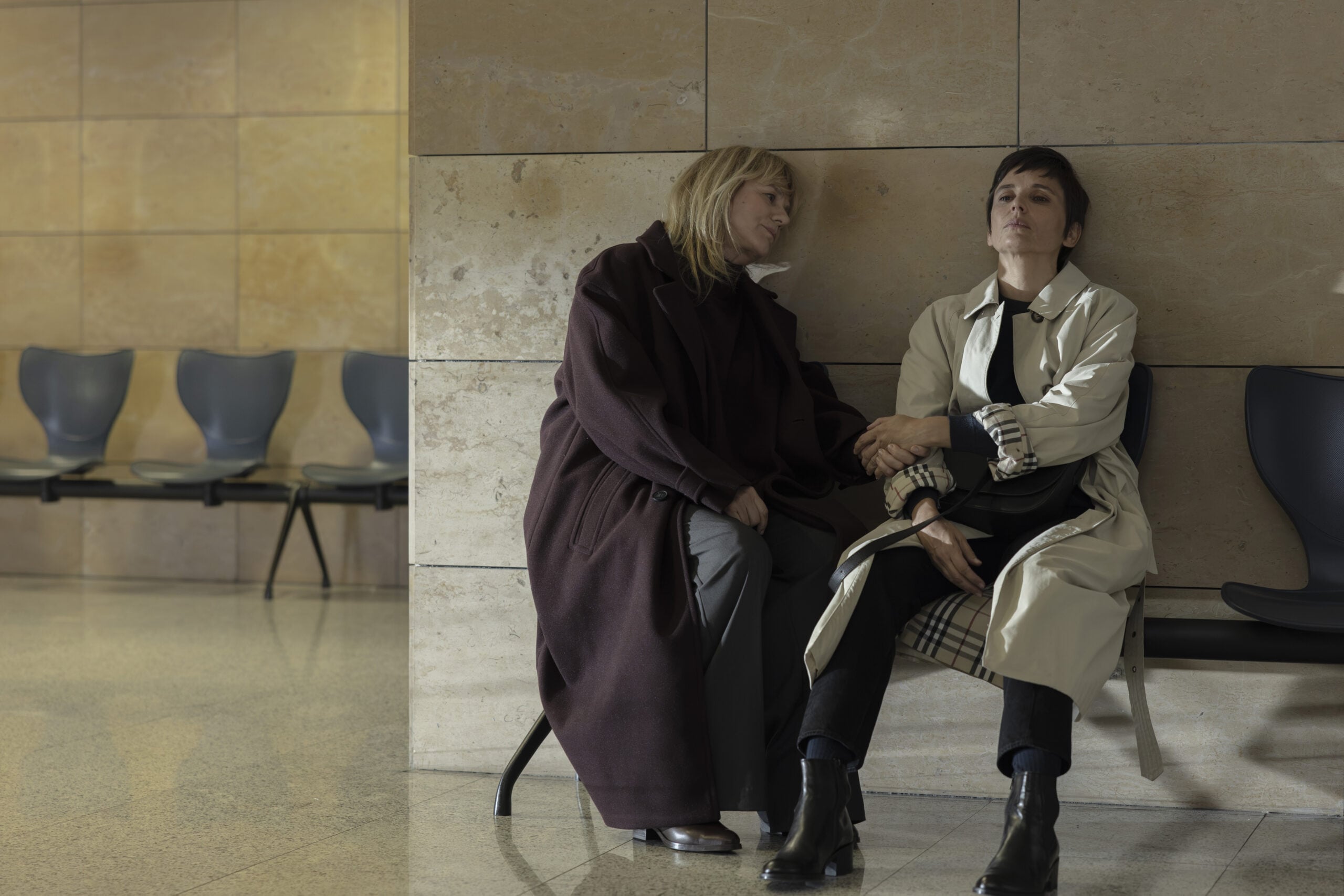
What begins as a summer family gathering outside Madrid quickly becomes a devastating confrontation with trauma, denial and the fragile boundaries between love and truth in Ione Hernández’s Sisters. Starring Elena Anaya and Emma Suárez, the Spanish-Basque drama arrives as a striking TIFF Discovery title and marks Hernández’s fiction feature debut.
Set against the San Juan Festival and the beginning of summer, Sisters brings two families together for a weekend intended to celebrate milestones and shared traditions. But the atmosphere of celebration is shattered when a serious allegation of sexual abuse involving two cousins forces the family to confront an unbearable reality.
A Celebration That Suddenly Turns Dark
At the centre of the story are sisters Chelo, played by Emma Suárez, and Marta, portrayed by Elena Anaya. Their relationship is tested when Chelo’s tween daughter, Sofia, wakes her mother in the middle of the night and reveals that she has been sexually assaulted by her 18-year-old cousin, Lucas.
The revelation immediately transforms the family gathering.
Chelo responds by entering a complicated world of hospitals, police statements and procedures while simultaneously trying to care for her deeply distressed daughter. Marta, however, cannot accept the accusation. Her son is the person being accused, and her refusal to believe that he could commit such a crime creates a devastating divide between the sisters.
The film’s conflict therefore operates on two levels: the legal process surrounding the allegation and the emotional fracture developing within a family that has suddenly been forced to question everything it thought it knew.
Two Sisters, Two Responses to Trauma
Hernández builds Sisters around the contrasting ways Chelo and Marta respond to the crisis.
Chelo turns toward action and therapeutic resolution. Faced with an overwhelming situation, she attempts to navigate institutions and protect her daughter while confronting the reality in front of her.
Marta moves in the opposite direction. Her initial response is denial, followed by anxiety and desperation as the implications of the accusation become impossible to contain.
Their different reactions become central to the film’s exploration of personal bias and guilt. Neither sister can simply remain outside the consequences of what has happened. The allegation reaches into their identities as mothers, sisters and members of the same family.
Elena Anaya and Emma Suárez at the Centre
The film depends heavily on the emotional contrast between its two leads.
Emma Suárez, known for films including Julieta and April’s Daughter, brings Chelo a restrained emotional strength. Her performance reflects a woman attempting to function within an unbearable situation while caring for a daughter who has been profoundly affected.
Elena Anaya, whose credits include The Skin I Live In, Wonder Woman, Van Helsing and Sex and Lucia, approaches Marta from a very different emotional register. Her character becomes increasingly psychologically bruised as denial gives way to desperation.
Together, the performances create a relationship defined not only by the immediate crisis but also by older wounds and unresolved emotions between the sisters.
A Story About Intergenerational Trauma
While the allegation forms the film’s central crisis, Sisters expands its focus toward intergenerational trauma, guilt, envy and the complicated ways families carry unresolved pain.
The sisters are not simply responding to an event in the present. Their reactions are shaped by histories that have existed between them long before this particular weekend.
As the legal proceedings approach, those buried tensions begin to surface. The family must confront not only what may have happened to Sofia, but also the accumulated emotional history that has influenced how each sister understands the situation.
Hernández’s approach places particular emphasis on the human dimensions of the story. Rather than treating the family as a collection of positions in a legal argument, the film examines how fear, loyalty and personal history can influence a person’s understanding of truth.
From Journalism to Fiction
The film’s observational quality reflects Hernández’s background and filmmaking approach. Her debut is described as combining a journalistic eye with an intuitive and compassionate perspective, allowing the story to move between the personal and procedural dimensions of the family’s ordeal.
That balance becomes particularly important as the film approaches its courtroom sequences. The question of truth moves from the family’s private spaces into a formal setting where testimony and evidence take on new weight.
Sofia’s testimony becomes an echo of everything that has unfolded throughout the story, forcing the sisters to confront an impossible reality once again.
A Spanish-Basque Drama Rooted in Family
Produced by José Esteban Alenda, César Esteban Alenda, Lara Izagirre Garizurieta, Garazi Elorza, María Zamora, Úrsula Romero Gerberding, R. Paul Miller and Ione Hernández, Sisters brings together an ensemble that includes Josean Bengoetxea, Carlota Keiko, León Martínez, Nora Otxoteko and Aritz Kortabarria alongside Anaya and Suárez.
The film runs 101 minutes and is presented in Spanish and Basque, with Be For Films handling sales.
Its setting is significant as well. The San Juan Festival provides the opening atmosphere of communal celebration, family gatherings and the arrival of summer. Against that backdrop, Hernández creates an increasingly tense portrait of a family whose sense of togetherness begins to fracture.
When Truth Becomes the Family’s Hardest Question
Sisters is ultimately less interested in easy answers than in the emotional consequences of confronting a devastating accusation.
For Chelo, believing her daughter means confronting a reality she cannot undo. For Marta, accepting the accusation means confronting an image of her son that she cannot reconcile with the person she believes she knows.
Between them lies a family forced to navigate grief, fear, loyalty and justice.
With Elena Anaya and Emma Suárez anchoring its emotional core, and Ione Hernández bringing an observational sensibility to her first fiction feature, Sisters transforms a family summer gathering into a deeply unsettling examination of what happens when the truth threatens to destroy the relationships built around it.

If you enjoyed this article, please stay connected and follow Katie Chonacas here