
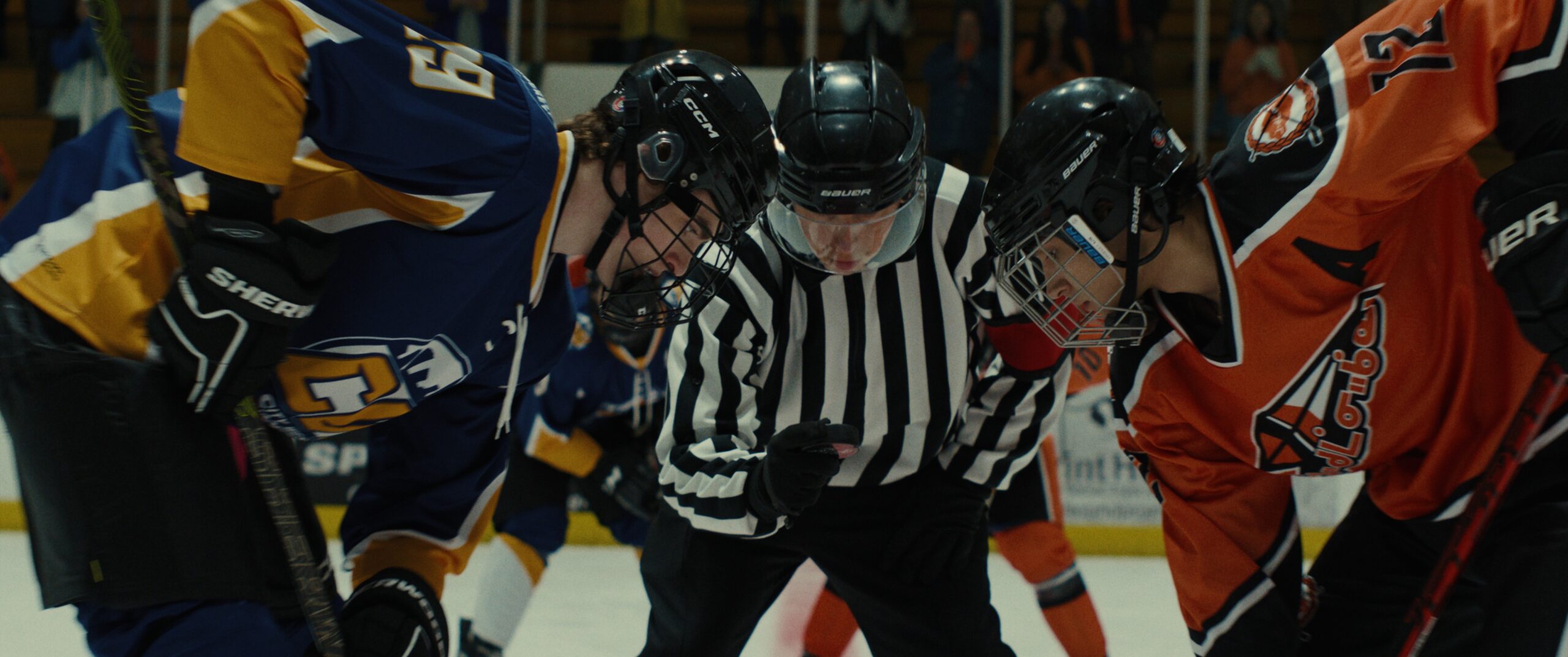
At the 2026 Toronto International Film Festival, an underdog hockey team has taken its story from the rink to one of Canadian cinema’s most visible stages. Cody Lightning’s Smudge the Blades has won the TIFF Best Canadian Discovery Award, following its premiere in the festival’s Centrepiece programme.
Announced at the TIFF Awards Ceremony on September 20 in Toronto, the honour recognizes the film as a standout emerging work of Canadian cinema. But Smudge the Blades is ultimately about more than hockey. Beneath its sports-movie framework is a story about community, resilience, racism, belonging and the importance of people showing up for one another.
An Underdog Team Finds Its Way Back Onto the Ice
Set in Northern Alberta, Smudge the Blades follows the Treaty 6 Blades, a struggling U-18 hockey team whose season takes an unexpected turn when they are expelled from their league.
With the team facing an uncertain future, local Zamboni driver Willie Gladue, played by Lightning himself, steps behind the bench. What begins as an attempt to keep the players together becomes a much larger journey through their final season as a team.
The premise carries the familiar ingredients of a classic sports drama: a group of underdogs, a difficult season and an unlikely coach. Yet Lightning and co-writer Samuel Miller use that structure to explore circumstances that extend well beyond the scoreboard.
For the players of the Treaty 6 Blades, hockey is simultaneously an escape, a source of identity and a place where the realities of their community cannot simply be left outside the arena.

Hockey as a Language of Community
Lightning’s connection to the material is personal. His experiences as a coach helped inform the film, giving its hockey scenes an understanding of the relationships, rituals and pressures that shape a team.
At the heart of the film is the idea of wechetowin — people helping people and coming together. That principle extends from the fictional team to the filmmaking itself.
Lightning described the TIFF recognition as a particularly meaningful moment, emphasizing how the movie was made collectively, with every member of the production contributing to the whole.
That spirit is reflected in the Treaty 6 Blades themselves. Their story is not simply about winning games. It is about maintaining solidarity when circumstances make it difficult, and finding strength in the people around you.
Beyond the Traditional Sports Movie
Smudge the Blades embraces the emotional appeal of the sports movie while refusing to pretend that every young player begins from the same starting line.
As Miller explains, the filmmakers wanted to make something resembling the sports films they grew up watching, while recognizing that the young people at the centre of this story are confronting much heavier realities.
That tension gives the film its particular identity. The familiar rhythms of hockey — locker-room banter, team dynamics, pressure and competition — exist alongside questions of racism, resilience and belonging.
Rather than treating those realities as a separate issue, the film incorporates them into the team’s journey. The result is a story in which the magic of sport comes not from ignoring difficult circumstances, but from finding connection within them.

A Cast Built Around Authenticity
The film’s ensemble brings together experienced actors and Indigenous hockey players making their acting debuts.
Lightning stars alongside Jana Schmieding and Ed Helms, while the cast also includes Paulina Alexis, Treycen Wuttunee, Isaiah Kakepetum, River Rayne Thomas, Elijah James Lee Moar, Tyler Halcrow and Ezekiel Mekanak.
That combination gives the Treaty 6 Blades an ensemble dynamic rooted in the physical and social rhythms of hockey. The locker-room exchanges, team relationships and intensity of the game are central to the film’s sense of authenticity.
For a story built around a young team, that chemistry is crucial. The players need to feel like a group that has spent time together long before the camera arrived — and the film’s casting approach helps establish precisely that sense of shared experience.
A Collaborative Indigenous Production
Behind the camera, Smudge the Blades represents a substantial collaborative effort.
The film is produced by Lightning Mill Inc. and North Country Cinema, with Lightning and Joshua Jackson producing for Lightning Mill, alongside Kyle Thomas and Sara Corry of North Country Cinema, Hayley Morin and Dylan Morin.
Executive producers include Harlan Kingfisher, founder of the Indigenous clothing brand Smudge The Blades, as well as Mike Falbo, Brett Harris and Ed Helms for Pacific Electric Picture Company.
The production received support from Telefilm Canada, the Government of Alberta, Indigenous Screen Office, Shaw Rocket Fund and the Edmonton Screen Office, and was produced in association with Crave, Aboriginal Peoples Television Network and CBC Films.
The film is represented for worldwide sales by John McGrath of UTA.
A Discovery Award With a Bigger Meaning
The Best Canadian Discovery Award places Smudge the Blades within a TIFF tradition of highlighting emerging Canadian filmmaking. For Lightning, however, the recognition also reflects the communal philosophy that runs through the film.
The Treaty 6 Blades may begin their story as outsiders struggling to remain in the game, but their journey is ultimately defined by the decision to keep showing up for each other.
That makes the TIFF award feel particularly fitting for a film whose central idea is collective effort. Everyone has a role to play, everyone passes the puck, and nobody gets left on the bench.
With Smudge the Blades, Cody Lightning turns a hockey underdog story into something broader: a portrait of Indigenous community, youthful resilience and the bonds that can form when people refuse to face difficult circumstances alone.
At TIFF 2026, that story has found its place among the festival’s recognized Canadian discoveries.
If you enjoyed this article, please stay connected and follow Katie Chonacas here