
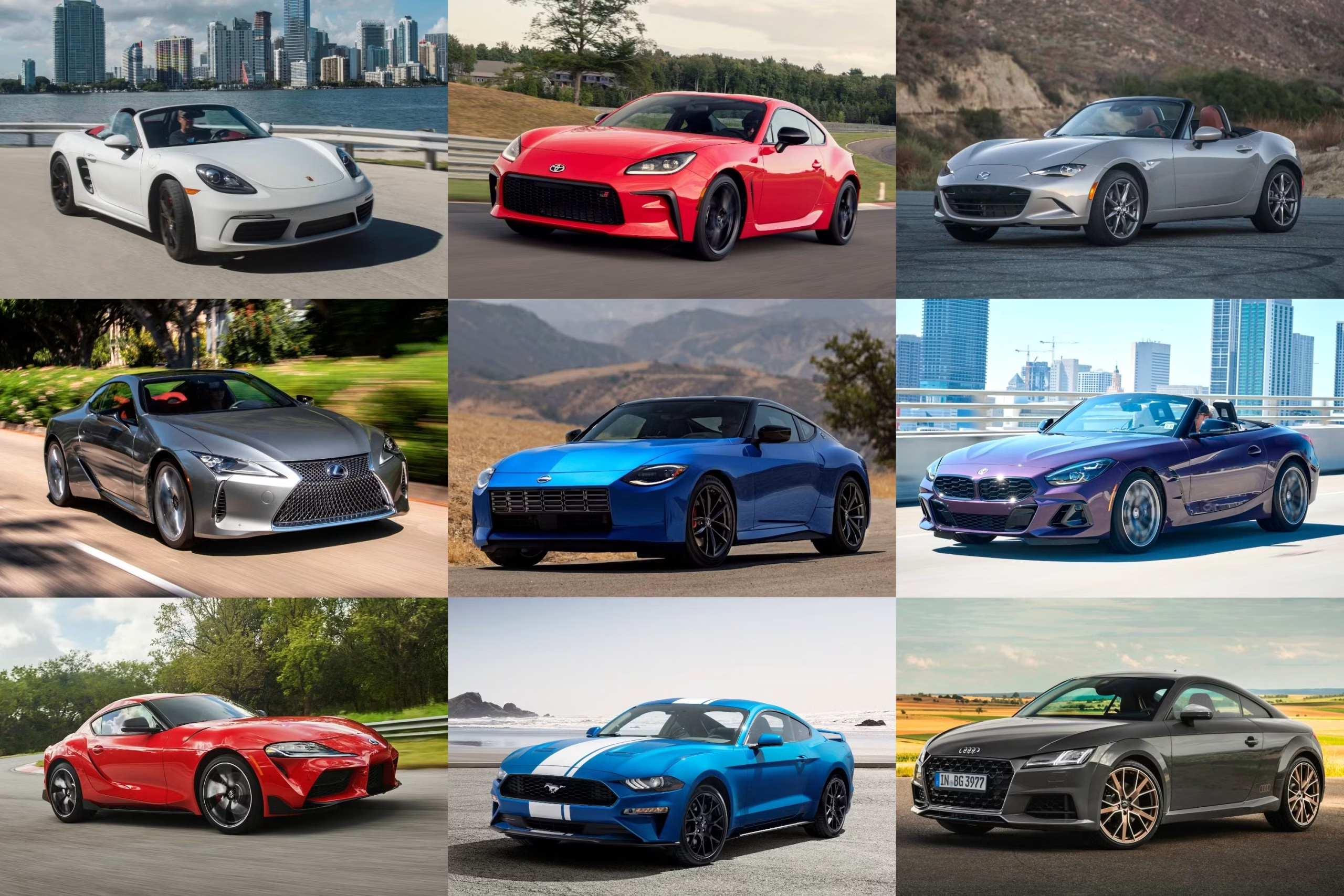
When most people think of sports cars, fuel efficiency isn’t the first thing that comes to mind. Traditionally, sports cars prioritize speed, performance, and handling over gas mileage. However, in recent years, manufacturers have developed models that balance exhilarating performance with surprisingly good fuel economy. For enthusiasts who love the thrill of driving but also want to save at the pump, these vehicles offer the best of both worlds.
This guide explores sports cars with good fuel economy, their key features, and tips for choosing a model that suits both performance and efficiency.
What Makes a Sports Car Fuel-Efficient?
Several factors influence a sports car’s fuel economy:
-
Engine Size and Configuration: Smaller engines with turbocharging provide power without excessive fuel consumption.
-
Weight: Lightweight materials improve efficiency by reducing energy needed for acceleration.
-
Aerodynamics: Sleek, aerodynamic designs reduce drag and improve mileage.
-
Hybrid Technology: Some sports cars use electric motors to assist the engine, cutting fuel usage.
-
Transmission: Efficient automatic or dual-clutch transmissions optimize power delivery while conserving fuel.
By considering these elements, manufacturers have created sports cars that are both thrilling and practical for daily driving.
Top Fuel-Efficient Sports Cars
1. Mazda MX-5 Miata
-
Fuel Economy: ~26 MPG city / 35 MPG highway
-
Engine: 2.0L 4-cylinder
-
Why It’s Efficient: Lightweight design and a small, responsive engine give excellent mileage without sacrificing fun.
-
Highlights: Convertible option, sharp handling, and reliability.
2. Toyota GR86 / Subaru BRZ
-
Fuel Economy: ~21 MPG city / 29 MPG highway
-
Engine: 2.4L 4-cylinder boxer engine
-
Why It’s Efficient: Modern tuning and lightweight chassis improve performance while maintaining reasonable efficiency.
-
Highlights: Great handling, rear-wheel drive, sporty yet practical for weekend drives.
3. Porsche 718 Cayman
-
Fuel Economy: ~21 MPG city / 28 MPG highway
-
Engine: Turbocharged 4-cylinder
-
Why It’s Efficient: Turbocharging allows for high performance with a smaller displacement engine.
-
Highlights: Luxurious interior, excellent cornering, and iconic Porsche styling.
4. Chevrolet Corvette Stingray (C8)
-
Fuel Economy: ~19 MPG city / 27 MPG highway
-
Engine: 6.2L V8 mid-engine
-
Why It’s Efficient: Despite a V8, advanced engineering, aerodynamic design, and lightweight materials improve mileage.
-
Highlights: Mid-engine layout, track-ready performance, and striking design.
5. BMW Z4 sDrive30i
-
Fuel Economy: ~25 MPG city / 32 MPG highway
-
Engine: 2.0L turbocharged 4-cylinder
-
Why It’s Efficient: Turbocharged four-cylinder engine provides a balance of power and fuel economy.
-
Highlights: Roadster fun, modern technology, and refined interior.
Tips for Maximizing Fuel Economy in Sports Cars
-
Smooth Driving: Avoid rapid acceleration and hard braking; gradual inputs save fuel.
-
Tire Maintenance: Properly inflated tires reduce rolling resistance.
-
Lighten the Load: Remove unnecessary weight from the car to improve efficiency.
-
Use Efficient Gears: For manual transmissions, shift optimally for lower RPMs on highways.
-
Hybrid or Turbo Options: Consider models with hybrid assistance or turbocharged smaller engines.
These small habits can make a noticeable difference in real-world fuel economy.
Comparison Table: Fuel-Efficient Sports Cars
| Model | Engine | MPG (City / Hwy) | Highlights |
|---|---|---|---|
| Mazda MX-5 Miata | 2.0L 4-cylinder | 26 / 35 | Lightweight, fun, reliable |
| Toyota GR86 / Subaru BRZ | 2.4L 4-cylinder | 21 / 29 | Agile handling, practical |
| Porsche 718 Cayman | 2.0L Turbo 4-cylinder | 21 / 28 | Luxury, turbo efficiency |
| Chevrolet Corvette Stingray | 6.2L V8 | 19 / 27 | Mid-engine, high performance |
| BMW Z4 sDrive30i | 2.0L Turbo 4-cylinder | 25 / 32 | Refined, sporty roadster |
Frequently Asked Questions (FAQs)
Q: Are fuel-efficient sports cars slower?
Not necessarily. Many models, like the Porsche 718 Cayman or Mazda MX-5 Miata, provide thrilling acceleration while maintaining good fuel economy.
Q: Do hybrid sports cars exist?
Yes, models like the BMW i8 and Lexus LC 500h combine electric motors with combustion engines for improved efficiency.
Q: Can sports cars be practical for daily driving?
Some models are surprisingly practical, especially with modern fuel-efficient engines and lightweight designs. Others are better suited for weekend or recreational use.
Q: Does driving style affect fuel economy significantly?
Absolutely. Aggressive acceleration, high-speed driving, and frequent braking can reduce MPG by 20–30%.
Q: How does fuel economy compare to traditional cars?
These sports cars have better efficiency than classic V8 muscle cars, though they typically won’t match compact sedans or hatchbacks.
Final Thoughts
If you love sports cars but want to save at the pump, there are several models that strike a balance between excitement and efficiency. Lightweight engines, turbocharging, and advanced technology allow vehicles like the Mazda MX-5 Miata or BMW Z4 sDrive30i to deliver thrilling drives without excessive fuel consumption.
For drivers considering versatility and economy alongside performance, it’s worth comparing these sports cars with options from other categories, such as the Best Cars for Ride Sharing Services, which prioritize fuel efficiency and practicality for everyday use while still offering comfort and style.