
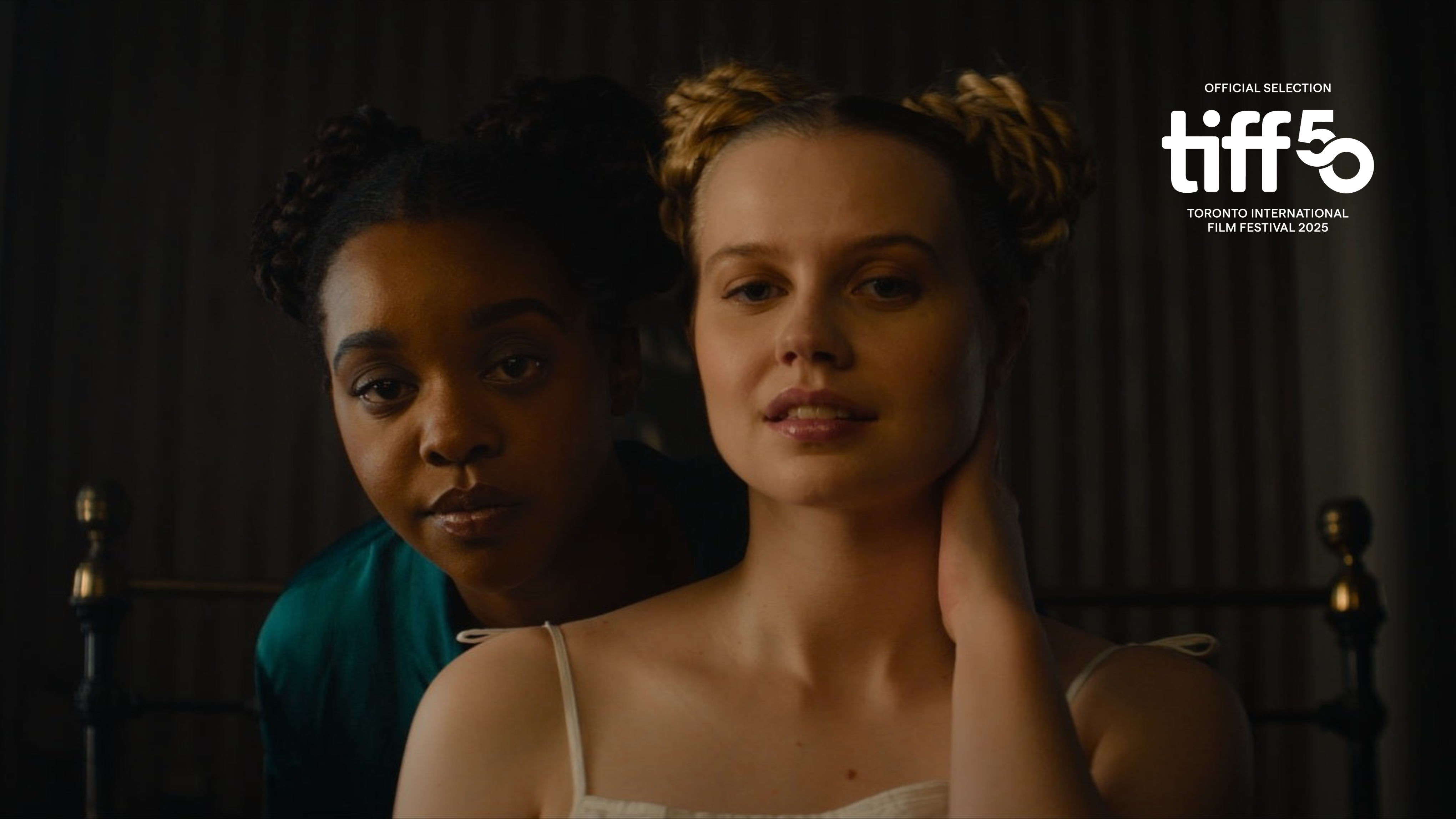
At first glance, Steal Away appears to unfold in a world of privilege, beauty, and quiet order. But beneath its lush landscapes and stately interiors lies a deeply unsettling psychological thriller that examines race, desire, power, and the fragile bonds between young women. Directed by acclaimed filmmaker Clement Virgo, Steal Away tells the story of two teenage girls who come together in unlikely circumstances and slowly awaken to the cruel systems that govern their lives.
Blending historical echoes with a surreal, Afrofuturist sensibility, the film exists in a timeless limbo—one that evokes the pre–Civil War American South and postcolonial Western Europe, while unmistakably reflecting the anxieties of the present. At its core, Steal Away is a story about sisterhood forged under pressure, and the courage it takes to resist a world designed to keep certain people in their place.
An Unlikely Friendship in a Ruthless World
The film follows Cécile, a regal and enigmatic young African traveler, who arrives at the secluded estate of Fanny, an awkward white teenager raised in a rarefied bubble of wealth and control. Fanny’s life is governed by women—her mother and grandmother—who preside over the household with a rigid belief that what they are doing is for the “greater good.” Servitude, hierarchy, and obedience are normalized, leaving Fanny both sheltered and quietly suffocated.
Cécile’s arrival disrupts this fragile equilibrium. Where Fanny is constrained and uncertain, Cécile possesses a bodily freedom and confidence that immediately fascinates her. When Cécile falls in love with Rufus, the gardener’s son, desire and jealousy erupt, triggering Fanny’s own turbulent sexual awakening. What begins as fascination soon turns volatile, as the girls’ emotional bond is tested by envy, danger, and the growing realization that the world around them is deeply corrupted.
A Psychological Thriller with a Social Pulse
Though Steal Away is driven by intimacy and emotion, it is also a sharply political film. Inspired in part by Karolyn Smardz Frost’s non-fiction book Steal Away Home, the screenplay—co-written by Tamara Faith Berger and Clement Virgo—reimagines historical truths through a genre lens. The film illuminates the often-overlooked role women played in systems of slavery and oppression, exposing cruelty not only as patriarchal, but also as something perpetuated within domestic spaces.
As the story unfolds, Cécile and Fanny begin to understand the power structures shaping their lives—both within the household and beyond it. Immigration is policed, obedience is enforced, and displacement is normalized. When both girls experience profound loss, their rivalry gives way to solidarity. Together, they band together to outwit a domestic and state system designed to control them, transforming the film into a tense and emotionally charged fight for survival.
Afrofuturism and the Power of World-Building
Virgo consciously avoids social realism, instead embracing Afrofuturism and fantasy as tools of liberation. By creating a world that is neither fully past nor present, Steal Away invites the audience to question where history ends and modernity begins. Subtle imagery of slavery and colonialism coexists with futuristic elements, allowing viewers to decode the film on their own terms.
This approach extends to every visual detail. Shot in Canada and Belgium, the film makes striking use of locations such as the 350-year-old Lozer Castle and the vast, otherworldly Caves of Han. Production designer Elisa Sauvé transforms these spaces into a setting rich with decay, beauty, and menace, while Afrofuturist art elements—created by Congolese artist Percy Nambi—infuse Rufus’s world with defiant creativity and symbolic power.
Performances That Drive the Tension
At the center of Steal Away are two remarkable performances. Angourie Rice brings vulnerability and volatility to Fanny, capturing a young woman desperate for freedom but unsure how to claim it. Her portrayal allows the audience to witness Fanny’s evolution from naïveté to painful self-awareness. Mallori Johnson, as Cécile, is equally mesmerizing—instinctual, rebellious, and emotionally grounded. She embodies a character who refuses to collapse under subjugation, instead blooming within it.
Supporting performances by Lauren Lee Smith as Florence, Fanny’s mother, add further complexity. Florence is not a villain in her own mind; she is a woman who believes control is compassion, a portrayal that makes her cruelty all the more chilling.
A Story of Sisterhood and Resistance
Ultimately, Steal Away is a film about sisterhood born of necessity. It explores how alliances across race, class, and identity are not only possible, but essential. Virgo and his collaborators challenge the idea that artists must only tell stories drawn directly from their own identities, instead advocating for empathy, imagination, and shared humanity.
By the film’s climax, Cécile and Fanny are no longer rivals but allies—two young women who have had their illusions stripped away and must now choose whether to submit or resist. Their journey offers a powerful message of hope: that even in the most controlled and cruel environments, solidarity can become an act of defiance.
Steal Away is not just a psychological thriller—it is a haunting, timely meditation on freedom, desire, and the courage it takes to see the world as it truly is.
See the YouTube Episode link.
Stay tunned with me:
She’s All Over the Place Podcast
Click on Instagram
About me here