
Image Credit: Unsplash
There’s a certain presence that heavy-duty trucks command on the road. They are more than just oversized vehicles; they are symbols of capability, strength, and potential. For contractors, farmers, and adventurers, these machines are essential tools designed to handle tasks that would overwhelm any standard pickup. Their allure comes from a simple promise: the power to move, haul, and build without compromise.
Engineered for Extreme Loads
At the heart of every heavy-duty truck is a design philosophy centered on managing immense weight. Unlike their light-duty counterparts, these trucks feature reinforced, fully boxed frames made from high-strength steel. This provides the rigid backbone necessary to support massive payloads and withstand the torque from towing heavy trailers. The suspension systems are equally robust, with heavy-duty leaf springs and shocks engineered to prevent sagging under load while maintaining stability.
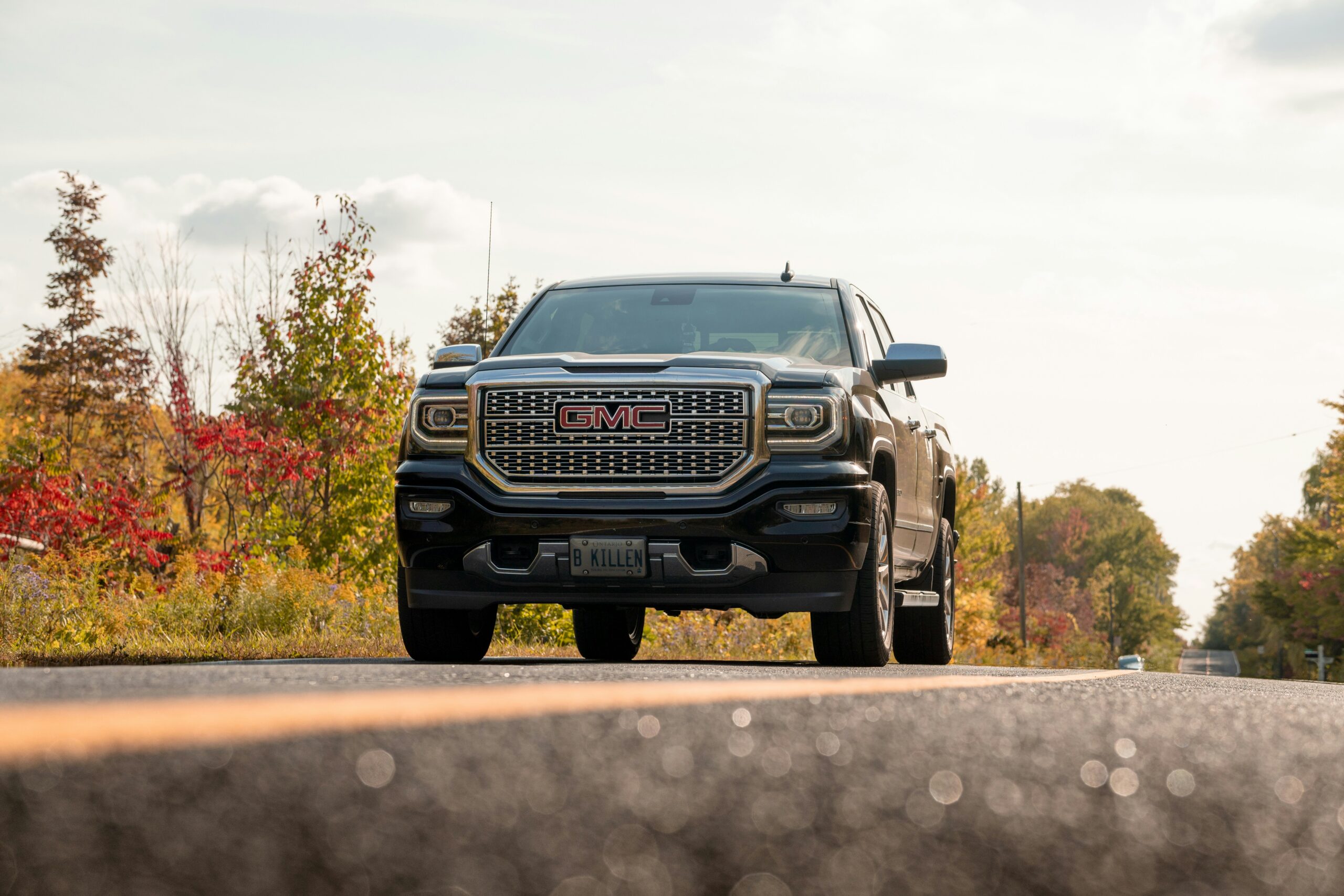
Engine options are a critical part of this equation. While powerful gasoline V8s are available, many buyers opt for turbocharged diesel engines. These power plants are renowned for their incredible torque output at low RPMs, which is exactly what you need to get a heavy load moving from a standstill. Manufacturers are constantly refining these systems for greater efficiency and power, with models like the 2026 GMC Sierra promising to push these capabilities even further.
Advanced Towing Technologies
Towing a 15,000-pound trailer is not just about raw power; it’s also about control and safety. Modern heavy-duty trucks are packed with sophisticated technology to make the process less intimidating. Features like integrated trailer brake controllers allow you to adjust the trailer’s brakes from the cab, ensuring smooth and synchronized stopping. Trailer sway control systems use the truck’s stability control to automatically correct for unwanted trailer movement caused by crosswinds or sudden maneuvers.
Many models now offer multi-camera systems that provide a “transparent trailer” view, stitching together images to let you see what’s happening behind your rig. Research into advanced truck technologies continues to bring innovations from commercial hauling into the consumer space. When you’re looking for the top performers, it’s helpful to compare the features on the trucks with the best towing to see how these systems are implemented.
Durability for Demanding Work
A heavy-duty truck is an investment expected to perform day in and day out under harsh conditions. To meet this expectation, manufacturers build them with durability as a top priority. This goes beyond the frame and engine. Drivetrain components like the transmission, axles, and driveshafts are all oversized and strengthened to handle constant high-stress operation.
Cooling systems are another key area of focus. Larger radiators, powerful engine fans, and external coolers for the transmission and engine oil help manage the extreme heat generated when hauling heavy loads up steep grades. Every component is designed with the assumption that the truck will be pushed to its limits, ensuring reliability on the most demanding job sites.
Key Differences in Heavy-Duty Models
When shopping for a heavy-duty truck, you’ll encounter terms like “2500” and “3500.” These numbers typically denote the truck’s class and capability. A 2500-series truck (like a Ford F-250 or Ram 2500) is the entry point into the heavy-duty world, offering a significant jump in payload and towing capacity over a standard 1500-series pickup.
A 3500-series truck takes it a step further. The most noticeable difference is the availability of a dual-rear-wheel (DRW) axle, often called a “dually.” That extra set of tires in the back dramatically increases stability when towing the heaviest fifth-wheel or gooseneck trailers, and it also boosts the truck’s maximum payload capacity. Choosing between a single-rear-wheel (SRW) 3500 and a dual depends entirely on the weight and type of loads you plan to carry.
Beyond the Job Site: Recreation
While these trucks are built for work, their capabilities have made them incredibly popular for recreational use. Their power is perfect for towing large fifth-wheel RVs that function as mobile vacation homes. For equestrian enthusiasts, a heavy-duty truck provides the confidence to safely transport a horse trailer across the country.
Boaters with large vessels also rely on these trucks to handle the immense weight and challenging dynamics of launching and retrieving at a steep boat ramp. In this context, the truck is not just a tool for a job but an enabler of adventure, opening up a world of hobbies that would otherwise be out of reach. It’s the key that unlocks weekends at the lake, summers in the mountains, and cross-country road trips.
Heavy-duty trucks are a unique blend of engineering and purpose. They are built to handle the toughest jobs and empower the grandest adventures, proving that true power is about more than just moving yourself; it’s about moving your world.