
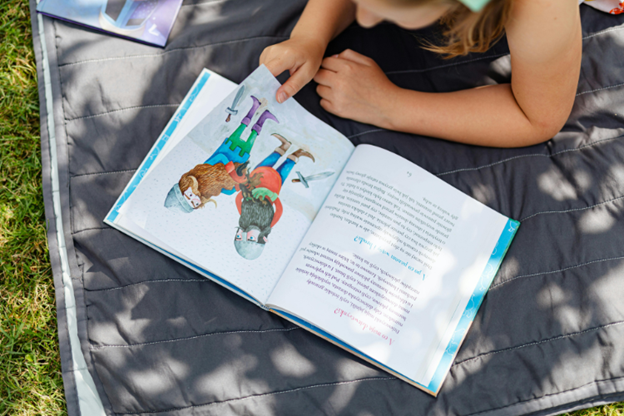
[Photo by Karola G from Canva.]
History class brings back memories of memorizing dates and long lists of names for many adults. Yet history, when told well, is a collection of stories that reveal how ideas shape the world. For children, the right history book can turn learning into a genuine adventure. Stories of revolutionaries help young readers connect emotionally with the past while building curiosity about the world around them. This storytelling approach to history isn’t new. As literary scholar Barnes once highlighted when discussing Rudyard Kipling’s view on education, “If History were taught in the form of stories it would never be forgotten.” A narrative transforms information into something vivid and memorable. Something children want to return to again and again. With that philosophy in mind, here are five history book sources that present the past in ways that inspire young readers and turn history into a captivating journey.
Tuttle Twins
Among the more innovative educational series for younger readers is the Tuttle Twins collection, created by author Connor Boyack. The books follow the adventures of twin siblings Ethan and Emily as they explore historical ideas and influential thinkers through engaging storylines. Parents and educators seeking story-based historical learning often discover the resources available at https://tuttletwins.com/, which introduces children ages 5–11 to concepts like individual liberty, entrepreneurship, and historical economic ideas through illustrated narratives. The series weaves important ideas into fictional adventures that help young readers understand why history (these ideas) mattered in the real world. Historical figures such as Milton Friedman and other influential thinkers appear throughout the stories, helping children connect historical principles with real-life lessons. The books are part of a larger educational ecosystem that includes animated content, learning guides, and community resources for families interested in engaging, story-driven history education.
Penguin Random House
Penguin Random House, through imprints such as Viking and Knopf, offers a wide range of historical books designed specifically for younger audiences. Many of these works emphasize storytelling rather than strict academic presentation, allowing readers to experience historical moments through narrative-driven accounts of explorers, leaders, and pivotal events.
The late historian and children’s author Russell Freedman frequently emphasized the importance of introducing children to compelling history books early in life. Freedman believed that guiding young readers toward engaging historical narratives could transform them into lifelong enthusiasts of the subject. Publishers like Penguin Random House continue that tradition by presenting historical figures and events through carefully crafted narratives that capture imagination while preserving historical integrity.
HarperCollins
HarperCollins has also played a significant role in bringing accessible historical storytelling to younger audiences. Through books like Harper Perennial, this publisher offers works that blend historical narrative and educational storytelling. These books often focus on the personal journeys of influential individuals like scientists, leaders, activists, and innovators whose actions shaped society. This approach aligns with the philosophy of celebrated children’s historian Jean Fritz, who believed young readers connect more deeply with history when historical figures are presented as relatable individuals rather than distant icons. Reviews of Fritz’s Revolutionary War biographies frequently highlight her ability to present historical figures as “personal stories rather than dry facts.” By humanizing history, books in this tradition encourage children to see historical figures not as abstract names but as people whose choices shaped the world.
Simon & Schuster
Simon & Schuster has produced many bestselling nonfiction titles across its publishing divisions, and its historical works for younger readers often focus on biographies and important historical moments. These books frequently explore the lives of influential pioneers whose contributions altered the course of history. These narratives help young readers understand that history is ultimately driven by human decisions and ideas by focusing on the personal experiences behind historical change. This storytelling format allows children to engage emotionally with historical narratives while absorbing broader historical themes. Instead of learning history as isolated facts, your children encounter stories that show how events unfold and how individuals shape their time. The result is a reading experience that feels closer to an adventure story.
Macmillan
Macmillan’s publishing portfolio includes respected literary works such as Farrar, Straus, and Giroux, which has produced some nonfiction titles in modern publishing. Many historical works from Macmillan adapt complex historical themes into narratives accessible to younger audiences without sacrificing intellectual depth. These books often introduce readers to global events, cultural shifts, and influential historical figures in ways that encourage critical thinking. Their book narratives encourage curiosity. Young readers begin to see how historical developments connect to the modern world, prompting deeper questions about society. Macmillan’s catalog offers a selection of titles for families seeking approachable historical storytelling.
Choosing the Right History Books for Kids
Selecting engaging history books can feel overwhelming, especially with so many titles available. A few simple guidelines can help parents and educators identify books that truly resonate with young readers.
Look for Story-Based Narratives
Children tend to engage far more deeply with narrative storytelling than with purely informational texts. Books that present history through character-driven stories often hold attention longer, leaving lasting impressions.
Choose Age-Appropriate Writing
A book that matches a child’s reading level encourages confidence and curiosity. Look for titles designed specifically for the child’s age group to ensure the language and themes are accessible.
Prioritize Curiosity Over Memorization
The most effective history books spark questions rather than simply deliver answers. Your kids are more likely to explore further when they become curious about historical events.
Consider Educational Themes
Many modern history books incorporate broader themes such as leadership, responsibility, innovation, and cultural understanding, ideas that resonate with young readers while helping them connect historical lessons to modern life.
Why History Books Matter for Young Minds
Beyond entertainment, history books play a meaningful role in intellectual development. They introduce young readers to diverse cultures, influential ideas, and pivotal moments that shaped the world. History also helps children develop critical thinking skills. By exploring the circumstances behind historical events, children learn to analyze cause and effect, understand differing perspectives, and recognize the complexity of human experiences. Perhaps most importantly, history inspires curiosity. When children encounter stories of explorers crossing oceans, they begin to imagine how their own actions might shape the future. As Barnes noted when reflecting on the educational value of storytelling, “A story well told engages and convinces the listener or reader. That’s why the word ‘history’ is made up mostly of the word ‘story.’” Stories provide context and emotional connection. When children read about a scientist’s discovery or an explorer’s journey, they don’t simply learn what happened. They understand why it mattered. This emotional connection helps transform history from a subject to memorize into a narrative to explore.
Final Thoughts
History becomes one of the most fascinating subjects a child can explore when it is presented as a living narrative rather than a list of dates. From the adventure-driven storytelling of the Tuttle Twins series to the narrative nonfiction published by Macmillan, today’s young readers have access to a collection of history books that make learning memorable. Families and educators can nurture curiosity, imagination, and a deeper understanding of the world. One story at a time by introducing children to history through stories.