
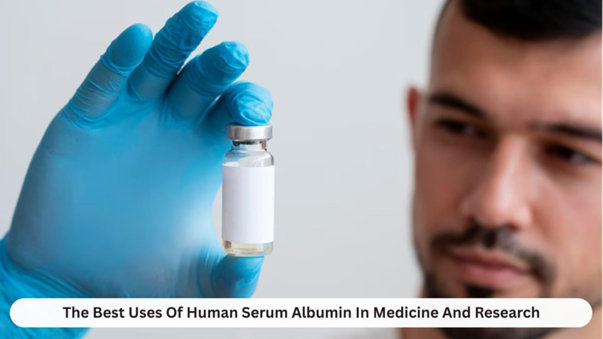
Clinical therapy and advanced laboratory research continue to lead to breakthroughs in biomedical science, with no sign of stopping anytime soon. Coincidentally, scientists are starting to recognize the impact of human serum albumin (HSA) on recent successes.
The human plasma contains a protein with a high concentration of HSA, about 50-60% of its total protein content. HSA is a major osmotic regulator with a monomeric structure and three homologous domains confirming its capacity for ligand binding and molecular transport.
With technology advancing scientific endeavors, modern biotechnology continues to shift from traditional plasma-based forms to purified recombinant forms. With this development, the future of medicine and research couldn’t be any brighter. You are about to discover the critical applications of HSA in medicine and research, and why they are indispensable.
- Keeping Oncotic Pressure and Plasma Expansion in Check
Human serum albumin ability to maintain colloidal osmotic pressure remains its most recognized clinical application. Albumin is responsible for about 80% of the oncotic pressure in human blood.
Oncotic pressure is the main entity preventing fluid from leaking out of the capillaries. When managing plasma-related issues, applying HSA can save lives.
- Hypovolemic Shock: Administering high-concentration albumin solutions can rapidly expand plasma volume during severe blood loss or trauma. By drawing fluid from the tissues back into the circulatory system, hemodynamics become stabilized more effectively than with only crystalloid solutions.
- Liver Cirrhosis and Ascites: Patients with advanced liver disease lose the ability to synthesize albumin in the liver. They tend to develop hypoalbuminemia and fluid accumulation in the abdominal cavity. People living with liver issues will require infusions to manage fluid balance and prevent other health complications, like spontaneous bacterial peritonitis.
- HSA as a Carrier and Stabilizer in Serum-Free Cell Systems
Transitioning toward serum-free media is a top priority in the regenerative medicine and biopharmaceutical manufacturing field. HSA remains the primary substitute for fetal bovine serum (FBS) due to its ability to replicate the carrier functions of blood within an “in vitro” environment.
Advanced recombinant proteins, especially those featured in specialized protein listings, are crucial for their high purity and low endotoxin levels. These properties enable the protein to act as a high-capacity scavenger that binds and neutralizes elements that would otherwise inhibit cell growth.
Most of the elements it combats include toxic heavy metals, reactive oxygen species (ROS), and free fatty acids. HSA also stabilizes labile growth factors and hormones, causing a considerable extension of their half-life and ensuring consistency in experimental findings.
- Contributions to Assay Optimization
Human serum albumin is crucial for optimizing sensitive diagnostic assays in the laboratory. Its negative charge and high solubility features make it a proper blocking agent in Western blots and Enzyme-Linked Immunosorbent Assays (ELISA).
- Preventing Non-Specific Binding: Saturating the free spaces on a microplate or nitrocellulose membrane ensures that antibodies bind only to their intended targets. This significantly improves its capacity to distinguish subtle abrasions from background noise in diagnostics.
- Disease Monitoring: Clinically, the concentration of albumin in urine is the industry standard biomarker for early kidney damage in diabetic patients. Likewise, the Glycated Albumin test provides a medium-term window of about 2-3 weeks into a patient’s glycemic control. It offers a more responsive alternative to the HbA1c test.
- Impact on Vaccine Formulation and Stability
The quest for stability is perhaps the greatest challenge in global vaccine distribution. Many viral vaccines and therapeutic proteins are still highly sensitive to temperature fluctuations and surface adsorption.
However, human serum albumin has been crucial in ensuring stability in vaccine formulations. It serves as a premium excipient because of its superior ability to prevent the structural alteration of active pharmaceutical ingredients.
Bioprocessing utilizes albumin to prevent expensive recombinant proteins from sticking to the walls of glass vials or plastic tubing. Forming a protective single layer on these surfaces ensures that the patient receives the maximum dose of the vaccine.
Also, its antioxidant properties protect sensitive viral antigens from oxidative damage when you store them for a long time. Its storage potential enables it to retain potency in varied climates.
Factors to Consider When Selecting Recombinant Proteins
When obtaining human serum albumin for research, the expression system you choose is critical to the outcome. Recombinant proteins in HEK cells, especially those present in premium biotechnical categories, offer the advantage of post-translational modifications that feel human-like.
These proteins are often supplied as lyophilized powders with immense stability. Usually, storing them at -20°C can keep them viable for up to 12 months. These are the crucial factors to consider during the selection process:
- Purity: SDS-PAGE analysis is essential to confirm a single band at about 66.5 kDa.
- Biological Activity: Recombinant forms should show a documented carrier effect. Biological activity is often measured by its ability to enhance the rapid increase in amounts of specific cell lines, like TF-1 human cells, in a dose-dependent manner.
- Safety: The absence of animal-derived components or animal component-free elements eliminates the risk of viral contamination, a mandatory requirement for clinical-level manufacturing.
Conclusion
Human serum albumin has claimed its position as a sophisticated pillar of biotechnology. Whether it is playing a molecular transport system role for hydrophobic drugs or acting as a protective armor for sensitive vaccines, synthetic alternatives don’t come close to its unique biochemical reputation.
As precision medicine continues to make progress, there will be increased demand for highly defined, recombinant versions of this protein. That alone cements its status as an essential component of today’s healthcare and tomorrow’s medical evolution.