
The Postcard on the Rapti River opens in November 2026 in Chitwan, Nepal, a 22-room-and-suite luxury retreat on a bend of the Rapti River beside Chitwan National Park. Rates start at INR 85,000 per suite, and every room starts at 1,300 square feet.
I have not stayed here yet. The hotel opens this month, and no guest has slept in it. What I can do is lay out exactly what is confirmed, what it costs, how it compares with the other luxury openings of 2026, and whether the wildlife on its doorstep justifies the price. Every number below comes from the opening coverage published November 3 to 5, 2026, and I have checked each one against at least two independent sources.
What is The Postcard on the Rapti River?
The Postcard on the Rapti River, Chitwan, is the Nepal debut of The Postcard Hotel, a boutique luxury brand founded in December 2018 by Kapil Chopra. The opening marks the brand’s entry into its fourth country, following India, Bhutan, and Sri Lanka. The brand currently operates 13 hotels across those three countries, with five additional properties scheduled to open over the next six months.
The property sits along a bend of the Rapti River, adjoining the buffer zone of Chitwan National Park, one of South Asia’s most significant wildlife destinations. It is a riverfront retreat, not a mountain lodge, and that is the point. The Postcard’s founder has said the brand looks for destinations beyond the usual travel map, and Chitwan is exactly that: Nepal’s wild lowland Terai, a world away from the Everest and Annapurna trails most travellers associate with the country.
The opening follows a strong year for the brand. In September 2026, The Postcard Hotel received 12 honours at the World Travel Awards Asia, Oceania and Indian Ocean Gala Ceremony in the Maldives, including the title of Asia’s Leading Boutique Hotel Brand for another consecutive year. That is the context for this launch: a boutique brand on a winning run, planting its flag in a country where it has never operated before.
The hotel is owned by Savanna Vaidya Basnyat, who developed it with her father, Suraj. She has described the project as deeply personal, built around conservation tourism and the idea that the value of a landscape lies in how well it is protected, not in how many people visit it. Her family spent years bringing the property to life from the moment they found the bend in the river overlooking the forest and the hills beyond.
Where exactly is it, and what is Chitwan National Park?
The hotel is located along the Rapti River in Chitwan, Nepal, adjoining the buffer zone of Chitwan National Park. The park was inscribed as a UNESCO World Heritage Site in 1984, which makes 2026 the 42nd year of that listing. It protects one of the last major surviving natural landscapes of Nepal’s Terai, a mix of grasslands, sal forests, and riverine ecosystems.
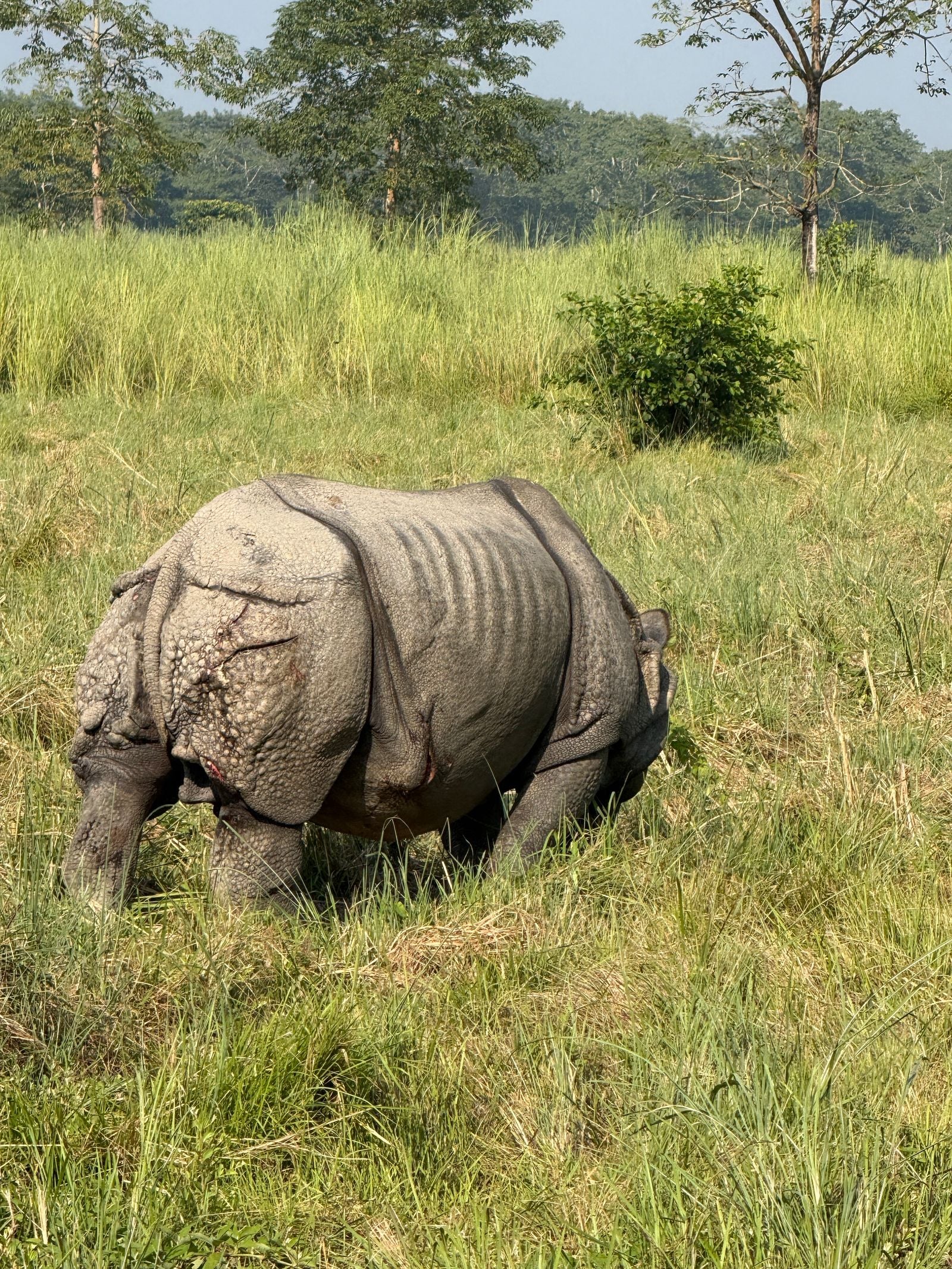
The wildlife numbers are the reason to come. Nepal’s 2021 national rhino census recorded 694 greater one-horned rhinoceroses in Chitwan and its surrounding areas, making the park the country’s principal stronghold for the species. The park is also home to more than 525 recorded bird species, which puts it firmly on the map for birdwatchers. Bengal tigers, leopards, sloth bears, and the endangered gharial, a fish-eating crocodilian with a long narrow snout, also live in the park.
That is a serious wildlife proposition. A greater one-horned rhino population of 694 in one park, plus tigers and more than 525 bird species, is the kind of density that justifies a dedicated trip rather than a two-night add-on. The hotel’s own materials note that rhinoceroses and crocodiles may occasionally be spotted along the riverbanks from the property itself, with Bengal tigers and sloth bears possible sightings in the wider area.
Getting there is straightforward by Nepal standards. The property is accessible via Bharatpur Airport, approximately 25 minutes by air from Kathmandu, followed by a 40-minute drive to the hotel. That is about 65 minutes from touchdown at Bharatpur to the hotel door, on top of the short domestic flight. Travellers should note that Bharatpur is a small regional airport, so flight schedules are limited and worth booking early.
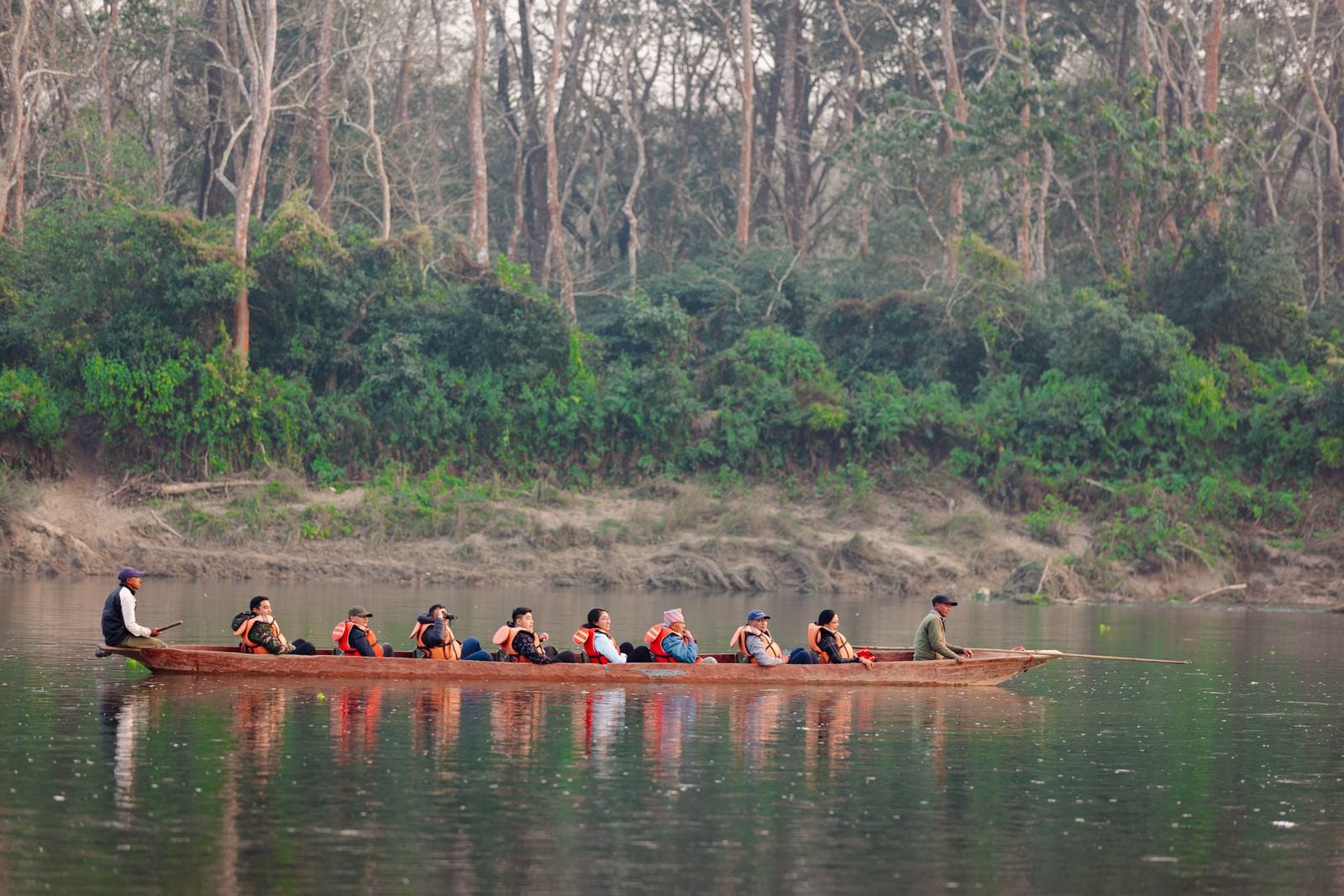
The Rapti River winding through forest and grassland in Chitwan National Park, Nepal. This photo shows the Rapti River in Chitwan National Park, not the hotel. Photo by Prince Nature / Pexels.
Rooms and suites: what you actually get
The Postcard on the Rapti River will feature 22 rooms and suites, each starting at 1,300 square feet, with private sit-outs overlooking the river or the forest. A 1,300-square-foot entry room is unusually generous. For comparison, entry rooms at most luxury hotels run 400 to 600 square feet. The smallest room here is more than double that, which tells you the positioning: this is a low-density, high-space retreat, not a hotel that packs in keys.
The headline room is the two-bedroom Presidential Suite, spread across 5,000 square feet, with a private swimming pool. At 5,000 square feet, the Presidential Suite is 3.85 times the size of the entry-level room, and roughly the size of a large four-bedroom house. Guests enter through a Temple Court built around a stupa, an architectural detail that introduces the property’s connection with its setting from the first step inside.
Facilities include Tree Tops, an indoor-outdoor restaurant and bar on an elevated deck overlooking the forest, and Tribal Circle, an open-air barbecue area around a bonfire. There is a swimming pool, spa treatment rooms, a steam room, and a sauna. An elevated viewing deck beside the pool offers views of the surrounding landscape and opportunities to spot wildlife without leaving the property.
The design language is rooted in place. The Temple Court entrance, the stupa, the Tharu-inspired dining, and the riverfront siting all point the same way: a hotel built to belong to its surroundings rather than simply occupy the landscape. That is the owner’s stated intent, and the architecture follows it.
What it costs
Rates at The Postcard on the Rapti River start at INR 85,000 per suite, inclusive of the brand’s signature anytime breakfast and anytime check-in and check-out. Nepali outlets quote the same starting rate as NPR 136,000 per suite. The two figures are consistent: NPR 136,000 divided by INR 85,000 is exactly 1.6, the fixed peg between the Nepalese and Indian rupees.
What does INR 85,000 buy? At the entry level, it buys a minimum of 1,300 square feet, a private sit-out with a river or forest view, anytime breakfast, and flexible check-in and check-out. On a per-square-foot basis, the starting rate works out to about INR 65 per square foot per night, which is a useful way to compare it with other luxury openings where the entry room is half the size at a similar price.
The anytime breakfast and anytime check-in and check-out are not small print. They are The Postcard’s signature inclusions across the brand, and they matter in a wildlife destination where the best animal sightings happen at dawn and the schedule bends around safaris, not around a hotel’s breakfast hours. You eat when you want, and you arrive and leave when you want, which is exactly what a 6 a.m. jeep safari demands.
I have not found a published rate for the 5,000-square-foot Presidential Suite. The starting rate is the only figure confirmed across the November 3 to 5 coverage. Expect the Presidential Suite to command a multiple of the entry rate, and check directly with the hotel before budgeting for it.
The numbers: how Rapti River compares with 2026’s other luxury openings
This is the part nobody else has compiled. I compared The Postcard on the Rapti River against the six other luxury hotel openings David’s Guide has covered in the last six weeks, using each property’s confirmed room count, entry size, and starting rate where published. The comparison shows exactly where this hotel sits in the market.
First, size. At 22 rooms, Rapti River is the joint smallest opening of the season, tied with Sara y Julieta in Mexico City, which also has 22 rooms. It is 61 percent the size of La Residence Phou Vao in Luang Prabang, which has 36 suites. Against the big resort openings, the gap is dramatic: 22 rooms is 8.8 percent of the 250-room Fairmont New Orleans, 7.8 percent of the 283-key Kimpton Al Rowda Doha, 7.3 percent of the 300-room Pyrmont Curacao, and 5.1 percent of the 429-suite Amare Cancun. This is a boutique property by every measure, and the room count is the proof.
Second, space per guest. The entry room starts at 1,300 square feet. The Presidential Suite is 5,000 square feet, which is 3.85 times the entry room. No other 2026 opening I have covered leads with a 1,300-square-foot minimum. That single number is the clearest statement of the hotel’s positioning: fewer guests, far more space per guest.
Third, price per square foot. The starting rate of INR 85,000 for a minimum of 1,300 square feet works out to about INR 65 per square foot per night. That is the entry-level value equation, and it is unusually transparent for a luxury wildlife lodge, where rates are often quoted without a room size to anchor them.
Fourth, brand momentum. The Postcard operates 13 hotels today, with five more scheduled to open over the next six months. That is growth of 38.5 percent in half a year, taking the portfolio to 18 properties. The 12 World Travel Awards honours in September 2026, including Asia’s Leading Boutique Hotel Brand, arrived two months before this opening. A brand adding a fourth country on the back of that kind of recognition is expanding from strength, not from desperation.
Fifth, the wildlife math. Chitwan’s 694 rhinos from the 2021 census, more than 525 bird species, and a UNESCO listing dating to 1984 give this hotel a wildlife proposition that none of the city and beach openings of 2026 can match. The question for a traveller is not whether the hotel is luxurious. It is whether a 22-room retreat beside a park with 694 rhinos and 525 bird species is worth INR 85,000 a night. On the numbers, the wildlife alone makes the case.
Quotable summary: At 22 rooms, The Postcard on the Rapti River is the joint smallest luxury opening of 2026, yet its entry room starts at 1,300 square feet, and it sits beside a national park holding 694 one-horned rhinos and more than 525 bird species.
Wildlife and cultural experiences
Guests will be able to explore Chitwan through naturalist-led jeep safaris, guided forest walks, canoe excursions along the Rapti River, and birdwatching experiences. Visits to nearby Tharu villages will introduce visitors to the region’s cultural heritage and the communities that have lived alongside its forests and rivers for generations.
The canoe excursion deserves attention. The Rapti River is the hotel’s front yard, and a canoe trip at dawn is the quietest way to see the park: gharials on the banks, birds in the riverside trees, and rhinos coming down to drink. The jeep safari is the workhorse for tiger and rhino tracking, the forest walk is the slow option for birders, and the Tharu village visit is the cultural counterweight to a day spent looking through binoculars.
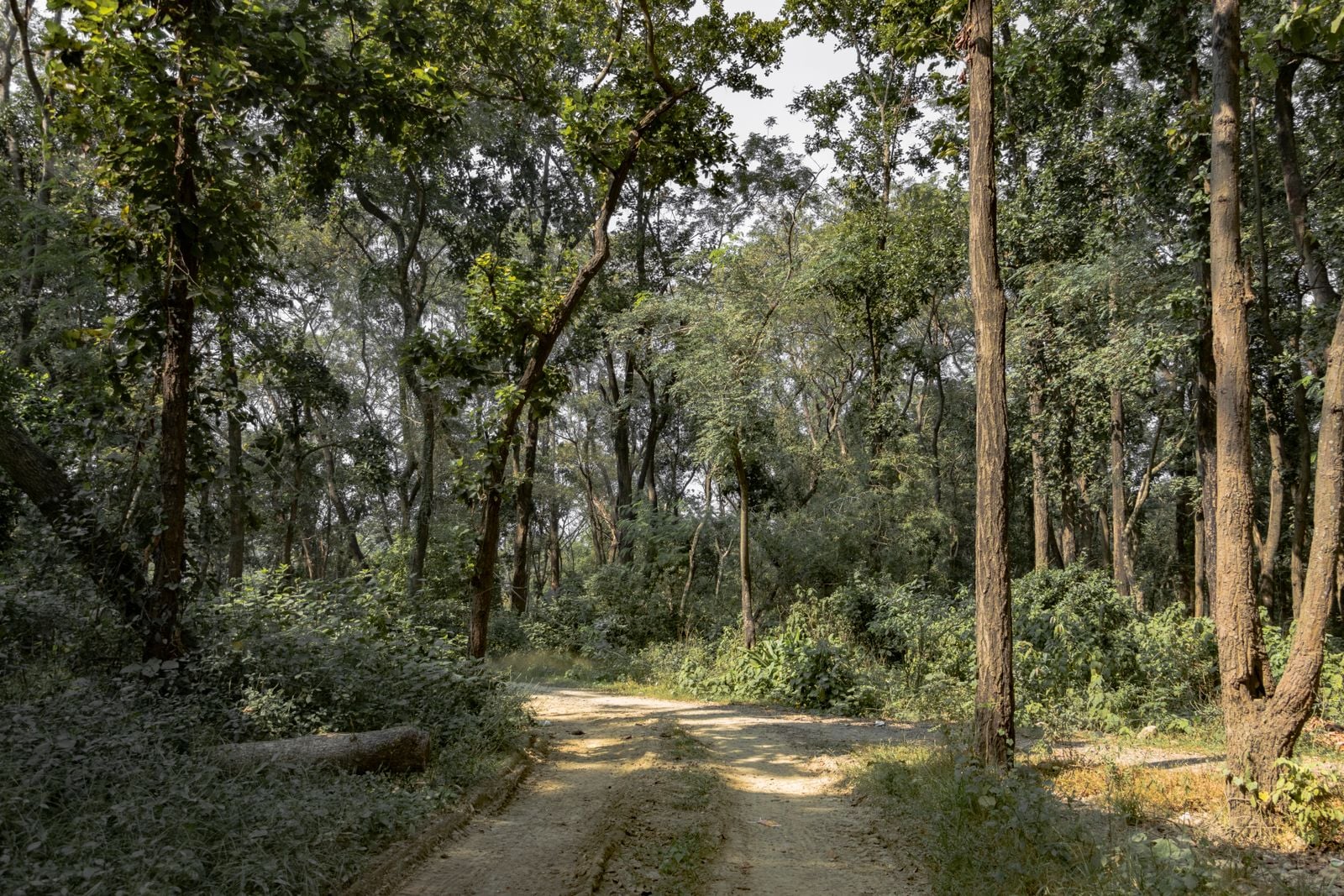
Forest and grassland habitat inside Chitwan National Park, Nepal, home to more than 525 bird species. This photo shows Chitwan National Park, not the hotel. Photo by Shantum Singh / Pexels.
The Tharu community is indigenous to Nepal’s Terai region, and the hotel’s Tribal Circle dining draws on Tharu culinary traditions around an open-air bonfire barbecue. That is a genuine cultural connection, not a themed dinner. The Tharu have lived alongside Chitwan’s forests and rivers for generations, and a hotel that puts their food and their villages at the centre of the experience is doing something most wildlife lodges only gesture at.
Dining by the river
Tree Tops, the indoor-outdoor restaurant and bar, sits on an elevated deck overlooking the forest. It serves The Postcard’s signature anytime breakfast, so guests choose when to begin the day rather than following fixed breakfast hours. That matters when the safari leaves at dawn and returns mid-morning.
Evenings bring a different dining experience at Tribal Circle, where an open-air barbecue around a bonfire draws on the culinary traditions of the Tharu community. The combination is deliberate: a flexible, view-led restaurant for the daytime, and a fire-led, community-rooted barbecue for the evening. Two dining venues for 22 rooms is a ratio of one venue per 11 rooms, which is generous by resort standards and consistent with the hotel’s low-density positioning.
Why this opening matters
The Postcard on the Rapti River matters for three reasons. First, it is a new country for a boutique brand on a winning run, and Nepal’s Terai is a destination most luxury travellers have never considered. Second, it is a wildlife lodge with a genuine conservation story, owned by a family that frames the project as protection first and hospitality second. Third, it is small, 22 rooms, with entry rooms starting at 1,300 square feet, which is a combination the luxury market rarely offers at any price.
There is also a pipeline story here. The Nepal opening adds another wildlife destination to a portfolio that already includes The Postcard Gir Wildlife Sanctuary in Gujarat, and the brand has future wildlife properties planned in Jawai, Kanha, and Pench. That is a deliberate strategy: build a collection of wildlife lodges across South Asia, each rooted in its own landscape and community, rather than a scattered set of city hotels. Chitwan is the fourth country and the newest chapter in that strategy.
For travellers, the practical question is timing. The hotel opens in November 2026, which is the start of Chitwan’s dry season and the best window for wildlife viewing. November to February offers cooler temperatures, lower water levels that concentrate animals near the river, and clearer skies. Booking early matters: 22 rooms fill fast when a new luxury lodge opens in a destination with this much wildlife, and the Bharatpur flight schedule is limited.
Planning a stay: the practical details
Fly into Kathmandu, then take the 25-minute domestic flight to Bharatpur Airport, followed by a 40-minute drive to the hotel. Budget about 65 minutes from touchdown at Bharatpur to the hotel door, plus the Kathmandu connection time. Book the Bharatpur flight early, as schedules are limited and the route is popular with wildlife travellers.
Rates start at INR 85,000 per suite, or NPR 136,000, inclusive of anytime breakfast and anytime check-in and check-out. The entry room is a minimum of 1,300 square feet with a private sit-out. The two-bedroom Presidential Suite is 5,000 square feet with a private pool, but no published rate was confirmed in the November coverage, so check directly with the hotel.
Pack for a wildlife trip, not a city break. Neutral colours, binoculars, a long lens if you photograph, and layers for cool mornings on the river. The best wildlife hours are dawn and dusk, which is exactly when the hotel’s anytime breakfast and flexible check-in prove their worth. Plan at least three nights: one day for a jeep safari, one for a canoe excursion and forest walk, and one for the Tharu village visit and birdwatching. A single night in Chitwan is not enough to see the park properly.
FAQ
When will The Postcard on the Rapti River open?
The hotel is scheduled to open in November 2026. The opening was announced November 3 to 5, 2026, across multiple outlets.
Where is The Postcard on the Rapti River located?
It is located along the Rapti River in Chitwan, Nepal, adjoining the buffer zone of Chitwan National Park, a UNESCO World Heritage Site since 1984.
How many rooms will the new hotel have?
The property will feature 22 rooms and suites, starting at 1,300 square feet, each with a private sit-out overlooking the river or the forest.
What wildlife can guests see in Chitwan?
Guests can see greater one-horned rhinoceroses, Bengal tigers, leopards, sloth bears, gharials, and more than 525 bird species. Nepal’s 2021 rhino census recorded 694 rhinoceroses in Chitwan and its surrounding areas.
What is the starting rate at The Postcard on the Rapti River?
Rates start at INR 85,000 per suite, or NPR 136,000, inclusive of anytime breakfast and anytime check-in and check-out.
How do I get to the hotel?
Fly to Bharatpur Airport, approximately 25 minutes by air from Kathmandu, followed by a 40-minute drive to the hotel.
What dining is available?
Tree Tops, an indoor-outdoor restaurant and bar on an elevated deck, serves the brand’s anytime breakfast. Tribal Circle hosts open-air barbecues around a bonfire inspired by Tharu culinary traditions. The hotel also has a swimming pool, spa treatment rooms, a steam room, and a sauna.
Who owns The Postcard on the Rapti River?
The hotel is owned by Savanna Vaidya Basnyat, who developed it with her father, Suraj. It is operated by The Postcard Hotel, founded in December 2018 by Kapil Chopra, which currently runs 13 hotels across India, Bhutan, and Sri Lanka.
